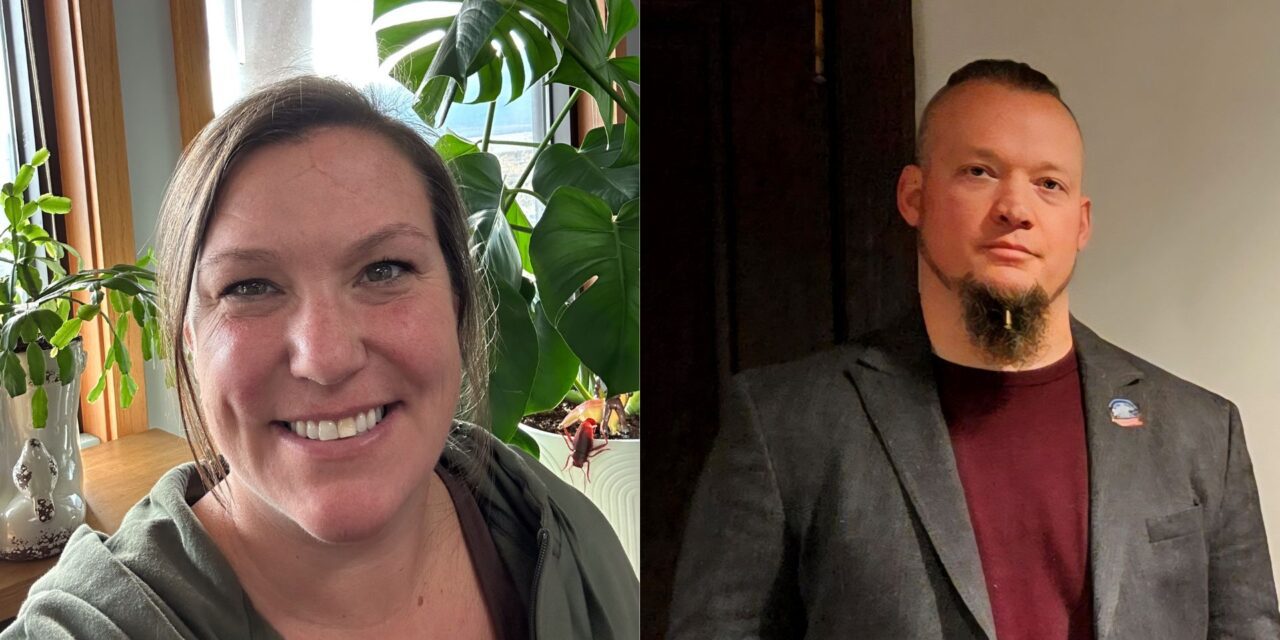
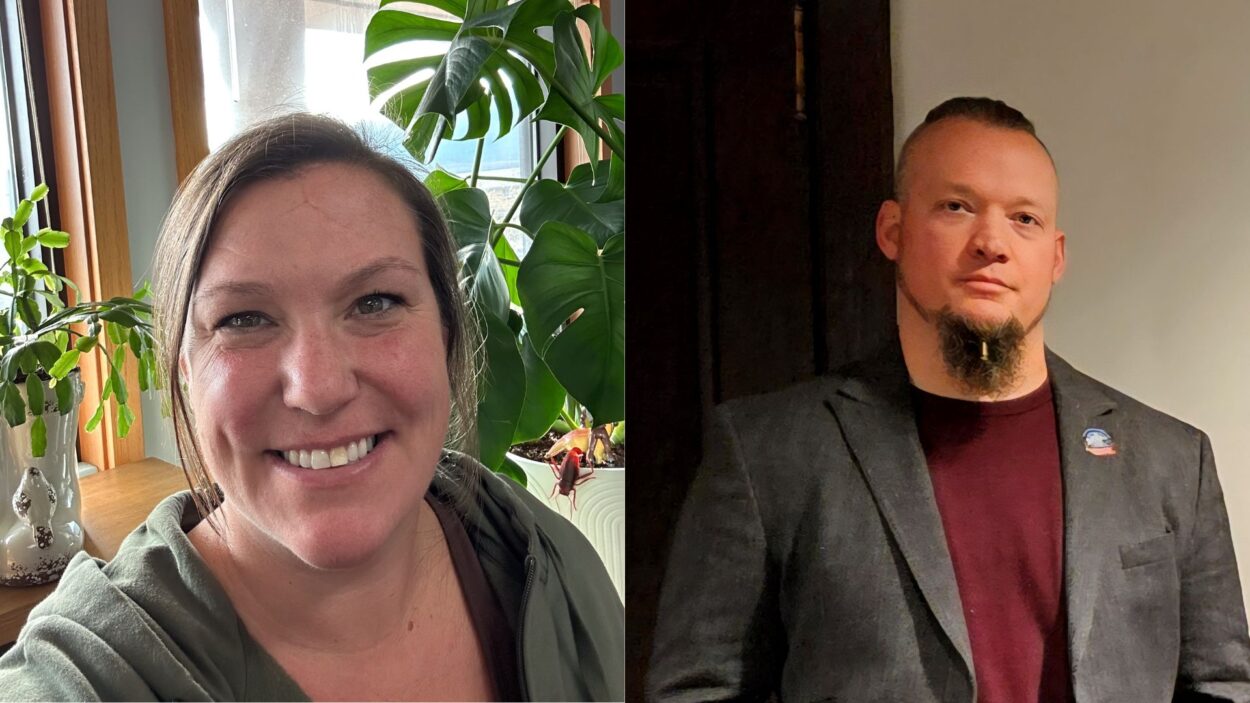
Ketchikan’s city and borough municipal elections are October 7. There are two candidates vying for one two-year seat on the school board: incumbent Paul Robbins Jr. and challenger Shari Montgomery.
School board members are responsible for overseeing the budget, adopting policies and hiring the superintendent — and that search for a new leader will be starting soon.
KRBD’s Sydney Dauphinais sat down with both candidates to talk about their plans if elected.
Who are you and why are you running for school board?
Shari Montgomery: My name is Shari Montgomery, and I am proud to be running for the two-year seat on the school board. I was born and raised here in Ketchikan. I attended our local schools from kindergarten all the way up through my Kayhi graduation, and then I graduated with honors from the University of Alaska campus here as a mother of two young boys. I am committed to ensuring that our schools are strong, successful and student-centered. With a background in business, accounting and management, I bring both practical skills and a strong moral compass to the table. I believe that our district needs leadership that is transparent, fiscally responsible, and truly listens to our community. I’m running to help rebuild that trust between the families and the district and to advocate for schools where every student can thrive.
Paul Robbins Jr.: I’m Paul Robbins Jr. I’ve lived here in Ketchikan for eight years. I’m running for the two-year seat on the Ketchikan Gateway Borough school board. I was appointed to the board first in 2020 and then elected to a three-year seat that year. I was appointed again in April of this year, and since then, have also been appointed to the Alaska Association for School Board’s board of directors, so the state governing body, and I’m looking forward to helping this board transition through a very difficult process. The reorganization has been difficult on the community, on the district, on the staff. The board previously didn’t do a great job in communicating out the effort and the transition, and it’s going to take some time and some serious work for us to regain the trust and confidence of both our staff and the community.
How do you differ from the other candidate?
Montgomery: Well, my opponent, he is a very skilled public speaker. He’s very polished and articulate, but too often his words lack substance and sometimes action. As a current board member, he’s been a very consistent supporter of the status quo, even when it’s clearly failing our students and families. We don’t need more carefully crafted talking points. We need courage, conviction and real accountability. I’ve got skin in the game and the spine to call out what is broken and fix it. I’m a mother with a business degree and a deep personal investment in the success of our schools. I bring the passion of a parent and the practical skills to make responsible decisions. I’m not running just to point fingers and place blame on current and past board members. I’m running to ask those hard questions, challenge our broken system and prioritize what’s best for our students over what’s easiest for the adults. Transparency matters, but it only works when it’s paired with sound judgment and good decision making. I’ll bring honesty, authenticity and a genuine commitment to rebuilding trust through action. Our community deserves a school board that listens to its citizens, acts accordingly, plans ahead and always, always puts students first. We need leaders who will push back, think critically and demand better, and that’s exactly what I intend to do.
Robbins Jr.: I’ll just speak to my credentials and my skills on it and let the voters decide there. But I came back because I was receiving text messages and communications from district staff and teachers and parents who asked me to come back and help transition this board through the difficult process. And the reason they asked me is not only because of my experience through the COVID years of being on the board, which was a very difficult time, but also because my professional expertise is in communication. I’ve been in the field of communications and public relations for 23 years now. It’s what my master’s degree is in. It’s what I do now. Professionally, I work for the Forest Service as their public affairs officer here for the Tongass. So helping this board and the district do a better job in communicating with the public, not just in general, but the reasons behind our actions, is really important. Because that’s what’s led to a lot of mistrust in the community is not explaining in detail and well enough why we’re doing what we’re doing and what effect that’s going to have.
Where do you stand on the elementary school restructuring and what are your hopes for the rest of the process?
Montgomery: The restructure is what lit my fire to begin this school board journey. This is a big issue with an even bigger impact on our students and families. The disruption of losing our neighborhood schools affects our identity and our student support systems. The lack of transparency from the beginning of this up to now still leaves a lot to be learned. It’s very apparent that this restructuring caused significant disenrollment, which directly affects our funding. If both the community and the budget don’t agree that this experiment puts our students and schools in the best position to move forward, we may need to revisit the other options to bring students back into our schools.
Robbins Jr.: As far as the board goes, at this point, the reorganization has happened. So the board’s job is to do what they can through policy amendments and contract approvals and what’s within the board’s power to support the reorganization. It’s understandable how angry some of the community is, and some of the parents are with this difficult transition and how it was communicated, but it’s happening. So our best way forward right now as a district and as a school board is to make sure our teachers and administrators have the support they need to be successful this year, and then we can evaluate where we are after the school year is done, and see what needs to be changed. I appreciate that the reorganization put us in a good place, budget-wise, as we were dealing with that turmoil with the governor’s veto. We were over a half million dollars in the black, even with the governor’s veto, and doing even better now that the veto was overridden. So part of the budgetary reasons for that organization worked, and I look forward to seeing how it goes throughout the school year.
What do you see is the biggest obstacle that the district is facing, and how do you plan to address it if elected?
Montgomery: The greatest challenge facing our school district right now is the declining enrollment and the financial strain that accompanies that. The impact of the inconsistent leadership, unclear communication and questionable budget decisions has detracted families and staff from our district. We need to protect our direct instruction, keep classrooms intact and make cuts where it won’t harm student learning. A crucial first step is hiring a superintendent who embodies the values of our community and prioritizes open, honest communication. We must ensure that all decisions, especially those around hiring and budgeting, follow board policy, are student centered and are made with full transparency. Making strategic, incremental changes now can help us avoid more severe cuts in the future. Ultimately, it’s the board’s responsibility to ask the difficult questions, make informed decisions and always put our students first. If we remain focused on rebuilding the trust and serving our students, we can strengthen our schools, stabilize enrollment and secure long term financial health for our district.
Robbins Jr.: It’s trust and confidence. There’s large swaths of the community who have lost trust and confidence in the school board. Our district staff have lost a lot of trust and confidence in the school board because many feel that we didn’t defend them during very public admonishments and harsh criticisms of the district staff. In order to regain that, we have to do a better job in being transparent, in being communicative and in showing accountability for the upcoming superintendent we hire and for ourselves.