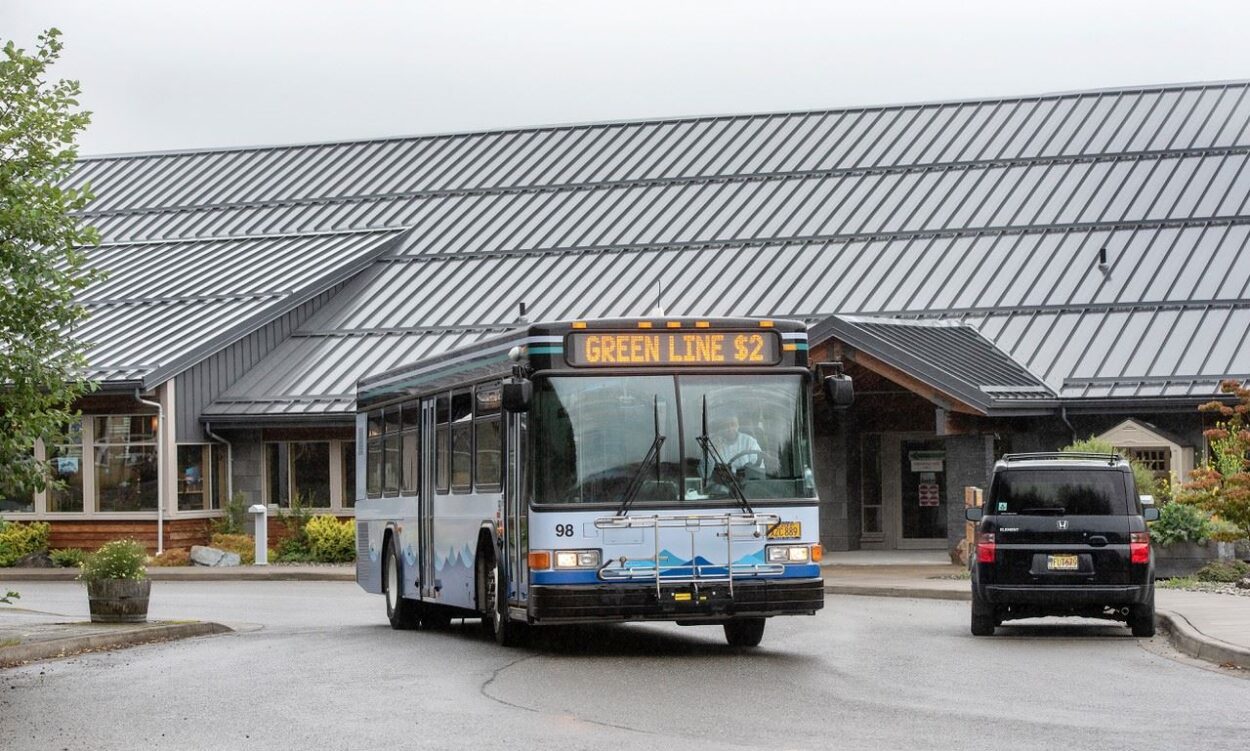
In a parking lot behind the Ketchikan Gateway Borough’s bus system headquarters on Copper Ridge Lane, Transit Deputy Director Stephanie Bushong steps onto one of several 35-foot-long commuter buses in their fleet. Later in the day, it’ll run up and down the Tongass Highway, reaching nearly both ends of the island.
Bushong says that same bus provided no-charge rides when two landslides closed major roadways in and around Ketchikan.
“It really goes back to the team that we have here, and the ability for us to not only serve the community, but the willingness from our team to serve the community through both landslides,” Bushong said.
The first slide happened in 2024, killing a city worker and closing the Third Avenue Bypass for five weeks. Then, this past March, the Wolfe Point rockslide closed a section of the Tongass Highway for nearly a week, leaving motorists cut off from the north end of the island.
That’s when the borough’s transit system, and its employees, stepped up. Not only did it offer free rides, it provided bus services and a warming shelter for workers cleaning up the first slide. And in the aftermath of the Wolfe Point slide, transit employees worked alongside the school district and water taxi companies to connect people to the island’s north end by bus and boat.
Transit Director Kyan Reeve says those efforts, in part, won them the Community Transportation Association of America’s Small System of the Year award in June. That honor goes to the public transit systems that serve communities with less than 50,000 people and/or receive federal funding to enhance mobility for seniors and people with disabilities.
“It’s really about, you know, Ketchikan as a whole, and what it means to live out in the middle of nowhere, in the middle of the forest, on an island,” Reeve said. “So, we’re pretty proud to serve Ketchikan and work as a team.”
Reeve says Ketchikan’s transit system was in the running for the award against hundreds of other systems around the country, and winning attests to the spirit of the community. Only two public transit systems in Alaska have been recognized by the national transportation association, the last being Juneau’s Capital Transit in 2003.
But it’s not just the Ketchikan system’s work during the landslides that helped them take home the award. Scott Bogren, executive director of the association, says the geographic challenges of running a transit system in Ketchikan made the award nomination stand out against others in the running.
“When you see them talk about themselves, you hear all the disparate parts of Ketchikan built into it,” Bogren said. “You hear about tribal members and the way they serve them. You hear about tourism in the way that serves tourism. You hear about emergency operations and their assistance there that really stood out in this nomination.”
The system recently installed new display screens on their buses to provide route updates and visitor information. They also brought on last year a new fleet of buses specifically for seniors and people with disabilities.
Reeve says that the new fleet helped increase ridership by 40%.
“We are one of the most efficient systems, certainly in the state of Alaska, in part because of how we’re able to utilize our assets and the money we get,” Reeve said. “We’re able to deliver to an awful lot of people.”
Reeve says the borough’s transit system still has a long way to go. They’ll soon be seeking public input on how they can further improve the system in a new development plan.
Hunter Morrison is a Report for America corps member for KRBD. Your donation to match our RFA grant helps keep him writing stories like this one. Please consider making a tax-deductible contribution.