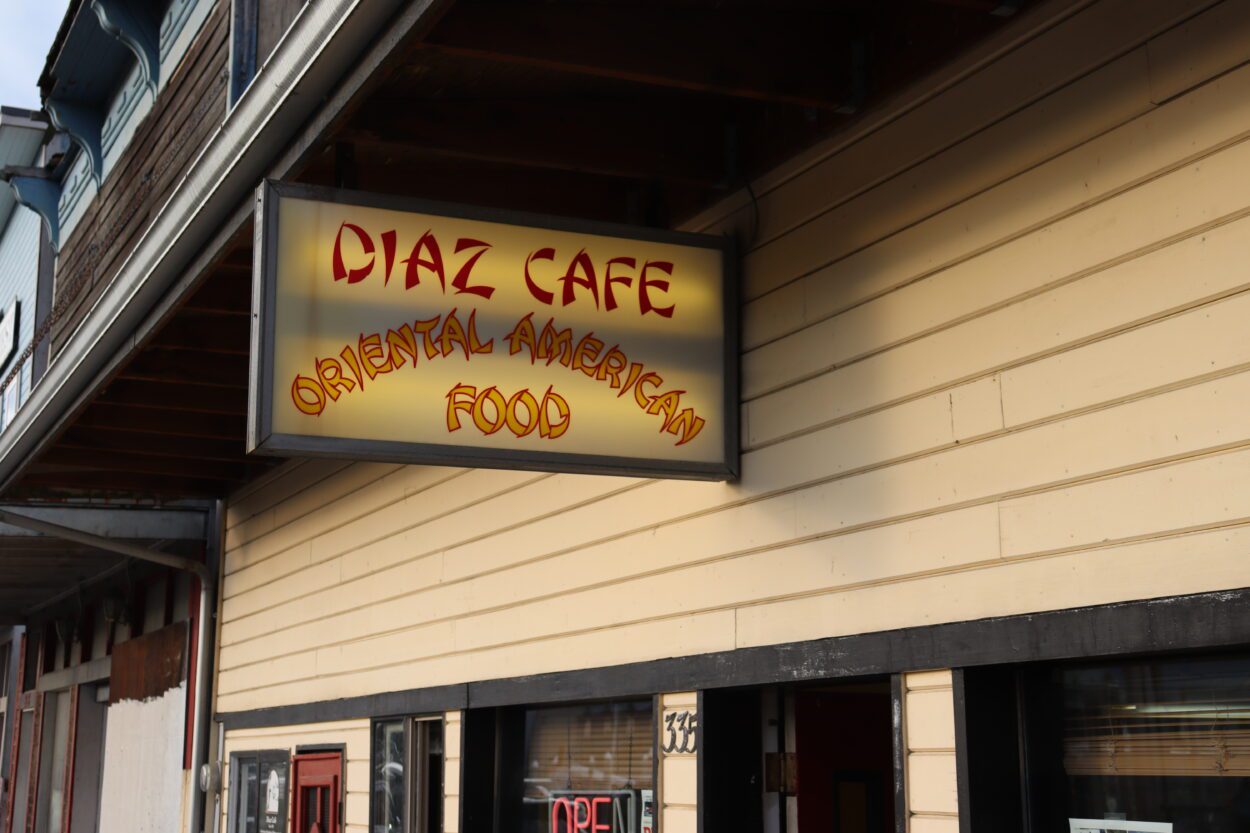
The aroma of lumpia and chicken adobo wafted from Diaz Cafe’s bustling kitchen earlier this month as people piled into the small restaurant. A line of customers formed at the counter.
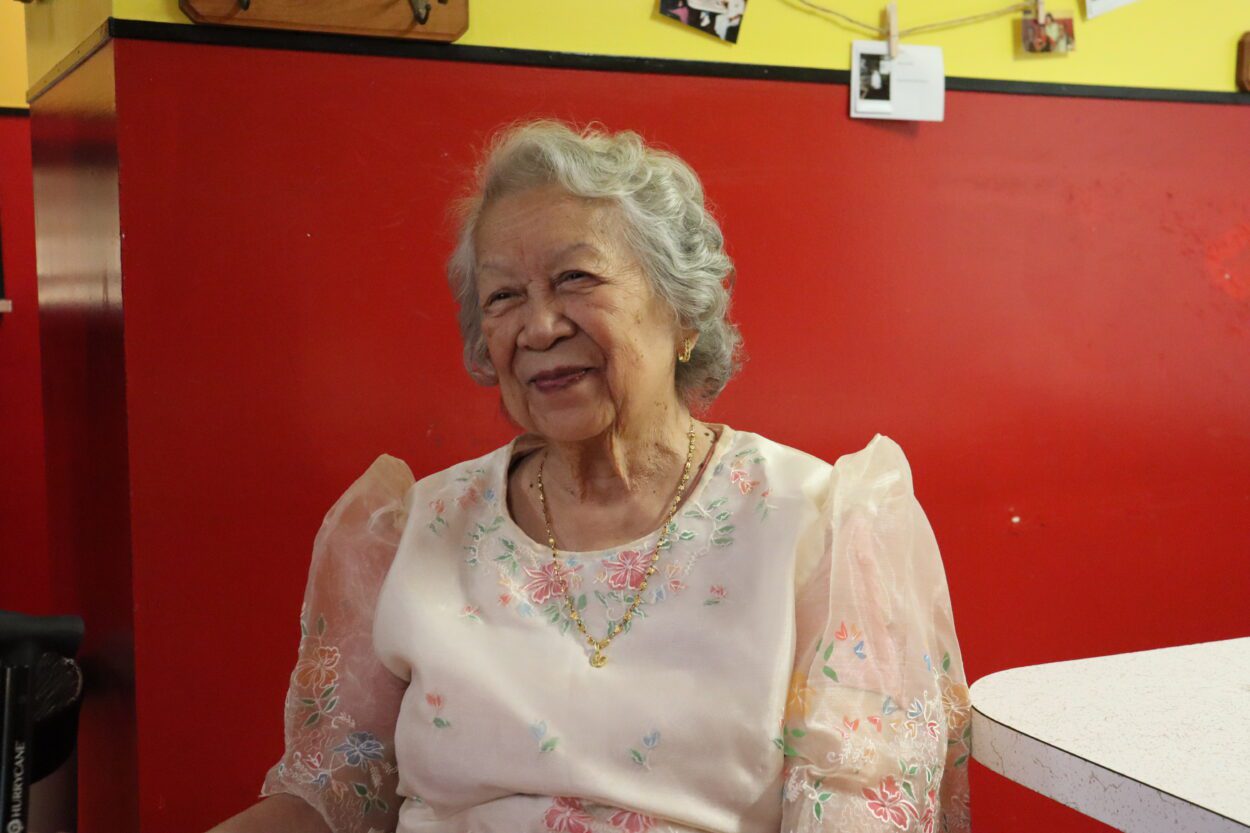
Clara Diaz has run the eatery for nearly 50 years. And at 93 years old she’s still working here because, she says, she enjoys interacting with customers.
“Well, the community! The community is what’s at the success of the restaurant,” Diaz said.
But many weren’t just here to eat. They were here to learn. Now lining the restaurant’s iconic red and yellow walls are photographs – of cooks operating the grill, of past restaurant celebrations, and of Diaz.
“We thought it was important to record the story of the Diaz Cafe and Clara Diaz’s story, because part of our ethos is to kind of share the stories of people who may have been overlooked,” said Shayne Nuesca, strategic storytelling director of Mana, an Alaska-based organization that records and elevates the state’s Filipino history. The group interviewed and photographed Diaz last year.
“Clara Diaz has been a staple in Ketchikan for so many decades, but someone like me, living in Anchorage, never knew about her,” Nuesca said.
Born in 1932, Diaz was the youngest member of her extended family in Philippines. Her mother sent her away to grade school to avoid conflict during World War II. Diaz later trained to become a nurse and worked at a hospital in Manila before coming to Ketchikan in 1958 – before Alaska was even a state.
She continued as a nurse, caring for thousands of patients during her tenure, including the victims of a 1976 plane crash in Ketchikan. She took ownership of the restaurant the following year.
Alma Manabat Parker is the strengthening cultural unity task force coordinator with the Ketchikan Wellness Coalition. The non-profit helped organize the exhibit’s opening reception on October 1– or the first day of Filipino-American history month.
“And it really isn’t a place of gathering just for Filipinos. It is a place of gathering for Ketchikan,” Parker said. “People remember coming here as kids. I’m not that old, but I do hear people saying, like ‘I came here when I was little, and now I’m bringing my grandkids here.'”
“It really is a historical location,” Parker added.
Parker says Diaz has served as a mother and grandmother figure to customers over the decades. She’s welcomed visitors to the city, adopted other members of the local Filipino community and has even taught traditional Filipino dance classes in the restaurant.
The history exhibit at Diaz Cafe is Mana’s first permanent installation. Nuesca, with Mana, says it’s an example of how Filipinos are intertwined with the broader community.
“The more that we can learn about each other, we can understand that we have a shared history, and we can build mutual understanding and a sense of belonging for all of us,” Nuesca said.
Right now, Nuesca says there aren’t many other efforts to document Filipino history in Alaska. But she says highlighting that history is dire because the state has one of the highest concentrations of Filipino residents in the country.
This story was updated on Oct. 28 to correct the spelling of Mana’s strategic storytelling director Shayne Nuesca.
Hunter Morrison is a Report for America corps member for KRBD. Your donation to match our RFA grant helps keep him writing stories like this one. Please consider making a tax-deductible contribution.