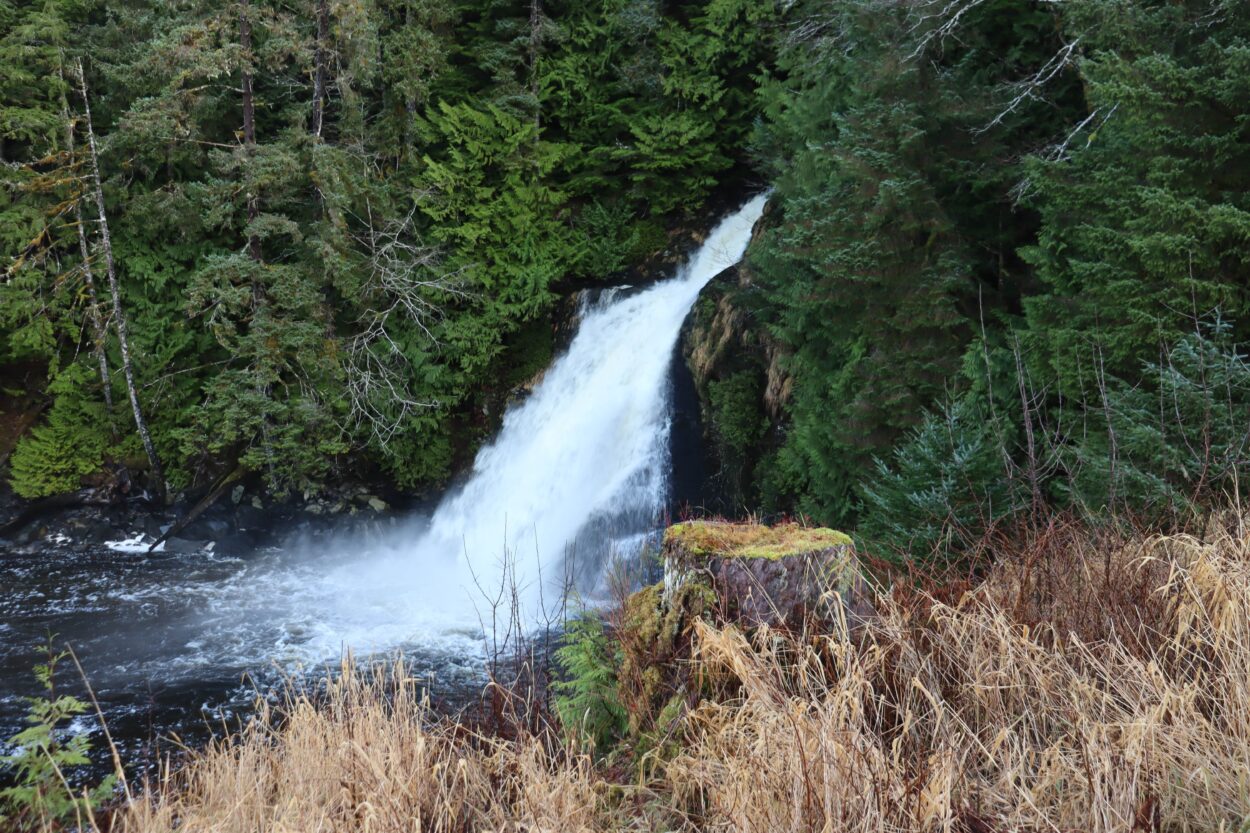
About 15 miles north of town, Second Waterfall gushed into a rocky shoreline.
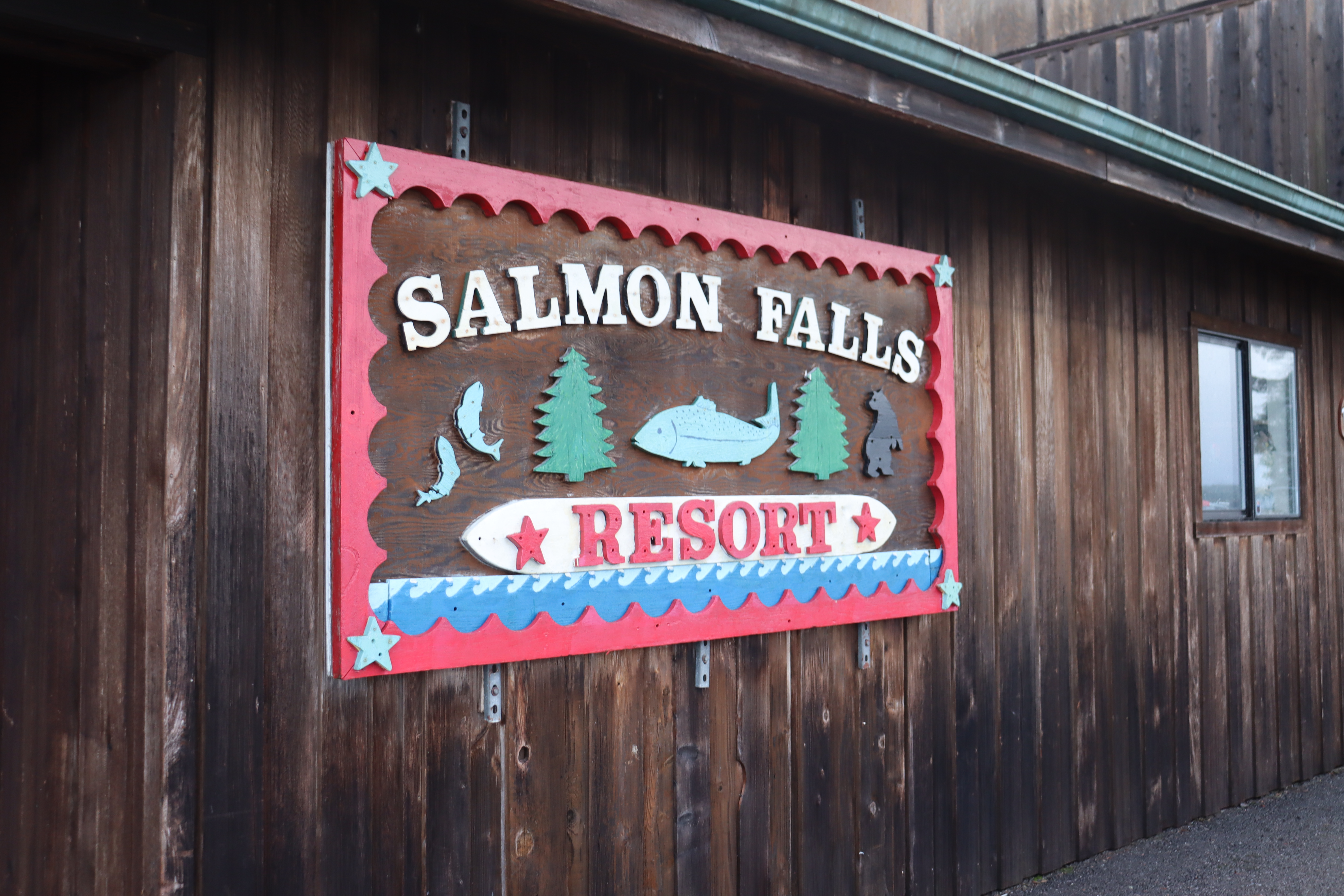
The natural wonder can be seen – and heard – from inside the clubhouse of the former Salmon Falls Resort, a longtime tourist destination for fishing, dining and lodging. The 11-acre facility has gone through many hands over the years and was foreclosed on in November. The Ketchikan Indian Community purchased the property, in cash, two days after finding out it was up for grabs.
“It met all of the qualifications we needed to be able to really move forward on a wellness center,” said KIC President Gloria Burns. She said the new facility will blend Western and traditional healing practices that will focus on an individual’s needs.
“We’re really excited about the opportunity it’s going to give people to reconnect to the ocean, and to the land, and to vision with our tribal citizens what healing looks like to us,” Burns said.
Burns said that approach is modeled after the tribally-run Didgwalic Healing Center in Washington state. She said opening a facility to help people struggling with substance misuse has been a part of KIC’s strategic plan for nearly a decade.
“For some people, they’re going to say that ‘my dissociation for not speaking my language is so profound that I can’t get by, and that is my path to healing,’” Burns said. “Some will say to us, ‘I dream of fish every day in the morning glory, I need to be on the water, I need to be providing for my family.’”

The recently-purchased property is equipped with a restaurant, boat dock, bunkhouses and guest rooms that can sleep more than 50 people. Burns said those beds will be used for both patients and health care providers.
And there’s room to develop more amenities, like traditional food gardens.
“Our family members and our loved ones who are in this state of addiction, it’s not who they are,” Burns said. “It’s this system, this drug that has taken who they are from us, so how do we restore within them the ability to identify, in a positive way about themselves, and to connect with the land and connect with their family?”
Burns has seen dozens of people on the island struggle with addiction over the years. A 2020 study found that addiction treatment is one of the most pressing health needs in the area. But the island has just two addiction treatment facilities. And Southeast’s only detox center, in Juneau, closed about a year ago, which Burns said leaves some people to resort to treatment facilities in the Lower 48.
Unlike some tribally-run healing centers, which are only open to tribal members or Native people, KIC’s new facility will be open to everyone.
“We recognize that it takes the entire village to make somebody well,” Burns said. “You can’t make the body well by just making the hand, and the arm, and the foot well. You have to make everything well.”
The tribe is still fleshing out a plan for what the healing center will look like and how it will operate. Burns said they also need to fix up the facility’s plumbing and remodel some buildings to tailor it to their needs.
Hunter Morrison is a Report for America corps member for KRBD. Your donation to match our RFA grant helps keep him writing stories like this one. Please consider making a tax-deductible contribution.