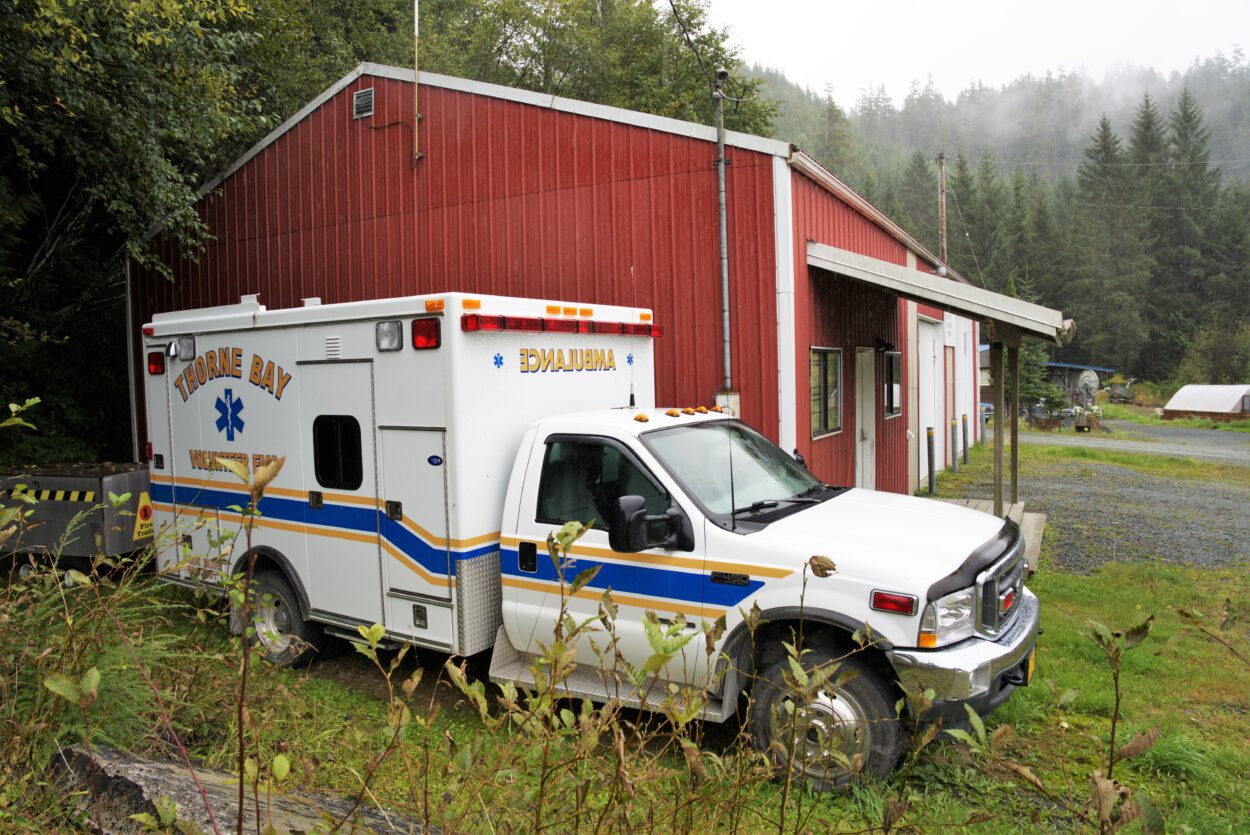
On a recent Friday morning, Les Carter sat with his Dutch Shepherd, Whiskey, inside his Thorne Bay home. Carter is one of about five first responders with the city’s volunteer EMS group, and works on standby.
But his walkie-talkie style radio on an end table adjacent to a recliner was silent. That’s typically a good thing – it often means that no one in town was having a medical emergency.
But Carter said that radio, which broadcasts all calls from the city’s well-known emergency line, no longer receives dispatches in real-time.
“I noticed that one day we got a call, and our dispatcher was trying to answer them,” Carter said. “We could hear some of the stuff that they were saying, but they couldn’t hear us.”
He said after a few attempts, the caller hung up and dialed 911. They were connected to the Alaska State Troopers, who called Thorne Bay’s emergency line. But Troopers experienced the same issue.
Carter said the volunteer group had to call Troopers from another line to relay the dispatch information back to Thorne Bay. He said the whole ordeal caused an eight-minute delay in response time.
“Well, if you think about it, if someone is having a serious medical condition or issue and they go into cardiac arrest, you have six minutes before you start losing brain function, right? When you have to spend six or eight minutes trying to get through a phone system, trying to get help, damage is already done before we even know there’s a problem,” Carter said.
According to an email thread from Alaska Communications, Thorne Bay’s landline operator, the issue could be traced to hardware issues. The email thread goes on to say that replacement parts arrived in Juneau last week, and replacement efforts are scheduled to begin Feb. 3.
So in the meantime, the volunteer EMS group has adopted a new, temporary system.
They have a new emergency phone number, which rings a cell phone carried by one of two dispatchers. The caller’s information, including the reason for their call, is relayed via a cell phone app to all responders on Prince of Wales Island. That information is also broadcasted across the radio system after the call.
Volunteer responders and dispatchers said this isn’t the best way to run an emergency response department, especially in a town with limited cell phone coverage.
And because responders can no longer hear a call in real-time, that’s caused slight delays in response time.
“It’s harder to deal with people when already in, like, a heightened state of worry,” said volunteer Thorne Bay EMS dispatcher Erin Mathis. She said despite the city’s efforts, not everyone knows the new emergency phone number.
“I just don’t think that any of us really realized how important our landlines still were until they went out,” Mathis said. “And we would like them fixed, for sure.”
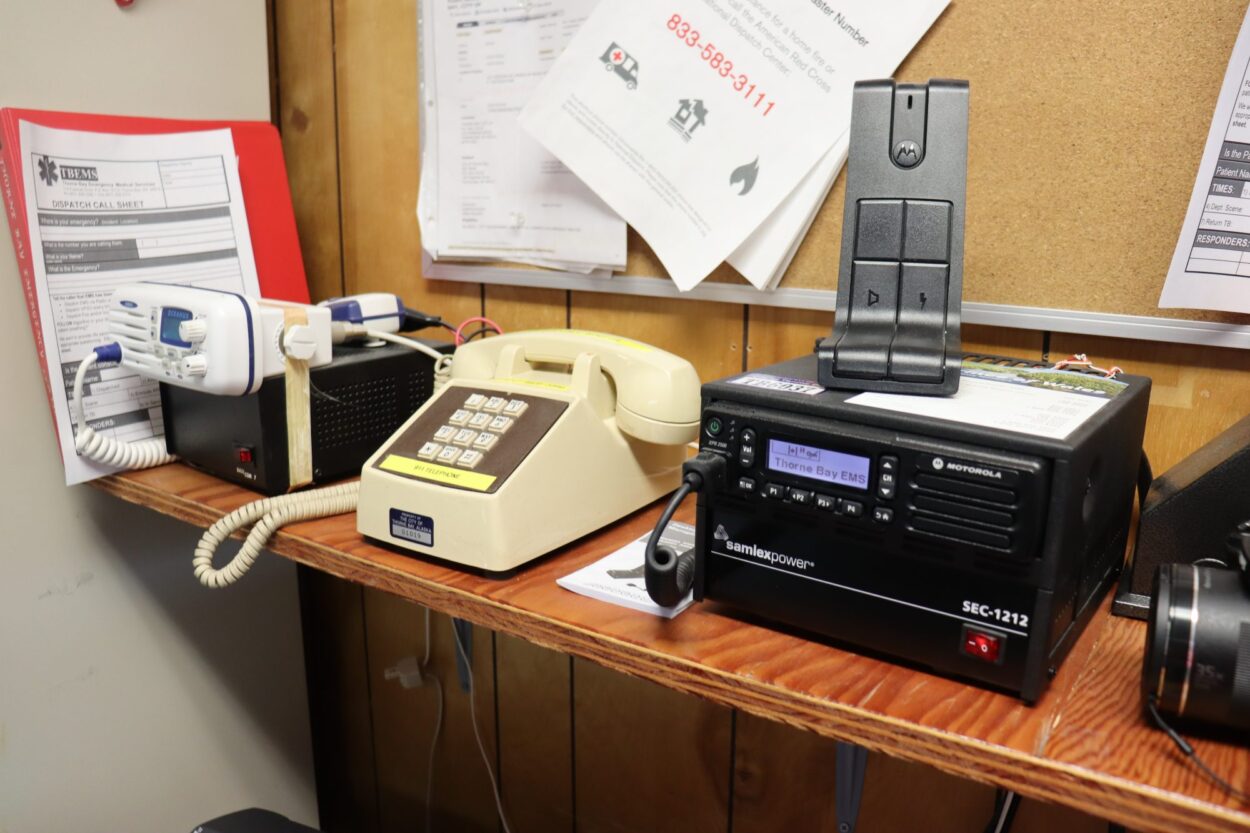
The phone issues have affected more than just the city’s EMS group. Mathis, who also works at city hall, said it’s caused complications for people trying to call the city. And people who live miles outside of town can’t call the city’s only grocery store to see what items are in stock.
But the city’s school, which is also dealing with the phone issue, is exploring alternatives. They’re considering a switch to a cloud-based phone system that connects phone calls over the internet, instead of traditional landline wires.
Rodney Morrison is the superintendent of the Southeast Island School District, which oversees Thorne Bay’s school. He said a break in communication can cause mistrust between parents and the school district.
“I’m surprised that in this day and age that we can’t get a more reliable system that we have in place,” Morrison said. “Communication is essential. So I would hope that we’re looking for a long-term solution for everybody that is struggling with this issue.”
Carter, the volunteer first responder, said the city’s EMS group has talked about other phone alternatives. But he said there aren’t many other options available.
And sitting in his living room on that Friday morning, he can’t help but think back to two recent calls where he said issues with the phone system delayed emergency response times.
“The delay in the communication either did or could have negatively impacted my patient’s medical outcomes,” Carter said. “If we had gotten there sooner, things might have been or probably would have ended up better for the patient.”
Thorne Bay isn’t the only Alaska community that’s recently dealt with emergency phone line disruptions. Anchorage’s 911 services were briefly offline in September because of an equipment fault. And in 2023, a severed fiber optic cable caused 911 disruptions for at least a week in some Northwest Arctic communities.
Correction: A previous version of this article misspelled Whiskey’s name.
Hunter Morrison is a Report for America corps member for KRBD. Your donation to match our RFA grant helps keep him writing stories like this one. Please consider making a tax-deductible contribution.