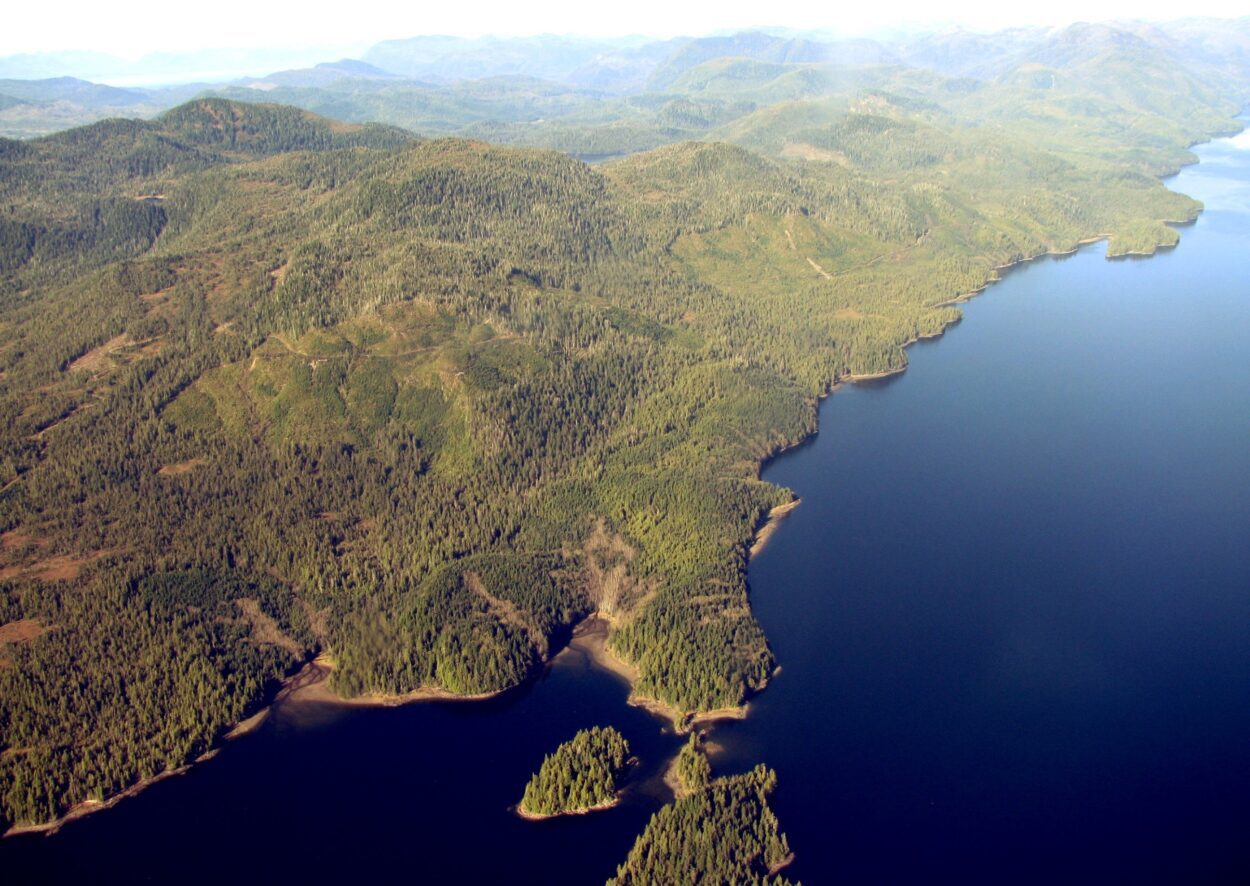
The U.S. Forest Service is moving forward with a plan to harvest over 5,000 acres of trees in the Tongass National Forest just east of Ketchikan. A majority of that is going to be old-growth trees, which some people worry will be devastating to the forest.
The Forest Service released the final environmental impact statement for the South Revilla project earlier this month. The project site, which surrounds Carroll Inlet on both sides, is around 41,000 acres in total. It would allow for the harvest of over 4,000 acres of old-growth timber, and over 1,000 acres of young growth timber over the next 15 years.
Cathy Tighe, a district ranger with the Forest Service, says the cut will allow for more than logging — it will also create new recreation opportunities.
“So it’s actually it’s not just focused on timber,” she said. “It actually clears a lot of activities that help us meet our multiple use mandate as an agency.”
The project includes construction of new trails, a cabin, boat launches and outhouses. It also includes the construction of parking spaces and 14 miles of new road.
Environmental groups have been pushing back on large scale old growth logging for decades. For years, up until Trump was reelected, the Forest Service was steering away from large scale old growth logging. The focus was instead on young growth sales, which has less of a negative cultural and environmental impact.
The Ketchikan-area plans were originally introduced in 2016 under the first Trump administration, but were shelved in 2020 with a change in administration and a temporary hold put on projects. But with another administration change came a new executive order, and new direction from the Department of Agriculture to restart and increase timber production.
“Since this project was so close to being completed previously, we had all of our resource specialists review those changes and sort of pick up where we left off.”
Part of developing the plan involves an interdisciplinary review, where resource specialists with the federal agency study the site and evaluate risks.
“It’s a long process, partly because we have all of these different resources working together,” Tighe said. “And then in addition, there’s a lot of what we call best management practices that go into, you know, how far away from a stream you have to, like, fuel equipment to protect resources.”
But critics say that old-growth logging projects of this scale will be devastating.
Betsey Burdett is the owner of Southeast Exposure Outdoor Adventure Center, a kayaking and ziplining tour company. She says she’s seen logging projects of this size before. And she doesn’t see it as responsible development.
“It’s just a question of how many people can this land support, I mean, in a healthy way, as we take care of our waters and our forests and so on, you know, what’s the breaking point, and how can we do it responsibly?”
She says she’s seen people leave the island because they didn’t like what was happening to the forests in the height of the timber industry.
Nathan Newcomer from the Southeast Alaska Conservation Council says there are better ways to go about logging.
“I mean, our organization works with small mill operators that are just like mom and pop shops really, like two people that work there, and they might go grab one or two old growth trees every once in a while,” Newcomer said. “Or a tribe, for example, they might want to go chop down one old growth tree to build a canoe or carve a totem pole. There’s appropriate ways to do this.”
He says the project will harm animal populations, like those native to the Tongass, and the region’s world-class salmon runs. Old growth projects affect carbon sequestration and long-standing ecosystems.
Newcomer says the South Revilla project will affect Southeast Alaskans who live a subsistence lifestyle — and it will come at a cost to taxpayers, who will likely have to pay for a lot of the project.
“The average person in Alaska understands that that’s not our economy,” he said. “It’s not based on large scale timber production. It might have been at one point decades ago, but we’ve moved on. And so again, I ask the question, who’s asking for this? Who’s getting the benefit out of this? It certainly isn’t the majority of Alaskans in Southeast.”
Newcomer suspects this project might be a bellwether for other large scale old growth projects to come in Southeast, particularly if important conservation laws get repealed.
There is a 45 day objection period that follows the release of the final environmental impact statement. That ends on March 8. The final environmental impact statement can be found on the Forest Service website.
Editor’s note: This story has been updated to reflect the timeline of the project.