Carlee Kistler got out of jail in December. While incarcerated, she worked with members of Ketchikan Wellness Coalition’s reentry team to develop a plan for when she got out. She would move into the reentry house and stay involved in the programming so she could get her feet under her and into good habits.
“They picked me up from jail,” Kistler said. “They were there that morning to pick me up and brought me to the house and got me settled in… things are going really good.”
Kistler is a recovering addict. She was in jail for three months this last time. She’s been in multiple times, but says this time was different.
“Right before that, I did like, a two week stint,” Kistler said. “And they let me out, and I hadn’t had time to contact anybody or figure out my resources or anything, or make a plan. And I immediately went right back to using.”
Kistler is working on getting into addiction treatment while she works with the reentry team on staying sober and rebuilding her independence.
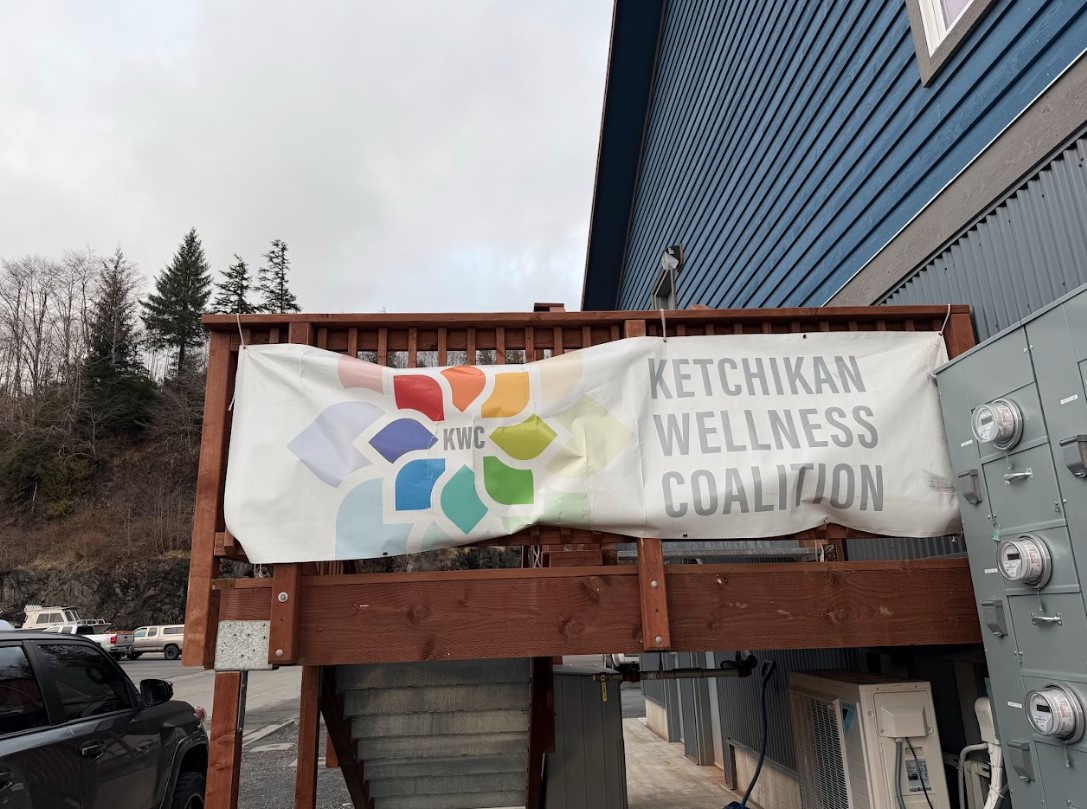
The Ketchikan Wellness Coalition’s reentry programming has several different components, all designed to support people after incarceration. It includes case management, job placement, and housing assistance.
The most common reason people go back to jail after release is because when they’re out, they return to the same conditions they were in when they were arrested in the first place.
Reentry Program Coordinator Drew Herby works with some of her clients in the Ketchikan Correctional Center, where they do a 12-week reentry class funded by the Alaska Department of Corrections. It focuses on topics like managing expectations and avoiding antisocial behaviors upon release. She says they make a big impact inside the jail — and they often come to see her as soon as they are released.
“They chase me down,” Herby said. “They come straight from jail, straight to my office before they see their probation officer. They only have 24 hours to see their probation officer, and they come see me first.”
The program recently expanded outside of the jail, too. Now, people can continue the class when they’re released and get their certificate of completion. It’s open to the public and classes are held right next to the Alaska Job Center.
Isolation, Herby says, is a big threat to the reintegration process. Being able to have open, vulnerable conversations with people who have shared experiences is a big part of the reentry classes. And without support, it’s easy to feel overwhelmed by things like getting an ID, securing housing, finding a job or getting sober. She knows this from personal experience.
“There’s a lot of missing components in our community when it comes to the justice system,” Herby said. “I was a misdemeanor over 47 times before I became a felon, and there just wasn’t help for me anywhere besides jail itself.”
Herby says she wanted the community to stop creating felons and start helping those with misdemeanors. She wants people to know that if they need help, she’s there for them whenever they’re ready. And she doesn’t judge. She knows people can change, because she did. That’s what she tells people when she’s advocating for her clients by going door-to-door or cold calling landlords who are wary of renting to felons.
Herby will let clients return to the reentry house after getting kicked out previously — like for relapsing when living in the house and putting other people’s sobriety at risk. That’s what happened with Chantel North.
A couple years later, North is back in the reentry house, along with Kistler and a few others going through reentry programming. The first time, she says she just wasn’t ready.
“I think that had I not been kicked out, I could have just kept getting away with it, and I wouldn’t be where I’m at right now,” North said. “I was lucky enough to get another chance, and without hesitation, they took me back in, and it’s been a blessing to get out of treatment and not have to worry about where you’re gonna go or who you’re gonna be around.”
North stays busy. She goes to meetings every day and is active in her recovery. She says everyone in the house has their own schedule, but sometimes they hang out together in the evenings and watch TV or cook together. They celebrated the holidays together.
“They’ve made it possible to be clean and sober,” she said. “Also, you know, [it’s] a safe place to go, where I do have the freedom to come and go, but I would prefer to stay there, just because it is a safe place.”
She’s working on getting her GED, which she hopes will open up more job opportunities.
The reentry house, which has six bedrooms and sits right on the water, is almost always at full occupancy. There’s a long wait list the reentry team regularly works through to help in other ways if they can’t get into the house. Residents typically stay there for nine months and are expected to pay rent and keep the space clean.
Construction to add two more bedrooms and a bigger shared space, so more people can go through the programming, is almost complete.