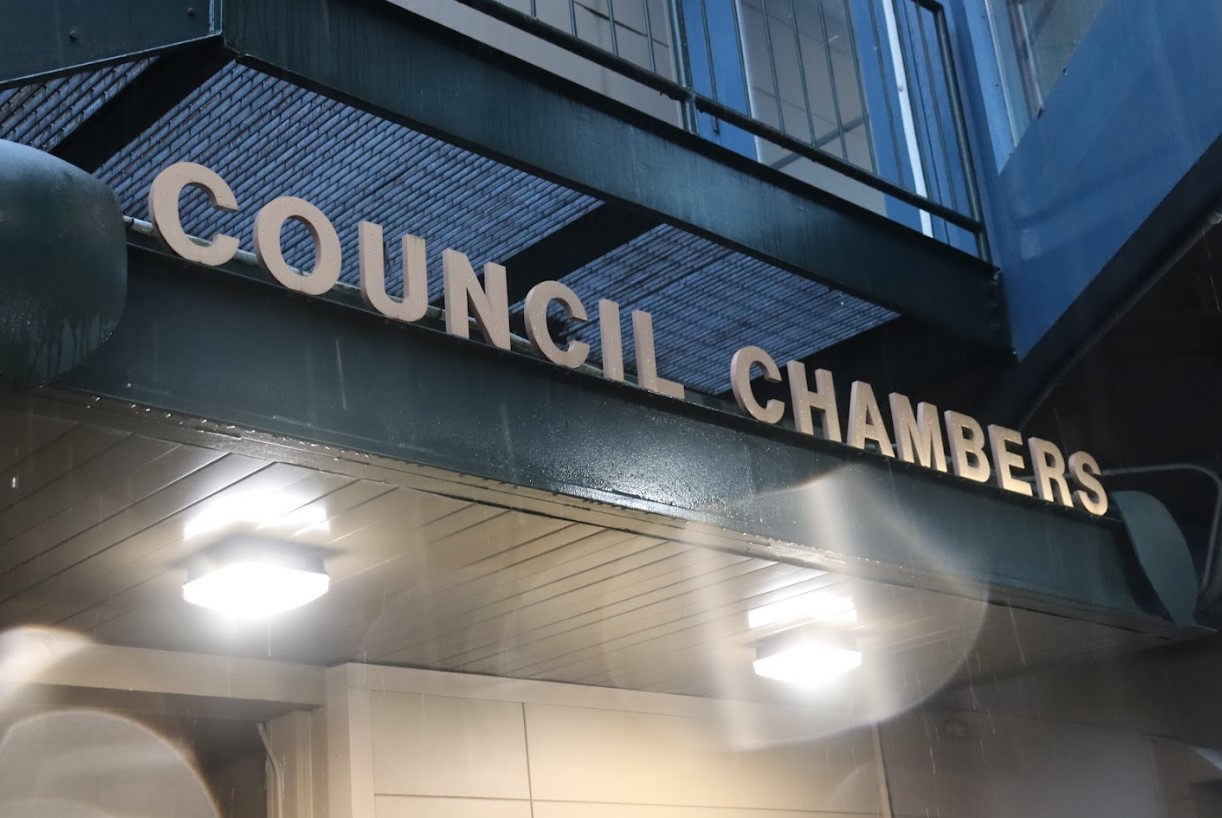
The Ketchikan City Council approved updates to its municipal laws Thursday night that will limit where people can sit, lay or camp within city limits. While some council members said the changes were created with safety in mind, several community members argued they could negatively impact the city’s unhoused population.
The city council listened to roughly an hour of public testimony from about half a dozen people speaking against the proposals. Their message was similar – they believe the new laws could affect unhoused people.
Ryan McHale was one of multiple people who gave public comment.
“At some point we have to ask, ‘what outcome are we trying to achieve?” McHale said.
In his testimony, he highlighted the need for solutions, rather than regulations. McHale also touched on the city’s main homeless shelter closing in 2024 because of actions from the city council.
“Enforcement without alternatives does not end homelessness,” he said.
According to three separate documents from the city manager’s office, the ordinances were to “address health, safety, and economic prosperity within the City.”
One new change to the municipal code deals with trespassing on city property. It also outlines new procedures related to issuing trespass warnings, including how an individual may appeal such warnings.
The second change adds a new chapter to the municipal code, indicating that “no person shall sit or lie down upon a public pedestrian way and or other area” between the hours of 5:30 a.m. and 10:30 p.m., with some exceptions. Those areas include Harbor View Park, Whale Park, the port, transit system shelters and others.
Another code update makes it illegal to camp or use camping supplies on city-owned or leased property, including public pedestrian ways, city-owned parking lots, and transit shelters.
The ordinances were reviewed by the city manager’s office and the Ketchikan Police Department.
All three ordinances were first discussed by the city council at a meeting on Feb. 5. They were officially approved by the council in separate votes on Thursday. The first ordinance, which provides more context for the city’s definition of trespassing, was the only measure that received unanimous support.
Councilmember Riley Gass voted in favor of all three. When speaking about the first ordinance, he echoed the sentiment of other council members, saying it will give police officers additional resources to address trespassing in “extreme cases.” And when speaking about the second ordinance, he said over the last few years, he’s noticed more people lying out on Ketchikan’s public sidewalks and is concerned about people with mobility issues.
“I think this is something the police would use discretion on, and only when people are refusing to clear the walkways for what they were designed for, which is for people to travel on,” Gass said. “Not people to sprawl out across.”
Councilmember Jai Mahtani also voted in favor of all three updates. He said they’re meant to address a small group of “bad actors,” and that law enforcement officers are “very, very compassionate” when helping unhoused people. He said the issue will not go away overnight.
“This particular ordinance, all three of them, have been debated for about two years,” Mahtani said. “It’s not for the lack of compassion, it is not to support a particular community, but it is for the whole community, as a whole.”
Not all council members supported the ordinances. Councilmembers Janalee Gage and Jack Finnegan voted against two of the three – pertaining to sitting or lying on walkways and camping on city property.
Gage spoke at the meeting about wages not keeping pace with the cost of living and the need for more affordable housing, among other things. She said the city could be contributing to the issue of homelessness by “the rates we’re charging our community members.”
Finnegan reiterated the testimony of a community member, saying it’s a balancing act weighing the needs of rate payers, business owners and the community. He said because of the needs of the council and the public testimony he heard, he could not support all of the ordinances.
“Ordinance changes like these, they do run the risk of criminalizing the most vulnerable members of our society, and it will not address the root causes of the situation these people, these neighbors of ours, these community members of ours, find themselves in,” Finnegan said.
A few residents testified about how the law changes may lead to fewer options for the community’s unhoused population and how they could target Alaska Native groups.
Both community and council members also highlighted the work that’s currently being done in Ketchikan to address homelessness, like the Ketchikan Indian Community’s temporary warming shelter and the tribe’s efforts to construct affordable housing. They spoke about the need for improved partnerships to address homelessness.
The three approved ordinances will go into effect Feb. 24.
This story was updated with hyperlinks to provide additional information about the changes to the City of Ketchikan’s municipal code.
Editor’s Note: Janalee Gage is a volunteer DJ at KRBD.
Hunter Morrison is a Report for America corps member for KRBD. Your donation to match our RFA grant helps keep him writing stories like this one. Please consider making a tax-deductible contribution.