The draft environmental impact statement for the Twin Mountain II Timber Sale came out in April. One of the key findings: it could have substantial effects on the subsistence use of deer on Prince of Wales Island.
The Forest Service was required to hold a subsistence hearing for the logging project under ANILCA, the Alaska National Interest Lands Conservation Act. A section of ANILCA requires the Forest Service to hold a subsistence hearing and allow public testimony if they find the proposed plan is likely to have a significant impact on subsistence uses. That testimony is then considered and incorporated into the final environmental impact statement.
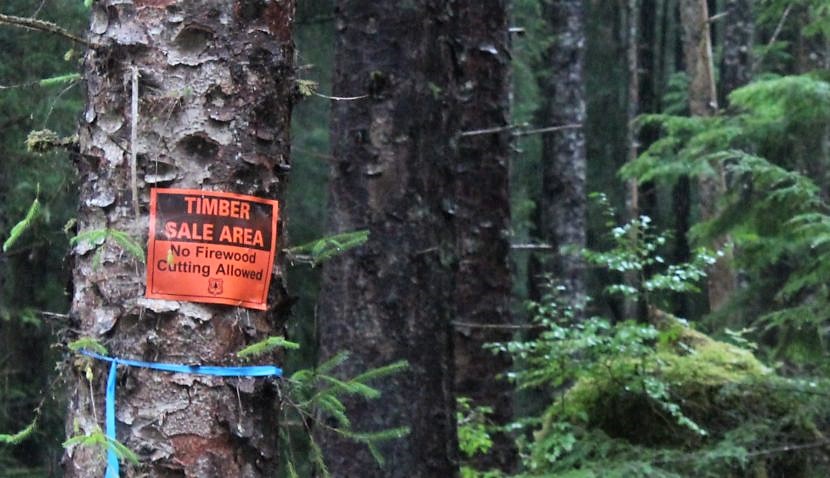
The Twin Mountain II Timber Sale would cover two separate areas on the north and west ends of Prince of Wales — the Red Bay area on the north end of the island, and the Staney Creek area just west of Thorne Bay. It’s expected to provide over 28 million board feet of timber — and it includes the harvest of about 1,655 acres of old growth.
Mike Jones, President of the Organized Village of Kasaan, opposes the project. He spoke on behalf of both himself and the tribe. A large majority of the island’s old growth has already been logged, he said, and the effects of that old growth logging never go away.
“Nobody’s ever seen old growth come back,” he said.
Jones said the trees at risk aren’t a commodity — they’re non-human relatives. And healthy forests are necessary for healthy salmon runs.
“We’re salmon people and we’re totem pole people and we’re canoe people,” he said. “Once the last of these old growth red cedar are gone, where does that leave us in our culture and who we are?”
Jones said he meets with the Forest Service regularly for government to government consultations. He hopes that what he says is taken into consideration, and is more than checking boxes for federally required meetings and processes.
Clinton Cook, president of the Craig Tribal Association, also opposes the Twin Mountain II project. He said he wasn’t informed about the feedback period for the environmental impact statement.
“Being a tribal government, it’s really painful to know that you didn’t reach out to us before you started having public hearings,” he said. “We didn’t know this was an ANILCA hearing, or we would have been way more prepared.”
Cook said there’s plenty of young growth trees in the area that could be harvested, instead. He wants to see the Forest Service transition to second growth logging and leave vital deer habitats alone.
Arielle Halpern is the Forest Policy and Research Manager for the Central Council of the Tlingit and Haida Indian Tribes of Alaska. She said their primary concern is that the draft environmental impact statement fails to disclose or mitigate impacts to tribal subsistence uses and cultural resources.
“There is no meaningful discussion of totem poles, canoes, paddles, baskets, or the living forest resources that make indigenous cultural continuity possible,” Halpern said. “This is not a minor gap. It reflects a structural failure to analyze the full scope of effects to tribal ways of life tied to homeland forests, encompassing and including the Tongass National Forest.”
She said that omission is despite tribal engagement and awareness of the cultural significance.
Multiple people at the subsistence hearing, including those over the phone, had issue with the scale of the project. They said they would be more in support of smaller logging projects they see as sustainable.
Don Hernandez lives in Point Baker, a town of around 15 people on the northern side of the island. He feeds his family almost exclusively through harvesting of meat, fish and wild plants. He said small, rural communities across Prince of Wales rely on timber for everything they do.
“We need to be as self sufficient as possible, and reason that is so is because it’s really expensive to buy groceries in rural Alaska,” Hernandez said. “In these smaller communities in southeast Alaska, it’s really an economic necessity. We also have lesser opportunities for making a living, so reliance on wild harvesting for subsistence uses is critical to rural way of life.”
Some people shared concern that the project could affect the deer population and, in turn, harm the island’s wolf population.
Only one person spoke in support of the project. Dan Hayes has lived on Prince of Wales for 50 years. He says in the ‘70s, during heavy logging projects, he saw the island’s deer population blossom. It’s back down now, he says, and he believes the Twin Mountain II project will help bring the deer population back.
Although the draft EIS found the timber project could greatly affect the island’s deer population, it also found that it would not have a significant impact on subsistence uses of fish, food plants, personal use timber, upland game birds, waterfowl, bears, or marine mammals.
Public comment for the project is open until June 8. Feedback will be used for the final environmental impact statement, which is expected in July.