Ketchikan has one of the longest-standing Filipino populations in Alaska. And one woman is working to keep traditional dance practices alive for the city’s next generation.
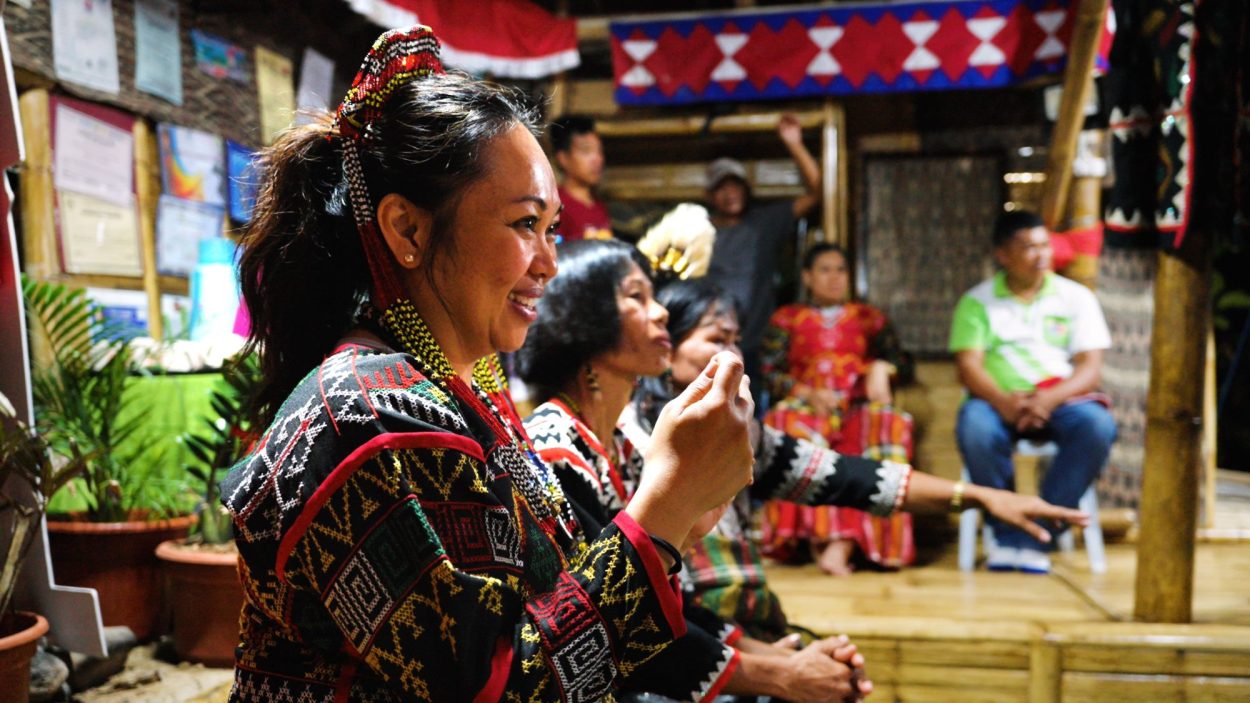
Alma Manabat Parker is the subject of a new 24-minute documentary titled “Bridging Our Stories.” The short film follows Parker’s 2024 grant-funded journey across the Philippines to study dance with Indigenous groups. She then returns to Ketchikan to pass on what she learned to the next generation.
Born in the Philippines, Parker moved to Ketchikan when she was eight months old. She’s the founder of the city’s Filipino folk music and dance performance group, Magsayawan Ketchikan, where she teaches traditional dance in shared gymnasiums and empty parking lots.
And Parker says that’s important after Ketchikan’s most recent Filipino Community Center closed about a decade ago. She said the center was more than just a physical space – it was an institution where Filipinos could connect, speak in their own dialects, and dance.
She said without the space, some Filipinos in Ketchikan feel invisible.
“It saddens me to see kids not having that opportunity and losing that because of the loss of teachers and elders who have either passed on or who are unable to teach at the moment,” Parker said. “So taking on this opportunity just seemed like a natural fit for me, as I’m involved with other dance aspects of Ketchikan.”
But Parker wanted to ensure that what she was teaching was culturally relevant. She hadn’t visited the Philippines in over 30 years and said the trip helped her to bridge the gap between her roots and Ketchikan’s disappearing Filipino culture.
“I think that is also an underlying theme of this film, of “Bridging Our Stories,” because it bridged us together, and now here we are elaborating and extending that bridge,” Parker said.
She said the country of more than 7,000 islands is diverse, with several languages and dialects. So, during her trip, Parker traveled to three distinct regions to learn dance from different cultural groups.
And during Parker’s travels, she found that a majority of the dances the Ketchikan Filipino community had been teaching for generations were colonial-era performances shaped by Spanish influence. Parker said some of the dances and cultural practices parallel those of Alaska Native groups she grew up alongside.
“That’s what I found so compelling to connect with was how a tropical island of the Philippines is so much like the southeastern Alaska, of Ketchikan, that I grew up in,” Parker said.
The idea for the film came about in 2023 when director Rafael Bitanga came to Ketchikan to document Parker’s work with the local Filipino dance group, after she won a grant from the Alaska State Council on the Arts to enhance the organization. Bitanga, who is of Filipino descent and grew up in Alaska, soon noticed that Parker embodies the tension of keeping Ketchikan’s Filipino culture alive. He said the film uplifts the stories of Filipinos in Alaska, which he believes is underdocumented and may disappear if nobody tells them.
“I guess it’s landing with a lot of people,” Bitanga said. “And that’s, I think, what matters most, is that it’s creating a legacy that Filipinos in Ketchikan and Filipinos across Alaska do matter, and people want to hear our voices as well.”
The film has so far won two national awards and has been screened in several cities along the West Coast. It’ll soon be making its rounds on the East Coast, as well. It was also Bitanga’s first documentary film.
Parker said “Bridging Our Stories” reflects the struggle of immigrants figuring out their cultural identity.
“I hope it resonates with our younger generation of them really finding the time to plant that seed, make the time to learn our language, make the time to understand what our dances mean and why it’s important to celebrate and uplift our cultural presence,” Parker said.
The film will premiere in Ketchikan and throughout Alaska this fall.
Bitanga is now working on another documentary about the impacts of overcrowded classrooms in Zambia.
Correction: Ketchikan’s most recent Filipino Community Center closed about a decade ago, not 40 years ago.
Hunter Morrison is a Report for America corps member for KRBD. Your donation to match our RFA grant helps keep him writing stories like this one. Please consider making a tax-deductible contribution.