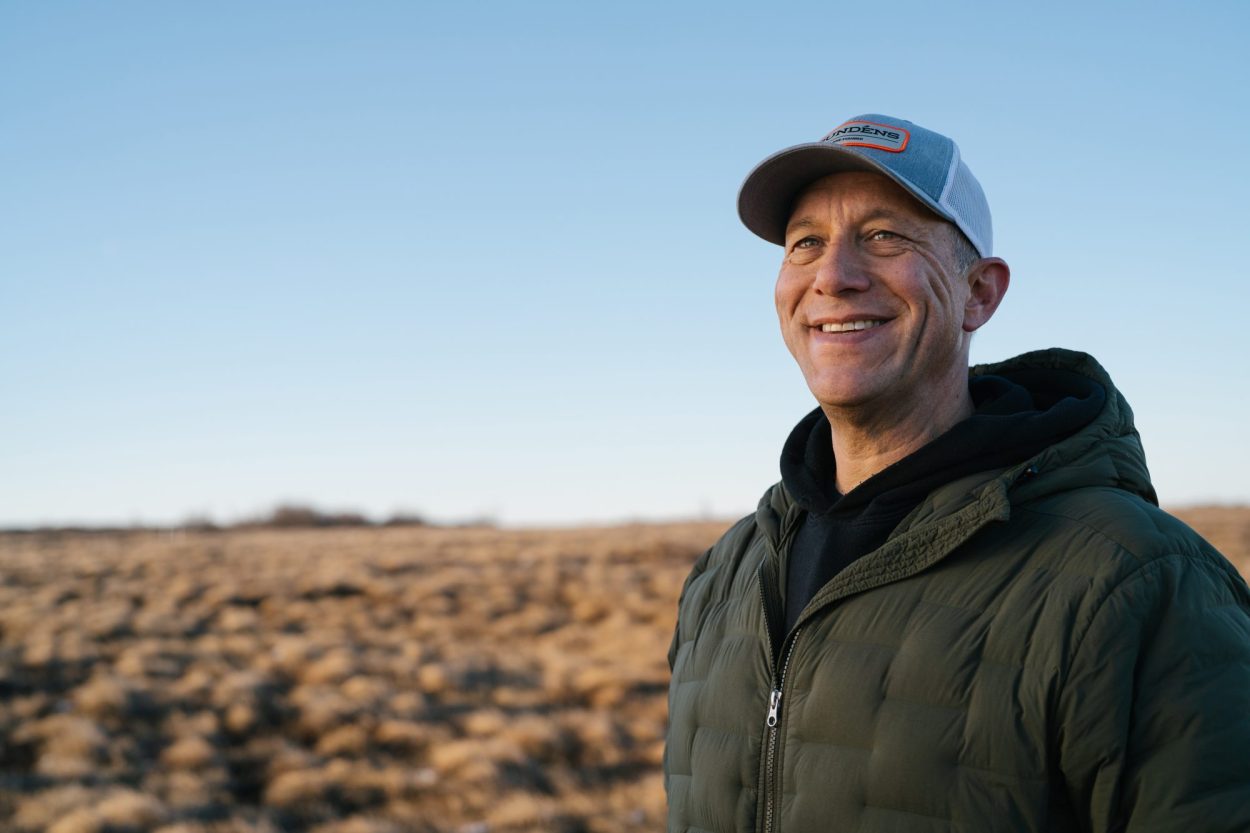
Bill Hill, a Bristol Bay fisherman and retired school teacher, is one of the 15 candidates running for Alaska’s seat in the House of Representatives.
Hill, an Independent, campaigned in several Southeast communities this week. KRBD spoke with him about the state’s rising costs of living, representation of rural Alaska, and what he thinks it will take to unseat incumbent Rep. Nick Begich III.
Sydney Dauphinais: Can you start off by introducing yourself?
Bill Hill: I’m a lifelong Alaskan Dena’ina Athabaskan out of Naknek in Bristol Bay, home of the greatest sockeye salmon run in the world. I’ve spent my entire life in Alaska. I grew up in Kokhanok, a little village of 100 people and had a real bush upbringing without TV or radio or telephone, not even electricity for a good part of the time, doing things like chopping wood, packing water, running dog teams. But I’ve spent most of my life in Naknek. That’s been kind of my home base for most of my life. I have lived in Fairbanks, Anchorage, and Juneau over the course of my life, as well.
A big part of my life has been fishing, both subsistence fishing and commercial fishing. I started commercial fishing at the age of eight, and I still do it to this day. I raised my kids on the boat. They learned how to work hard, work in Mother Nature, and they’re really successful people, I think in part because of their commercial fishing experience. I’ve also been a construction worker in the state, everything from laying sewer lines to building houses. Helping build the infrastructure for your community is an important job, and I really enjoyed that. But I joined the family profession, which is education, and I spent 25 years doing that as a teacher, principal, and superintendent. I retired from that a couple of years ago.
My last form of employment is I’m a small business owner with my wife, Diane. We build commercial textile products for the fishing industry in Naknek, and that’s been going for about 12 years. It’s been very successful because Diane can make things happen. Most importantly, father of four, grandfather of seven, and my concern about a place for my kids to work hard and build a life here in Alaska, and my concern about where our nation is headed have prompted me to jump into the race for Congress, and so I’m working to defeat Nick Begich.
Dauphinais: So, you have experience in education and as a fisherman. Those are both pretty big areas of interest for the state. Does that have any influence on your priorities?
Hill: Well, I think priorities around education and fishing are big priorities for the state of Alaska, and many people in the state of Alaska, so, yes, they would influence my priorities, because I think it reflects what Alaska is about.
Dauphinais: Would you say those are your top priorities? Can you speak to that a little bit?
Hill: I think the top priorities that I have aligned with what I’m hearing from a lot of Alaskans, and the cost of living is top of mind for everybody, especially these past few months. We need people in Congress who are going to work to drive down the cost of living. We’ve seen dramatic increases to health care recently, the cost of food, the cost of fuel, especially most recently in my community, we had $6.70 gasoline. Our spring fuel barge showed up and it immediately jumped to about $9 a gallon, and that’s pretty light for bush Alaska –some communities this fall are expected to pay $15 to $20 a gallon for heating fuel. Then you look at the failure to pass the [Affordable Care Act] tax credits, and the families that are affected here in Alaska, on average, are paying over $900 more a month for their health care. I don’t know about you, but my family couldn’t support an increase like that. So we need people in Congress who are going to be focused on driving down costs, finding ways to reduce the cost of health care, and reducing the cost of fuels. Let’s get rid of willy-nilly tariffs that are essentially attacks on the American people, and let’s not get into wars that are going to drive the costs up for Americans. Let’s spend that money here at home.
The other thing that is going to be a focus of my time in Congress is to fight corruption. Alaskans are sick and tired of congressmen trading stocks while they’re supposed to be serving the best interest of the Alaskan people. I’m for a complete ban on stock trading. I’m also wanting to get into the work of getting the big money out of our election systems. I’m proud to be endorsed by End Citizens United, because we don’t have as big a voice as individual Alaskans and Americans in our government, and we need to get the big money and the dark money out of our election systems. Finally, I want to protect the Alaska way of life. I worry about a government that may start encroaching on our rights here in Alaska, and I want to make sure we keep government out of our business, out of our doctors’ rooms, out of our access to the lands, and frankly, for me, as a subsistence hunter, I need to maintain a right to own a firearm, and that’s really important to me.
So, three things: let’s reduce the cost of living for Alaskans, let’s fight corruption, and let’s protect the Alaska way of life.
Dauphinais: Do you feel like it is important or valuable to have people in office that have lived in these rural areas?
Hill: I absolutely do, and I think it’s a missing component of what we’ve seen a lot in Congress. I mean, if you look at Congress as a whole, more than half of them are multi-millionaires. If you look at Congress as a whole, it’s made up of attorneys, high finance people, and lifelong politicians, career politicians. I don’t necessarily think that those people speak for Alaska as a whole. And then bush Alaska has been left out of the conversation a lot, even though a lot of our resources in this state come from bush Alaska, they’ve been left out of the conversation. So, I think it’s important, but more broadly from my perspective, I feel like I can represent the broad swath of Alaskans, both rural and urban. I’ve had experience in my life learning from all communities and walking a lot of different paths in terms of employment, so I think I can speak for a lot of Alaskans.
Dauphinais: Why did you decide to run as an Independent?
Hill: I’ve been a lifelong Independent, and every election cycle has brought me a new slate of candidates and policies to consider. I’ve always voted based on what I thought was right for myself, my family, my community, and my state, and I was surprised to learn, actually, when I started running, that 60% of Alaskans do not align themselves with a political party, or at least a major political party, and I think it’s really sort of an Alaskan ethos. We don’t fit into that nice neat little political box that people want us to fit into. So yeah, I’ve been a lifelong Alaskan, and that’s why I’m just running to be myself.
Dauphinais: Can you tell me a little bit about how you might differ from any of the other candidates in this race?
Hill: Yes, definitely. I think I differ from the other candidates in a lot of respects. First, I have experience in both bush Alaska and urban Alaska. I am an Alaska Native. I have spent 15 years on my village corporation board, the last 10 as the president. I have experience in Alaska’s education system. I have been a small business owner in Alaska, I’ve been a commercial fisherman, and I’ve been a construction worker. In addition, we’re the campaign that’s an independent campaign that can really represent a whole lot of Alaskans who do not identify with a political party, and we’re the campaign that’s the only campaign that’s backed by organized labor. We have the endorsements of five unions: the [Alaska Professional Fire Fighters], the National Education Association, the Plumbers and Steamfitters, the Iron Workers, and the carpenters union have all endorsed our campaign. So we think that we can build a coalition that includes coastal fishing communities, bush communities, urban communities, the working people of Alaska, the Native peoples of Alaska, to build a coalition that can beat Nick Begich.
Dauphinais: As you’ve been campaigning, what would you say have been the biggest concerns that you’ve been hearing from people?
Hill: Definitely cost of living, education, and corruption. Those are things that I hear repeatedly. The failure to fund essential components of Alaska’s infrastructure, your radio station being one of them. You know, radio plays a really important part in bush Alaska. In my communities, KDLG puts out the fishing information that we need every day, gives us warnings about storms, it’s really important. But it’s not just public radio. It’s a lot of the systems that support what happens in Alaska. Like the National Oceanic and Atmospheric Administration, and some of the funding that they’ve lost.
I think people are concerned about the cost of living. They’re really worried about the services that our government should be providing, and they really want to change from somebody who’s disconnected with Alaska to somebody who’s really connected with Alaska, voting to increase the costs to Alaskans through health care or Medicaid or Medicare or clawing back renewable energy projects. All of those things impact Alaskans negatively, all the while our current representative is giving tax cuts to big corporations and billionaires. Alaskans want somebody who represents them and represents their concerns and their hopes.
Dauphinais: If elected, what do you foresee as being a big challenge?
Hill: There are a lot of challenges ahead. Number one, we need to beat Nick Begich, because we need to make sure that we have a Congress that retains its separate but equal status in our government. Number two, we need to return to the rule of law. We need to make sure that everybody who is a part of our government is abiding by the law, but more importantly, I think that our government has turned its face from the hardworking people of America, and especially Alaska. You know, we’re all hardworking people, some of the hardest working people on Earth. We’re proud of what we do, but we have a government that is no longer functioning for us. It’s functioning to serve special interests. We need a government that’s going to turn its sights back to allowing us to work hard and build really good lives and communities, and not to worry at the end of the month about not being able to pay our bills, or worry about one medical emergency bankrupting us. We want to work hard, we want to be proud of our work, and we want to build good lives. But right now, we’re not being able to do that, because the focus of our government is on billionaires and corporations.
Dauphinais: Anything else you’d like to add that you think listeners should know?
Hill: What I’d like to add is that I am somebody from the bush, and I’m traveling across the state to meet as many Alaskans as possible. If you can’t meet with me, I have a website where you can learn more about me, but I will be traveling across the state, and I will be reaching out to different communities to make sure that I can meet with you. If you have an opportunity to meet with me, I’d appreciate it, because I’ve learned a lot through our travels, and I would really like to represent all Alaskans and their concerns, and that’s the work I want to do, because if you’re going to represent Alaskans, you got to be out meeting Alaskans and talking to them. So please come say hi, and let me know what you think.