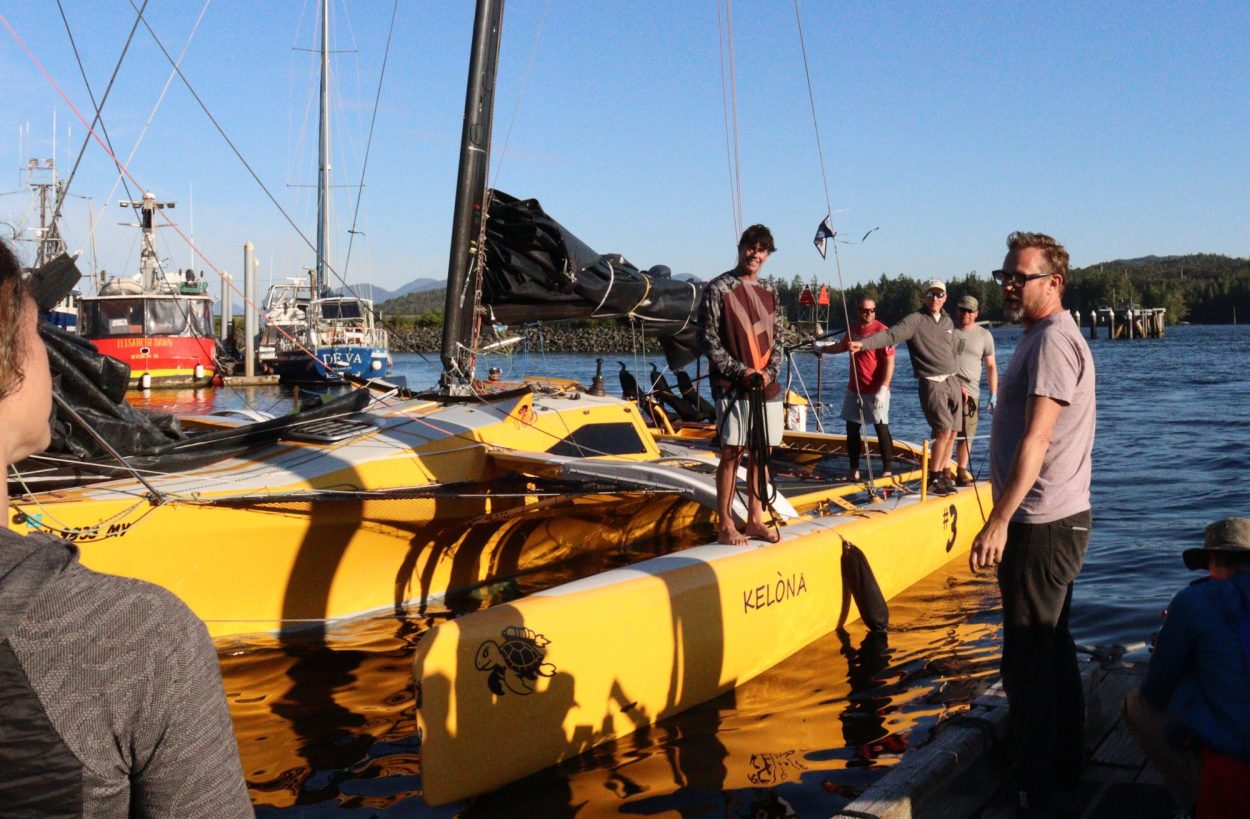
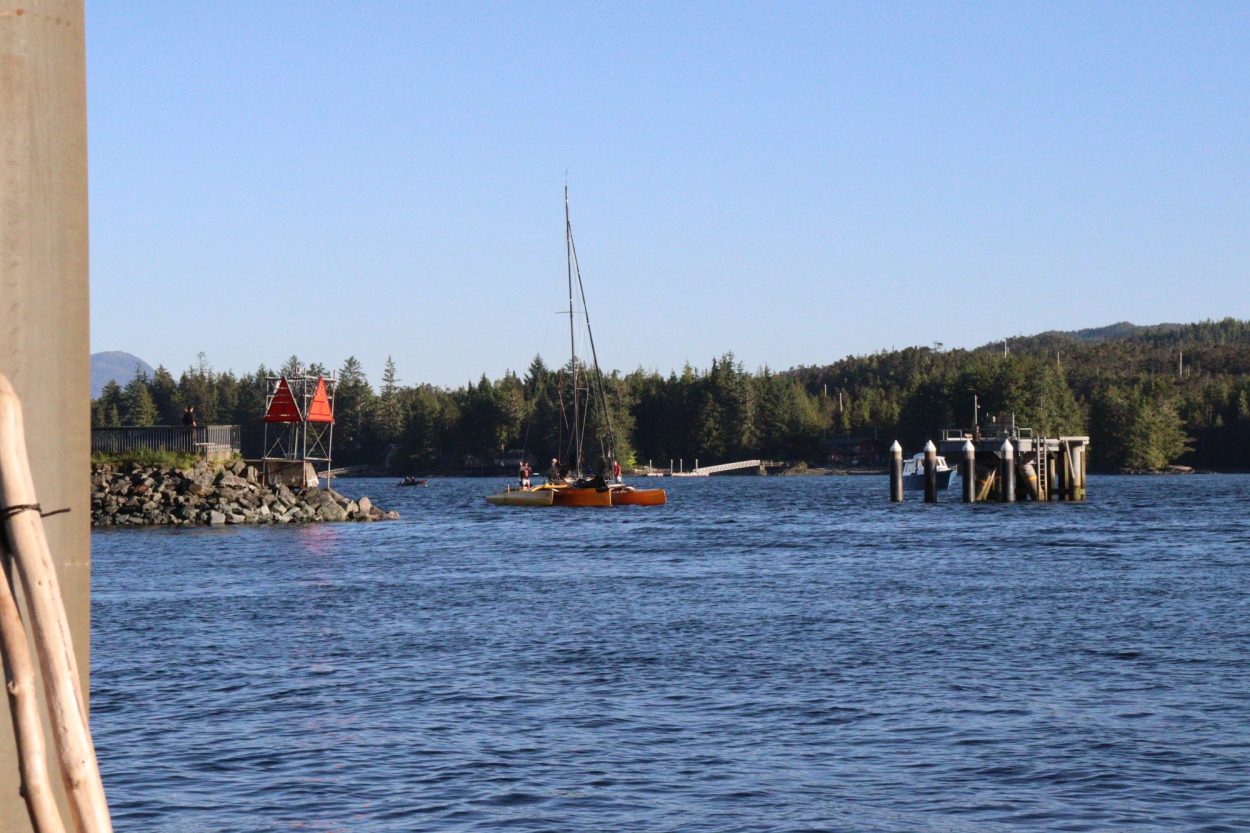
It was a rare sunny evening on Monday at the Thomas Basin boat harbor, in the heart of downtown Ketchikan. A few dozen spectators cheered on the Northbound Nutters, a team of four men aboard a yellow, multihull sailboat that approached the dock.
Nigel Oswald stepped off the vessel and rang a bell – marking his team’s completion of the journey. A bystander handed him a well-deserved beer.
Oswald said his Race to Alaska experience started long before hitting the water.
“It was a huge amount of boat work, prep, and planning, and logistics,” he said. “And to know that we hadn’t screwed it up, and everything worked, and we got here – it was just a huge emotional relief, more than winning or not winning.”
The route from Port Townsend, Washington to Ketchikan traces the Inside Passage – a network of waterways weaving through the islands of the Pacific Northwest coast. The race follows the steps of traders, gold rush steamers and Native people, who have paddled the passage for time immemorial.
It can be an unpredictable and rough trip – with rain, wind, and heavy currents – all with no motor power. There are also no support boats following along. If people need to be rescued, it can take hours or days.
“Because it’s so unpredictable you just don’t know where you’re going to be next and how long it’s going to take to get there,” said Jeanne Goussev with Northwest Maritime, a nonprofit devoted to educating and engaging people with nautical culture. The nonprofit sponsors the race. Goussev is also a former race champion.
“It’s a lot of reading the weather in motion, and making calls as you’re going through the course,” Goussev said.
The Race to Alaska began a little over a decade ago, when its founder was figuring out a way to get more people to explore the Inside Passage. And as it turns out, if you give them a reason to go, they’ll go. Race Boss Jesse Wiegel said traveling the waterway without an engine brings a whole other level of commitment to the race.
The first place winners get a $10,000 cash prize. Second place gets a set of steak knives.
“Those prizes have not changed since the start, because it turns out that’s enough to convince people that they should go do this dumb thing,” Wiegel said.
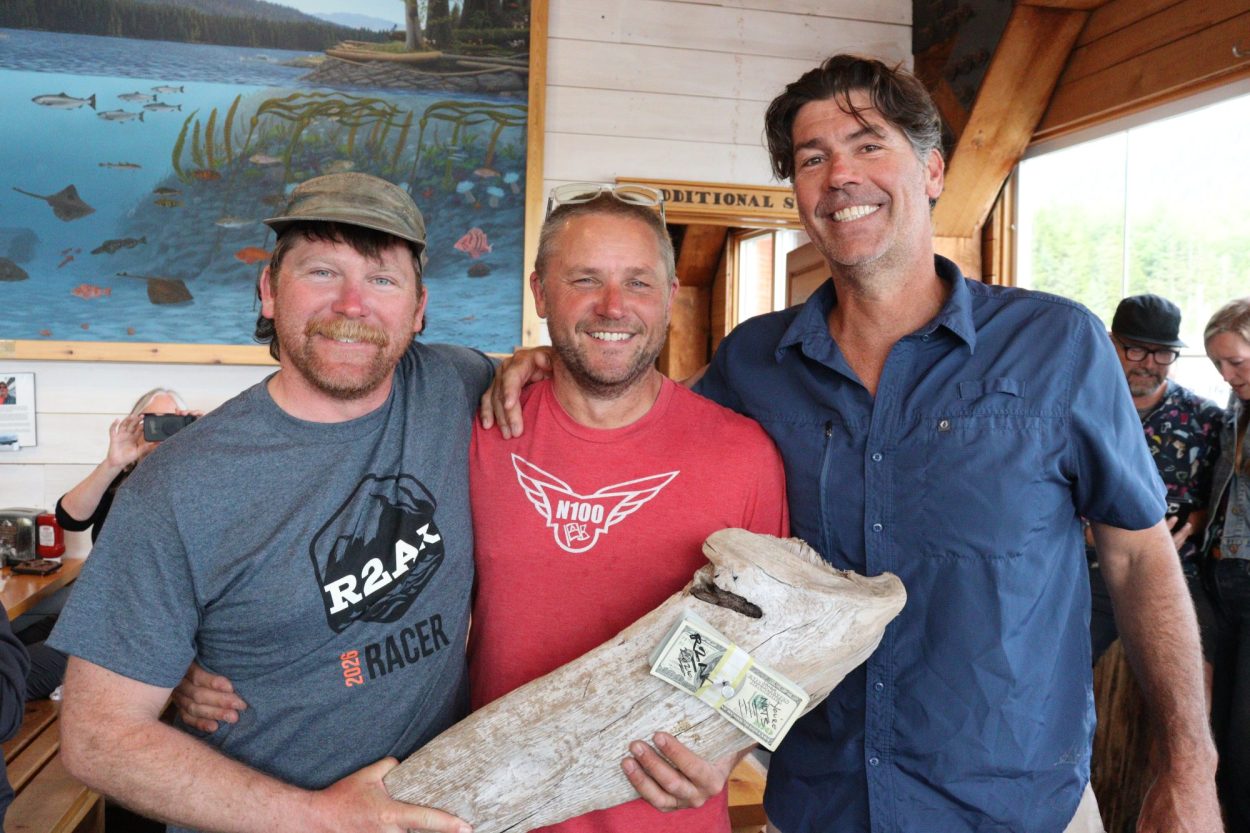
The race is held every two years and begins with a 40-mile jaunt to Victoria, British Columbia. Teams that make it across in 36 hours or less can continue on to Ketchikan, where they could encounter any number of hazards. Past teams have run into rocks, beached themselves or even capsized.
“So you really have to be able to be prepared for whatever happens,” Goussev said. “Whether that’s hitting a log, being dismasted, having an injury on board – you really have to prepare yourself to be ready to handle any emergency for some period of time.”
More than 300 teams have participated over the years. Interested participants must apply to compete before hitting the water. About 60 teams or individuals are competing in this year’s race, which is the most ever. And not all of them are using sailboats. Some are faring with rowboats or paddleboards.
One of the only rules of the race is that teams cannot prearrange help along the course route. Anything not planned in advance is okay. Goussev said participants can only use what is brought on board their vessel.
“It is a bit unique to not have the tools staged along the way, but it’s also part of the beauty of the race,” Goussev said. “The fact that it’s out in nature and that you are in really remote, untouched, amazing, incredible, wild places.”
Race Boss Wiegel said the race isn’t always about winning, but rather the experience of being in nature and working with a team.
“I mean, the race exists because there’s too many rules in everything else,” Wiegel said. “The race exists because the world has just a lot of signposts that say ‘No, you can’t do that.’ That’s not what Race to Alaska is. Race to Alaska says ‘This is here, go do this thing.’”
Back at the Thomas Basin boat harbor, a sleep-deprived Oswald was enjoying his beverage and chatting with fans. He’s a veteran Race to Alaska participant, and said he and his winning team wanted to take on the challenge to see what they were made of.
Oswald didn’t make it to Ketchikan last go around. He’s proud his team this year was able to finish in a boat that was built for much shorter journeys.
“But huge sense of accomplishment getting that boat that isn’t designed for this kind of thing with these guys to here, just feels awesome,” Oswald said.
Despite some challenging conditions throughout the race, Oswald’s team, which had a former Race to Alaska champion on board, made it to Ketchikan in five days, eight hours and four minutes. He and his teammates plan to celebrate with pizza, beer, and much-needed sleep.
The remaining teams are expected to trickle in, or tap out, over the next few weeks.
Hunter Morrison is a Report for America corps member for KRBD. Your donation to match our RFA grant helps keep him writing stories like this one. Please consider making a tax-deductible contribution.