It’s the time of year where many people in Southeast Alaska are itching to spend time outdoors — and the sunny weather marks the busy season for the U.S. Forest Service.
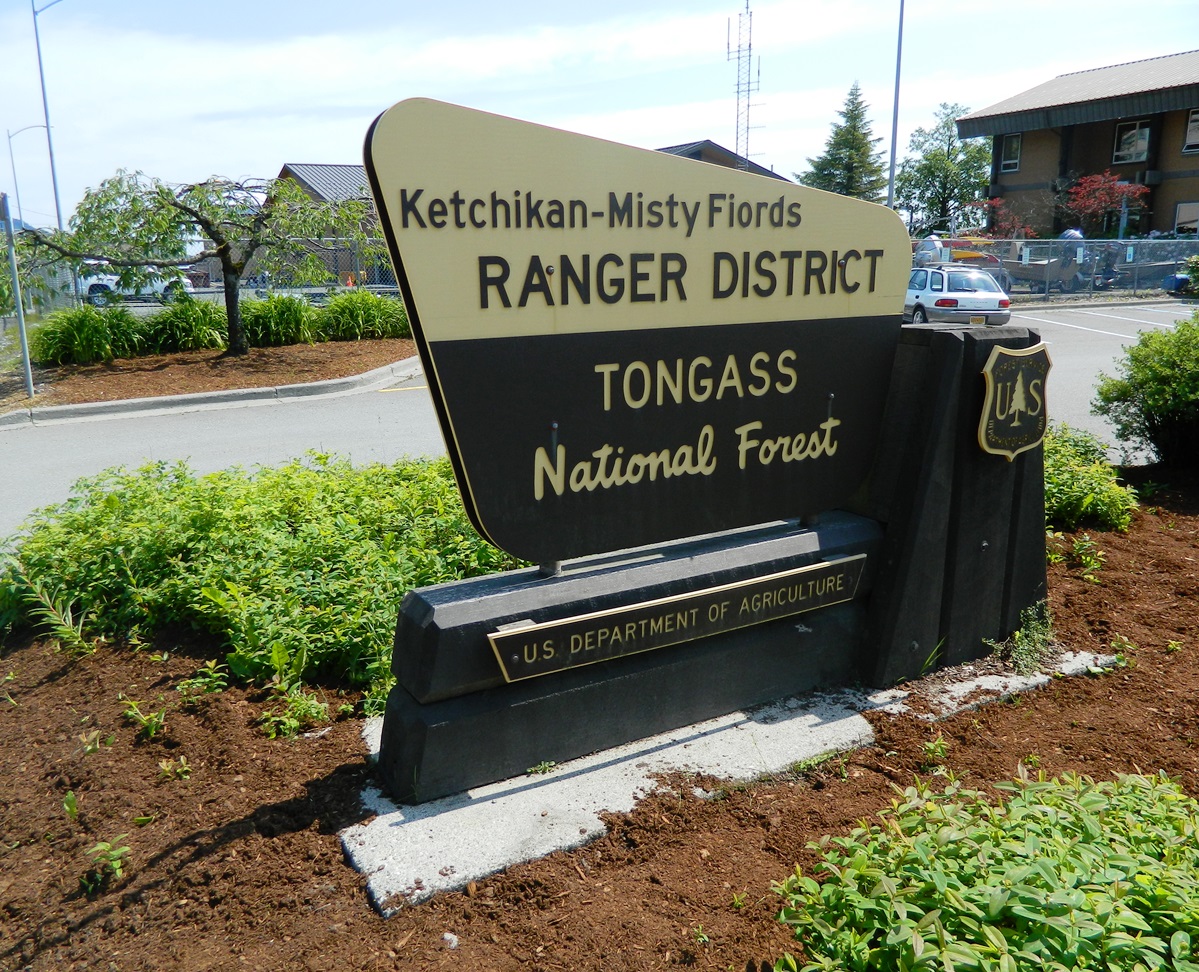
Last week, KRBD spoke with Cathy Tighe, the Ketchikan Misty Fjords District Ranger for the Tongass National Forest, about trail maintenance, new cabins, and planning for the rest of the summer.
Sydney Dauphinais: I want to start by asking about something we reported on just a couple weeks ago. There’s a new Forest Service cabin just outside of Ketchikan. Can you talk a little bit about that?
Cathy Tighe: Sure. We just built the S’igeidí Aas Hídi cabin, which means Beaver House. It was named by a local Tlingit elder. It is at Ward Lake in what used to be campsite one. So just as you pull into the campground, it sits there along the creek and that day use parking for Frog Pond. It is a two-story cabin, 20’ by 20’, and it is available for reservation on recreation.gov. Currently, it is booked out through September. There’s just a handful of dates in September, and then it starts to open up in October, November, and December a little bit more.
Dauphinais: Yeah, that is something that I think people have been really excited about. So I know as part of the South Revilla project, which is a proposed timber project just east of Ketchikan, it includes other features that you’ve said will help meet a multiple use mandate as an agency. That includes another cabin. Can you tell me a little bit about that project and where it’s at right now?
Tighe: Yeah, so that is the South Revillagigedo Timber Sale EIS. That’s an environmental impact statement. It’s located along both the Shelter Cove and Shoal Cove road systems. That project is intended to do multiple resources, as you mentioned, and take place over an approximately 15 year time frame. That includes not only proposed timber harvest of both old growth and young growth, but it also includes stream restoration, culvert replacement for fisheries enhancement, and a lot of recreation developments. And one of those would be another cabin, very similar to what’s at Ward Lake. It would be out at Saddle Lake, right along the main road system.
Dauphinais: So I know this is a big time of year for trail maintenance and improvement. Can you tell me a little bit about what that’s been looking like? What have you guys been working on?
Tighe: This summer, the Ketchikan district has been working on several of the local trails as well as a couple of the wilderness trails. We did a project in May with the American Hiking Society. It was a group of volunteers that came up to work on the first section of the Deer Mountain Trail with us. So they planned basically a working vacation and came up to work alongside of our crews and improved a little bit of the lower section of the trail, replacing some gravel and logs along the side to hold that gravel in place. Eventually, we are working towards getting all the way up to that first overlook initially, and then hopefully later on, doing some other work. But we’ve also been out doing a little bit of work on the Nooya and Punchbowl trails out in Misty Fjords Wilderness, and then we are in the middle of planning some work on Dude Mountain Trail. Our emphasis will be that top section that needs a lot of work in the subalpine and alpine, but we are also going to propose some work on the lower section, just in case some additional funds come in.
Dauphinais: So, what does that trail restoration look like? Is it kind of the same process for a lot of these trails?
Tighe: Yeah. So, a lot of the work is just replacing in kind or replacing gravel that has washed away, or adding new ditch relief where we’re noticing that water is either eroding or not crossing properly — and then for sure, like brushing alongside the trail to make it so you don’t feel closed in while you’re hiking it. So a lot of it has to do with that.
Dauphinais: With these trails, do people typically reach out to you saying that there is restoration or improvements needed, or what is that monitoring like?
Tighe: People are free to call our office and let us know because there are so many trails across the district that we can’t get to all of them right away. So sometimes we don’t even realize there’s a problem. Other times we do sort of outlook planning for future years, where we are trying to decide which trails need the most work. Some of that depends on how long it’s been since we’ve maintained it. If we’ve discovered issues, or just sort of a regular trying to visit all of them over a series of time.
Dauphinais: Are there projects or events that you are looking forward to that maybe haven’t started yet? I guess we’re still pretty early in the summer.
Tighe: We are still pretty early in the summer. In June, we did Kids Fishing Day at City Park, and we also did a National Trails Day event. And then in September, we actually are looking forward to hosting Public Lands Day. So we don’t have the date set yet, but very soon we’re going to be picking that. It’ll be mid to late September. We’re going to work on the roadside picnic sites out at Ward Lake, as we advertise that, we would love for volunteers to come out. That’s what that day is all about: contributing back to your public lands.
Dauphinais: Will that be advertised like on Facebook? How can people volunteer, and what’s the best way to get in touch?
Tighe: Yeah, so people can either reach out to our main office at 907-225-2148 or we probably will be posting once we have dates set for all of the public lands events across the Tongass. Those will get published on our Facebook site for the Tongass.
Dauphinais: Anything else you’d like to add?
Tighe: I am just excited to have this opportunity to talk about what we are working on, and if people have ideas, please reach out. We’re always open to volunteers, even if it’s just for a couple of hours, or if you want to participate in a longer-term project.