Prince of Wales Island has seen more cruise ship tourists than ever this year. It’s raised some concern over how to preserve the culture and infrastructure of the remote communities amid an increase in visitors.
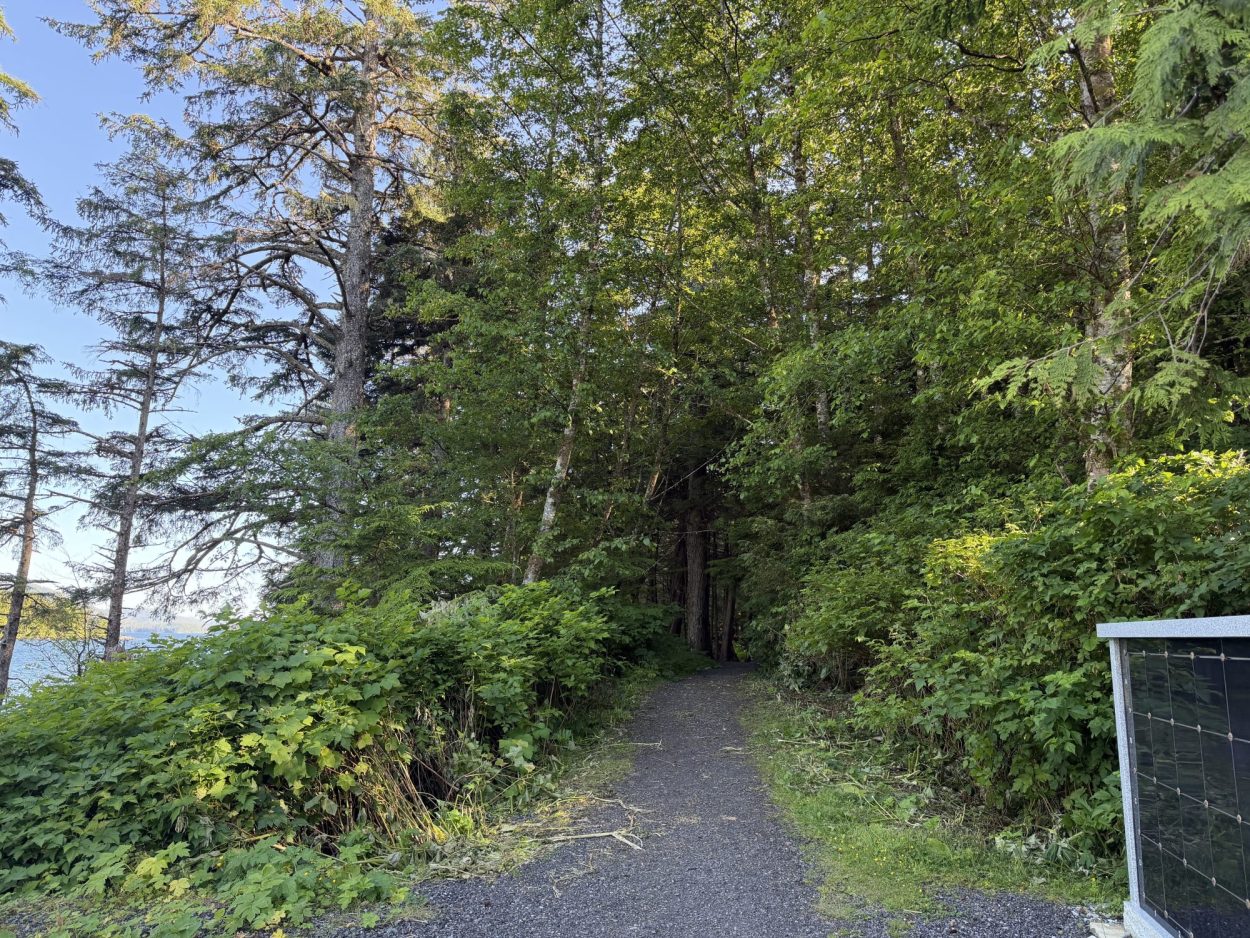
The Graveyard Trail, or the Cemetery trail, in Craig is just under a mile-long forested path skirting the coastline. It’s owned by the city and well-used by the community. Earlier this year, the city began granting commercial access permits to local tourism companies, authorizing them to conduct tours on the Graveyard Trail.
Cheryl Felko, a longtime Craig resident, walks the trail pretty much every day. She said she isn’t trying to keep it a secret — she can see why visitors would want to come there. She thinks the city putting together commercial access permits for the trail is a good thing.
“If you don’t put together an access permit, it’s a public trail and they could still come here,” she said. “I think it’s just looking to put some limits on the use, to allow local people to be able to have this trail for what it was intended, and to kind of keep this escalation that’s happening under control with the cruise ship industry.”
She and some other Craig residents have said with the rise in cruise ship tourism happening so quickly, they want to get ahead of it. The cruise ship dock is owned by Klawock’s for-profit Native corporation, Klawock-Heenya Corporation. Because it’s not owned by the city of Craig, that means the city can’t control whether or not visitors come to town. Commercial access to city-owned trails is one thing that can be controlled.
“This is just a personal feeling, but once the cruise ship industry pays you to use parts of your city, then you are somewhat beholden to them,” Felko said.
Early this year, Craig community members created a survey and sent it out to residents to gauge how people feel about tourism on Prince of Wales. One question asked how people feel about granting commercial access permits for city trails. A little over 60% of people responded that they don’t want the city to grant commercial access permits for use of the Cemetery Trail.
The city is working to set guidelines for trail usage. Some of the regulations include times of day tours can be held, and prohibiting tours when a funeral is going on at the trailhead, and limiting the size of tour groups.
Now, the city is figuring out how to enforce the regulations. In mid-June, the city was notified that there was an unauthorized tour on the Cemetery trail. The tour was held by a cruise ship tour operator, not the local tour operator that has an access permit.
According to a report from the city, the tour guide denied a local resident access to the trail. The resident was forced to walk alongside the trail on the coastline, and was injured in the process. The Craig city clerk immediately reached out to the companies that have commercial access to the trail, who then contacted their tour partners affiliated with the unauthorized tour. Klawock Island Ventures wasn’t aware of the tour, investigated the incident and formally acknowledged it. The operator with the vessel — who was associated with the unauthorized tour — agreed to pay what the excursion would have cost if it were authorized with a permit.
Craig City Council members are deciding how much of a penalty there needs to be for unauthorized use for it to function as a deterrent.
“They only got caught because someone got hurt,” council member Shauna Thomas said at the July 16 council meeting. “You know, how long has this been going on?”
One council member suggested implementing a regular $500 penalty for unauthorized tours. Another council member argued that isn’t enough.
The council agreed to give a letter to the access permit holders, letting the companies know their access to do tours on the trails is limited, and it doesn’t extend to other companies they might work with.
“We probably need to go back as soon as possible and have a conversation with Icy Straits or Klawock Port Authority, and tell them with real strong language, ‘This is not okay, and we only want to do business with you,’” said council member Joshua Bennett.
The city plans to send out a statement reinforcing that the trail will remain public, and commercial tours won’t interfere with public use in the future.
That includes public use for tourists, too. Mayor Kasey Smith says some visitors are getting use of the trail through their own exploration without guided tours. He said regulating tourist access in the community as a whole is an ongoing learning process.
“Year by year,” Smith said.
The access permits expire this year.