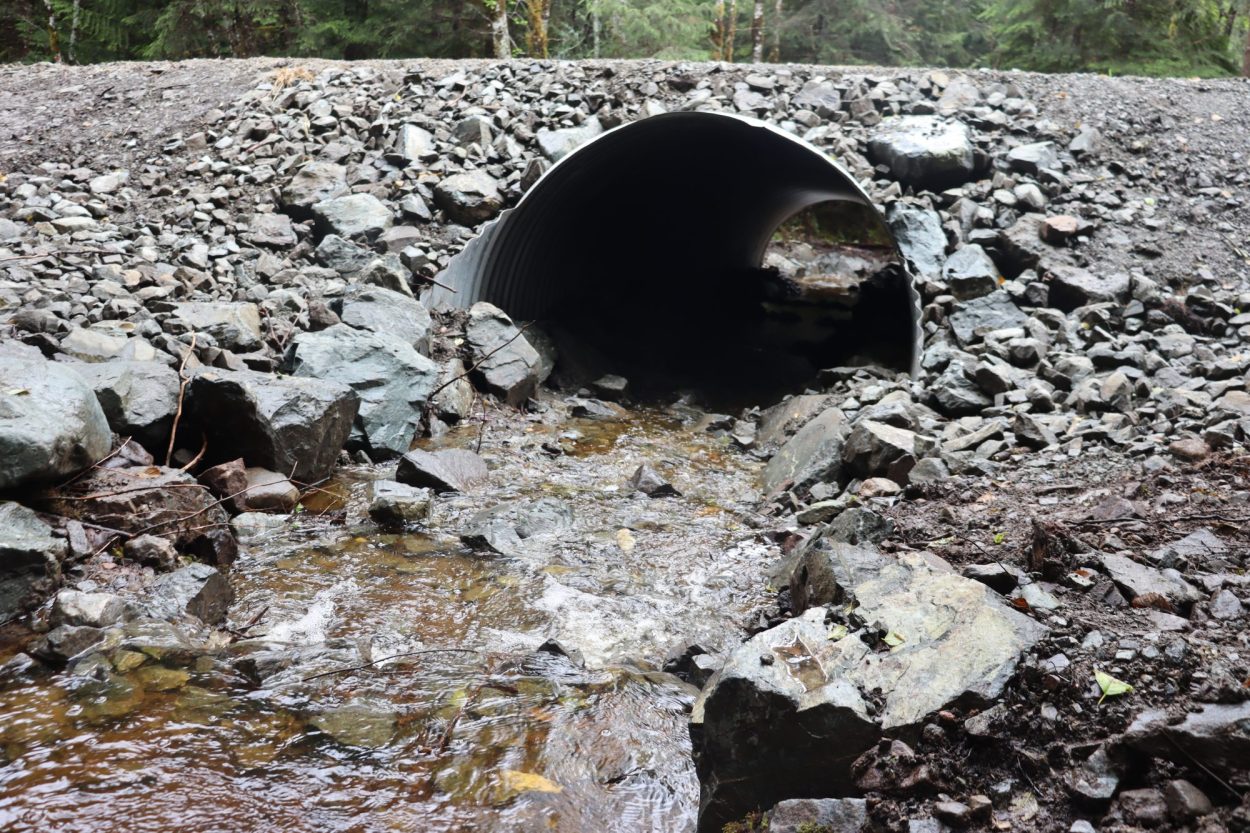
Miles down a gravel U.S. Forest Service road on the eastern side of Prince of Wales Island, a small stream trickled down from a dense, moss laden forest. Sophie Weaver trekked down to the streambank, marked by colorful wayfinders, and pointed to an old culvert underneath the road.
“If you come look at this pipe, you can see it’s way undersized,” Weaver said. “The water is pooling up.”
Weaver is the Southeast Alaska project manager for Trout Unlimited, a national organization that, among other things, aims to enhance fisheries. She said the pipe is less than half the size it should be to properly allow water to flow, and fish to pass, underneath the road. A new, larger culvert will be installed by the end of the summer.
It’s one of six the organization is replacing this year near Luck Lake, south of Coffman Cove. The lake and its tributaries are home to a variety of fish species, from coho and sockeye salmon, to steelhead, to Dolly Varden. The project will reconnect a mile of fish habitat.
“When you have all these fragmented culverts that are disconnecting really important spawning and rearing habitat upstream, those are reducing populations of fish,” said Marian Giannulis, Trout Unlimited’s Alaska Communications and Engagement Director. She said the former logging roads and culverts serve as transportation routes.
There are around 450 culverts and bridges on Prince of Wales’s Forest Service roads that block fish passage.
“And when you’re coming in and replacing them, allowing the full access to native habitat, upstream habitat, those are bolstering populations of salmon that are supporting the commercial fisheries, the sport fishing and tourism industry across Southeast Alaska, and also just subsistence fisheries,” Giannulis said. “And food security in rural Alaska, which is incredibly important.”
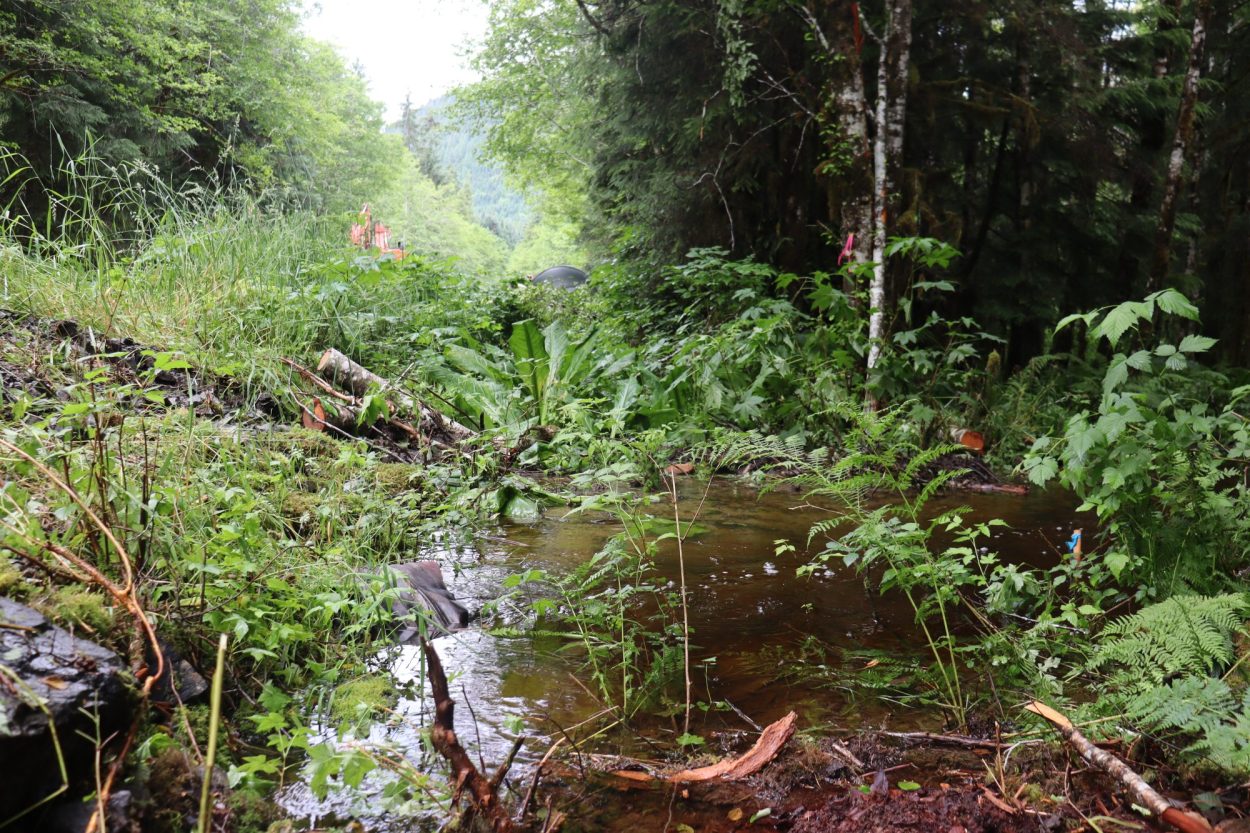
The organization partners with the Forest Service to determine which culverts need to be replaced. They prioritize projects with ecological and community benefits, like those that improve fisheries and transportation. In addition to enhancing fish passage, Giannulis said the culvert replacements near Luck Lake will better connect communities to homes, recreational activities and subsistence resources.
And that’s because small, failing culverts can lead to road washouts during high rain events. Most new ones are at least four times the size of the old ones being replaced and can accommodate larger water flows. They’re also designed to more closely resemble the stream’s natural habitat.
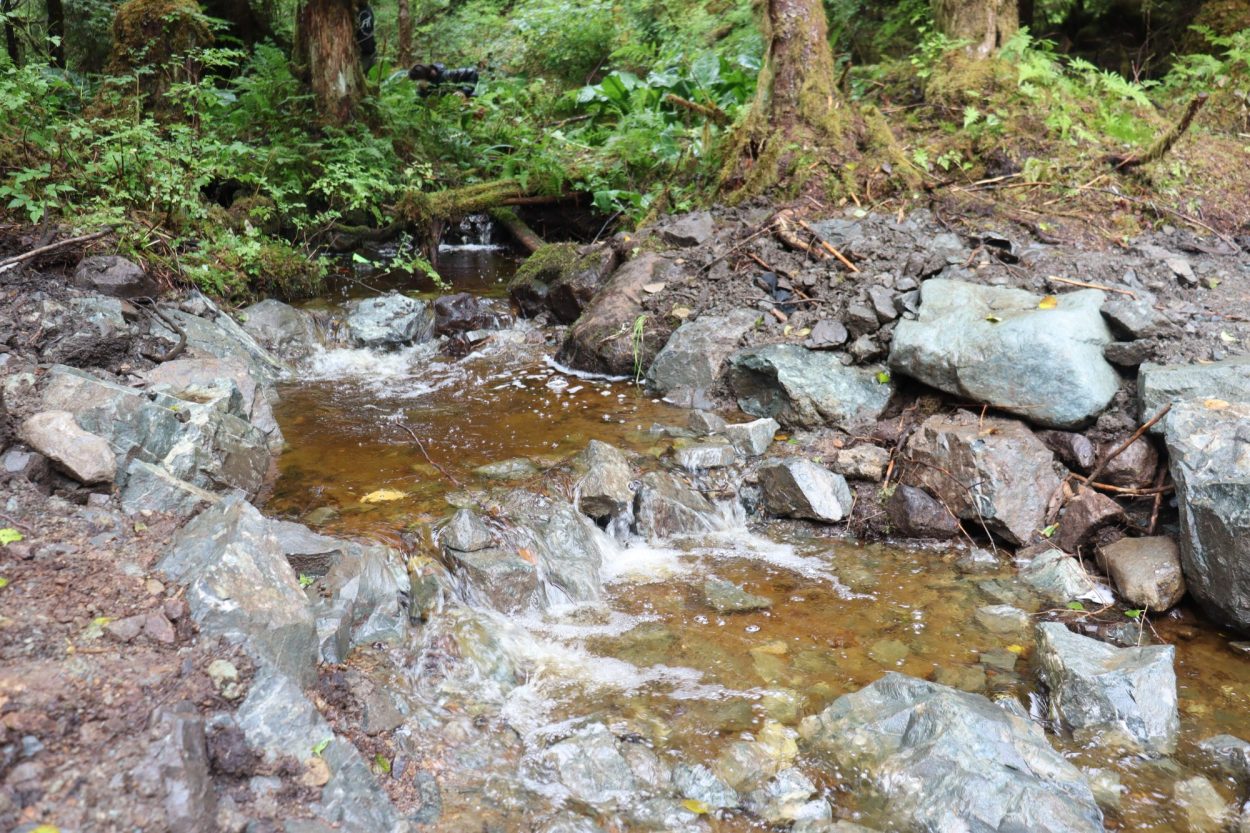
But it’s not just culverts the organization is replacing. They’re fixing up the streams to enhance water flow and fish movement. Giannulis said those will have natural steps and pools so migrating fish have a place to rest.
“So, maybe a larger fish could handle the exertion of passing through a space like this without resting areas. But when you’re talking about juvenile fish, it’s the difference from them surviving or not a lot of times,” Giannulis said.
And Giannulis said the benefits of restoration projects like these go beyond habitat and transportation. She said they also support the economy by bolstering the region’s fishing, recreation and tourism sectors. And they’re hiring local contractors to carry out the projects.
It’s also the organization’s first restoration effort on Prince of Wales Island in about two decades. Over the next few years, they plan to restore six more culverts on the western side of the island. The projects are funded by a mix of federal dollars from the Infrastructure Investment and Jobs Act and the Inflation Reduction Act, as well as state and private moneys.
Giannulis said at first glance, some of the restoration sites might not look like a place where fish could be found. But she said having full connectivity to rearing grounds is what sustains salmon populations in their freshwater habitats.
“The number of culverts across Prince of Wales and across the Tongass National Forest in total, and the broader Southeast Alaska in general – it’s cutting off access to hundreds and hundreds of miles of upstream habitat that salmon need to be able to survive and to thrive,” Giannulis said.
The Prince of Wales projects aren’t Trout Unlimited’s only restoration efforts underway in the region. They’re partnering with the Forest Service to design a new culvert in the Last Chance Campground, near Ketchikan. And they have ongoing projects near Wrangell, on Kuiu Island, and in the Chugach National Forest, in Southcentral Alaska.
Hunter Morrison is a Report for America corps member for KRBD. Your donation to match our RFA grant helps keep him writing stories like this one. Please consider making a tax-deductible contribution.