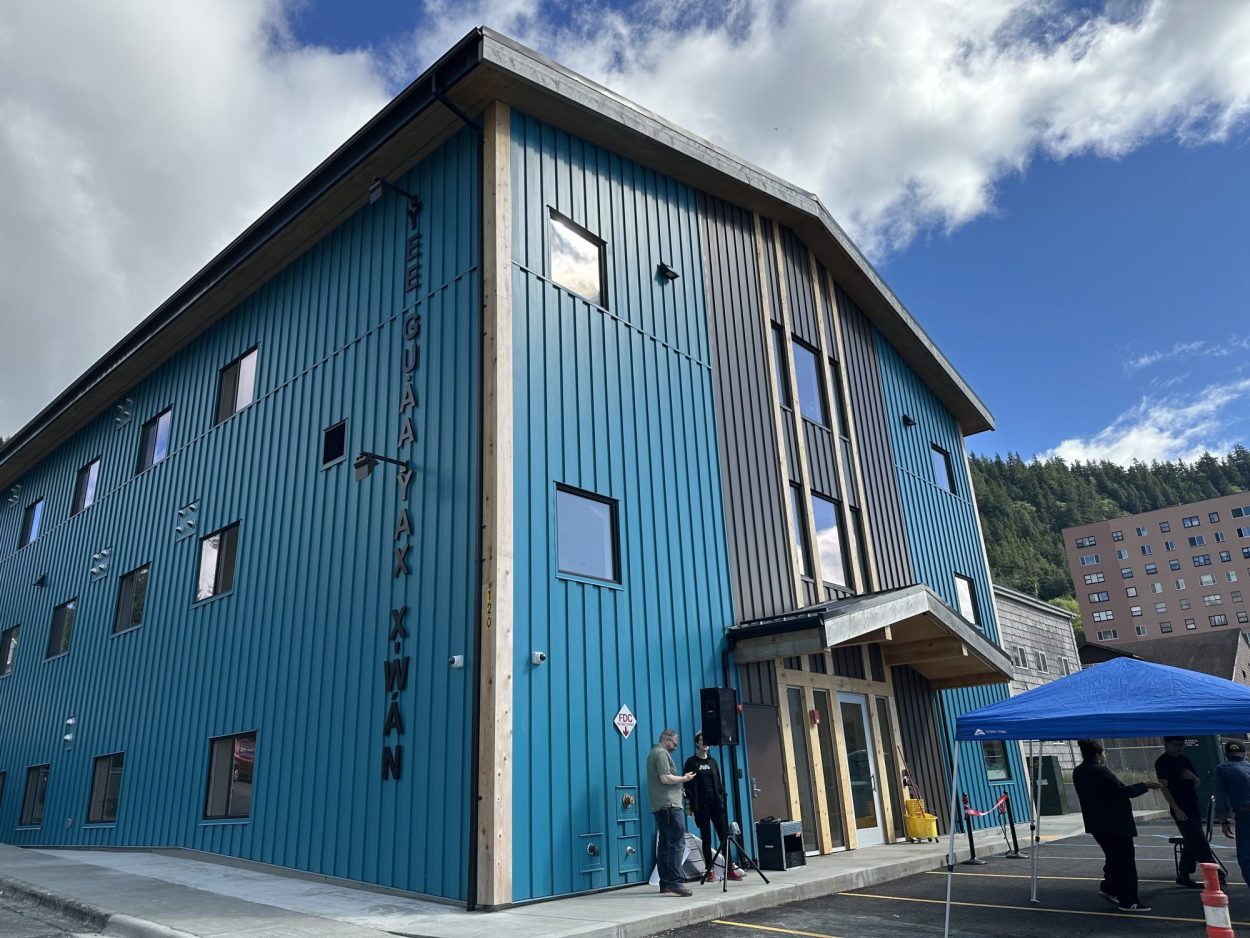
On a recent sunny morning, natural light flooded the housing complex’s first floor. To the right was a large community room, equipped with a kitchen and dotted with cedar art.
Melissa O’Bryan, the Ketchikan Indian Community’s housing project development coordinator, exited the large space and walked down the hall to a studio apartment.
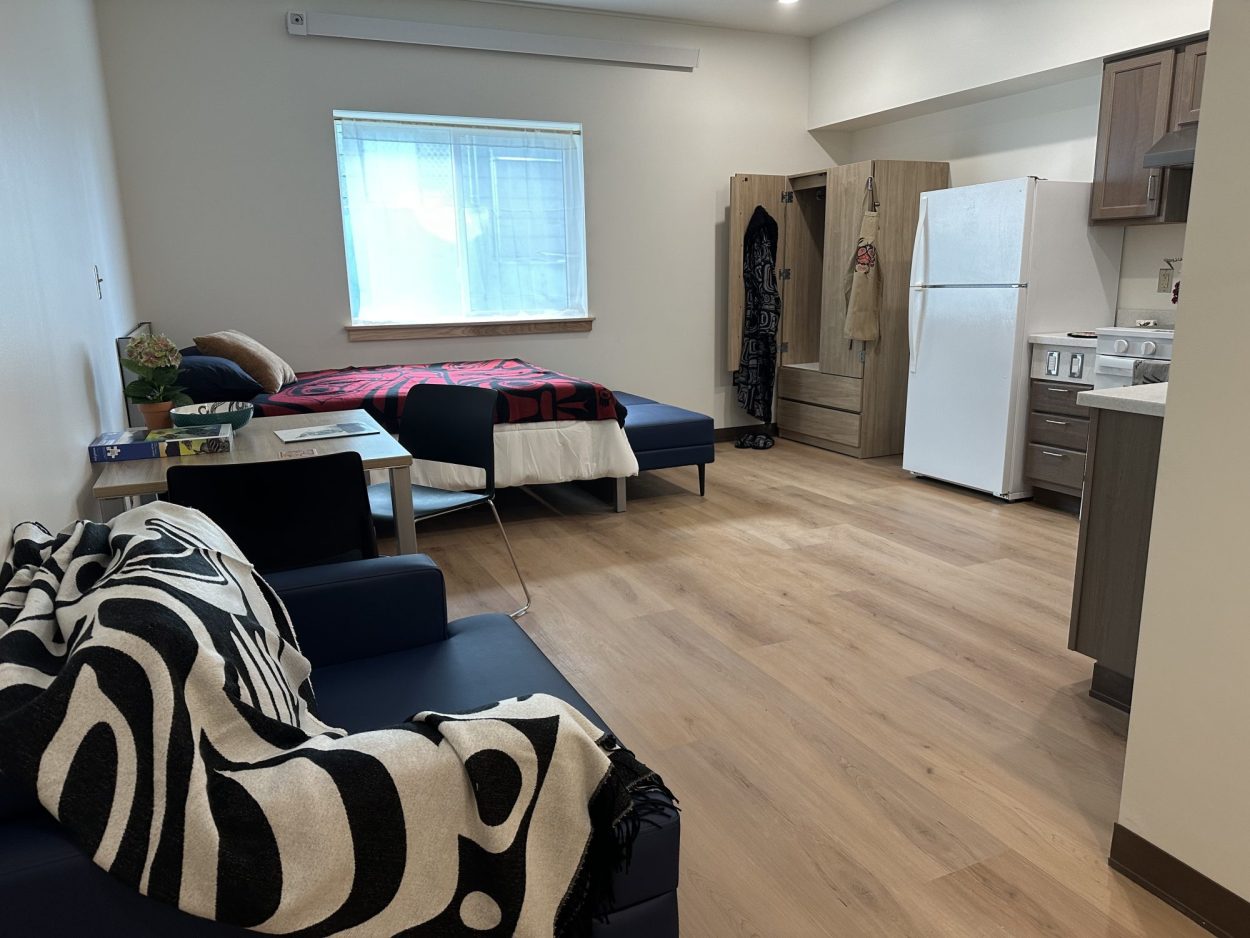
“Each unit comes furnished with a full-size bed, an armoire for their clothes, a table and two chairs,” she said. “We have TVs going up.”
It’s one of 28 living spaces inside the tribe’s new, three-story permanent supportive housing complex. Each single-occupancy apartment is also equipped with a full kitchen, bathroom, shower and other household staples.
And the housing complex isn’t just for tribal members. It will serve everyone 55 and older experiencing chronic homelessness. The tribe is working with other local groups to identify and bring in the community’s most vulnerable.
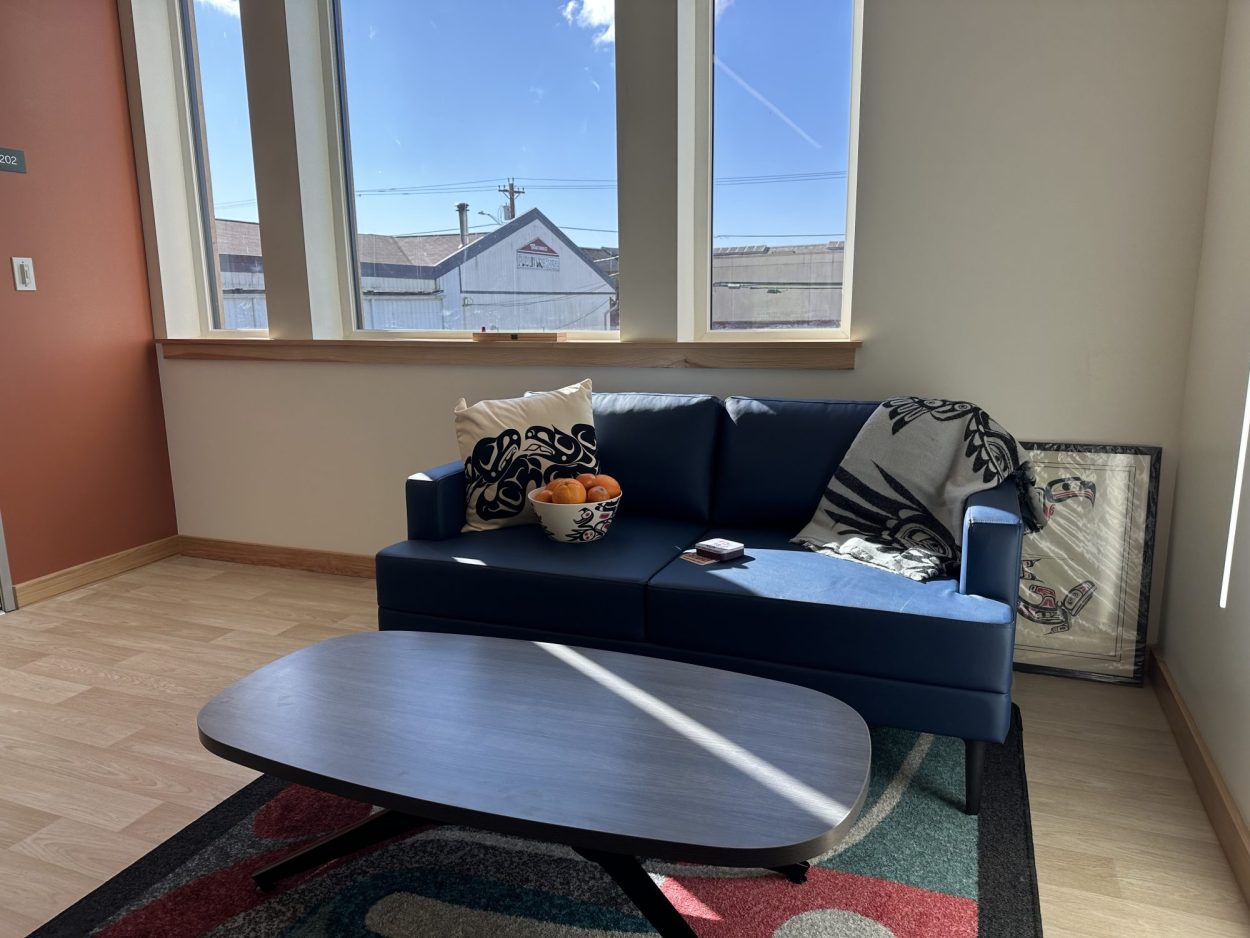
The facility, located across the street from the Plaza Mall, is not just designed to house people who are struggling. It’s laid out to feel welcoming, like a home. Throughout each apartment are flares of Native culture, from formline bed comforters to Indigenous art coloring books. There are also visiting areas, a community room with crafting supplies, a laundry room and more.
“We often find that our unhoused population are told to leave, told to go away, and we needed to have a beautiful place where we’re saying ‘We’re inviting you in, and we built this for you,” said Myrna Chaney, the tribe’s housing director. She said the new complex creates a sense of belonging in part because it’s reminiscent of Southeast Alaska.
“And that was thought of when we were building the space, that it wasn’t going to be something that was not beautiful,” Chaney said.
Homeless facilities in Ketchikan are few and far between. The city’s main shelter closed in 2024.
But the tribe’s been developing long-term housing solutions for the community’s unhoused for nearly five years. Tribal leaders wanted permanent supportive housing – a leasing model with in-house case management and living assistance. That includes help with day-to-day tasks and offering basic classes. It will be staffed 24/7.
Tenants will be under six-month leases, although they’ll be able to extend if needed. Rent will also be subsidized. O’Bryan said tenants will have the same rights and responsibilities as a renter.
“We want people to feel like this is home,” O’Bryan said. “This is welcoming, and it’s down to the staff that we put in the building. It’s down to the spaces that are designed. It’s down to the touches in the room.”
“It was designed with the intention of dignity and respect and hope,” O’Bryan added.
That frame of mind even goes down to the facility’s name – Yee gu.aa yax xˈwán. That’s a Lingit phrase meaning “be strong and have courage.” Tribal leaders say that name conveys the importance of having people behind you, supporting you and holding you up.
The tribe is working through the housing application process with half a dozen people who will likely move in by the end of the month. Chaney, the tribe’s housing director, said she’s excited to see what the community’s unhoused will be able to do now that they have a place to live.
“I’m looking forward to knowing that if they are outside, they just had a warm shower at home, and they had something warm to eat in their room, in their unit,” Chaney said. “But mostly, just looking forward to not seeing them over there across the street at the bus stop, but actually inside sleeping and feeling safe.”
The facility was funded with the help of federal, state and borough dollars.
And the housing complex isn’t the only tribal facility that will be on site. Nearby will be a four-story navigation center that will provide additional resources, like a year-round warming shelter and classes, for the community’s unhoused. That’s set to open next year.
Hunter Morrison is a Report for America corps member for KRBD. Your donation to match our RFA grant helps keep him writing stories like this one. Please consider making a tax-deductible contribution.