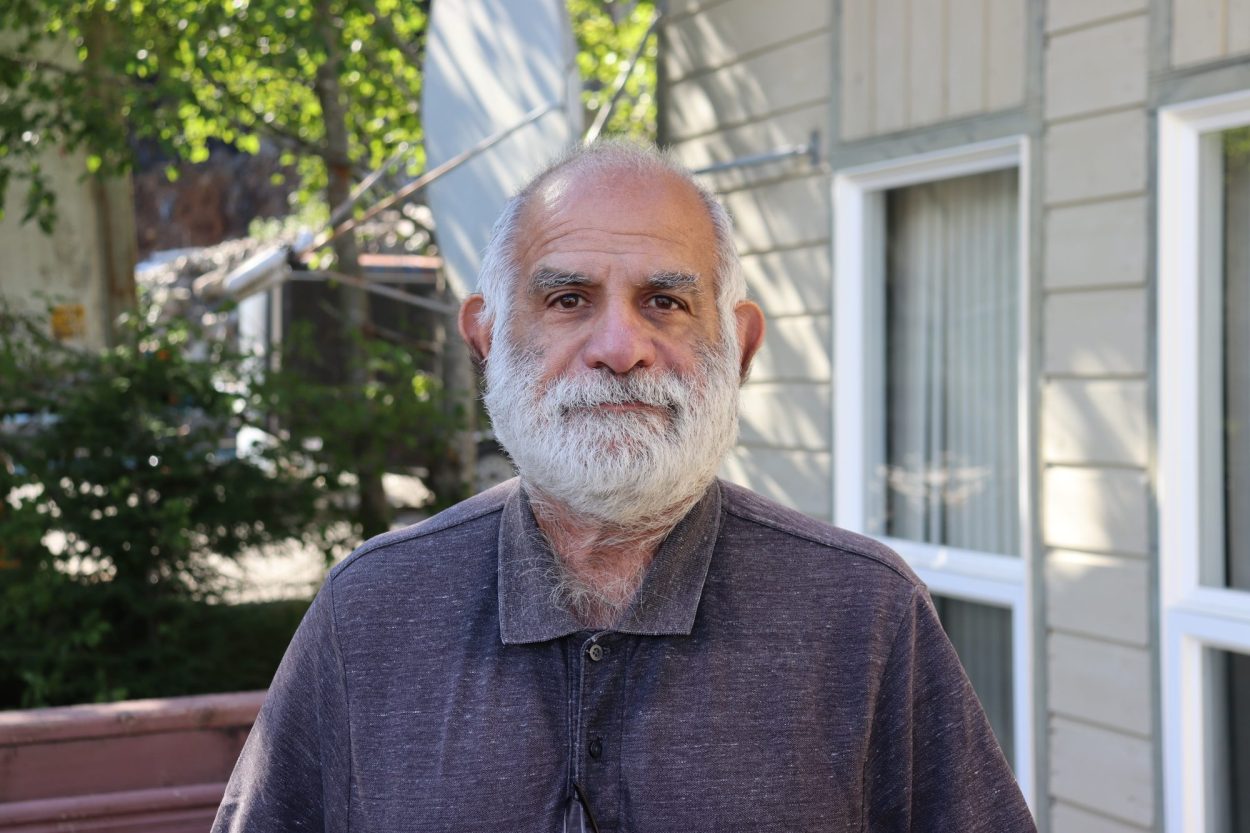
Jai Mahtani filed to run for a one-year seat on the Ketchikan City Council. There is one 1-year seat and three 3-year seats up for grabs in the upcoming municipal election.
The council serves as the city’s legislative power and is responsible for creating ordinances and approving the city budget. It’s made up of a mayor and seven council members.
KRBD’s Hunter Morrison spoke with candidate Jai Mahtani about his goals and priorities if elected to office.
Mahtani: I’m running because we started good work on the city council, started to make a difference while I was there for the last five years. I mean, look at what’s happening in our city. Our young people are leaving. Look at the correlation between the school district having closed two schools down. This is not happening because the budget was mismatched. We are losing the BSA [base student allocation] because we are losing the population, and that’s what’s happening, because the rates, the taxes, the property taxes, and the living costs are just out of hand. That is happening because our rates are going up for water, our rates are going up for electric. Our rates are going up for wastewater. I mean, we’ve tried to control the taxes. We’ve tried to control the property taxes, but there is a movement that needs to go up, too. And the blame is always, “Oh, we don’t have enough money for infrastructure.” If you listen to some past city council meetings and the comment made by the mayor, 70% of our revenue is dedicated to wages and benefits, and we’ve been fighting to keep that in balance. Our staff is a crackerjack staff. They deserve a good standard of living, but they have a good standard of living. If you are asking citizens, the laymen, to make a sacrifice, I think they need to make a little bit of a sacrifice too. We get this excuse: “If we don’t pay them, they’re going to move.” No, this city is so beautiful and so serene, and their driving distances are five, seven, ten, minutes. They are not going to move to Seattle or up north, where your driving distances are going to be hour, hour and a half. In big cities, you’re going to sit in traffic for a five-minute drive for an hour, hour and a half. No, our staff is well taken care of, but we need to take care of them as well as have a balance where we can fix our infrastructure. Every budget session that I’ve been on the council for the last five years, we’ve gone into reserves. That can’t happen. I mean, there has never been a balanced budget that is actually balanced. It’s a balanced budget that’s really not actual. That is just a deceiving balanced budget.
Morrison: Can you elaborate a little bit more on some of your priorities?
Mahtani: My priorities are bringing our spending under control. Let me give you an example. Every department during the budget session slips something in the budget, and that’s not realistic, and that money is never used. And then they find some other area to use the money for. They can always leave it in the reserves and come back to the council and ask for that. That’s not been happening. A lot of budget and financial items are slipped into the consent agenda, so the public won’t know what the situation is. An example: equipment. The fire department has bought three fire trucks. None of them have still been delivered, but we are paying for it. We are going to be floating a bond for wastewater and water treatment of $50 million. I have been one of a few council members that has controlled and questioned spending. We cannot spend, spend, spend, tax, tax, tax.
Morrison: Gotcha. What is something that you’re proud of doing on your time on the council?
Mahtani: What I’m proud of doing is controlling spending, controlling tax rates, controlling water, electric, [sewer] treatment rates.We lost, but we had a four-to-three vote. Three council members questioned the fact: “Why are we raising 8% over five years?” And then last year, the staff slipped in without [others] knowing for a certain item, 12%. But I’m there. Riley is there. Abby is there to question that. I mean, we cannot be spending without any ramifications. We got to stop. We are losing population, and I have championed that. I mean, most people call me a no vote. I’ve been a no vote on spending because the spending is not real.
Morrison: Outside of your time on the council, what other community engagement roles, leadership roles [make you equipped for this role?]
Mahtani: I was on this KRBD board for a long time. I was on the KVB [Ketchikan Visitors Bureau] board for a long time. I was on the chamber board for a long time, and then I support charities and all events that go on in the community.
Morrison: Aside from what you’ve mentioned, what is something that you’d like listeners to know about you?
Mahtani: Well, what listeners need to know about me: I’m consistent. I’m transparent. I’ve been in business about 50 years, 30 in Ketchikan. I got fined for a mismarked piece. It got blown out of proportion. I accepted responsibility. My biggest mistake was saying my product was from Alaska when it was not, and the piece was manufactured and not natural because that came from the vendor. But I should have been diligent, and I should have been the one to have picked up on that. I didn’t. Now I’m starting to be diligent. I have made my peace with it, and not only that. If you Google me or Google my business, except for petty complaints, there has never been a complaint that I’ve sold something that is not correct.
Hunter Morrison is a Report for America corps member for KRBD. Your donation to match our RFA grant helps keep him writing stories like this one. Please consider making a tax-deductible contribution.