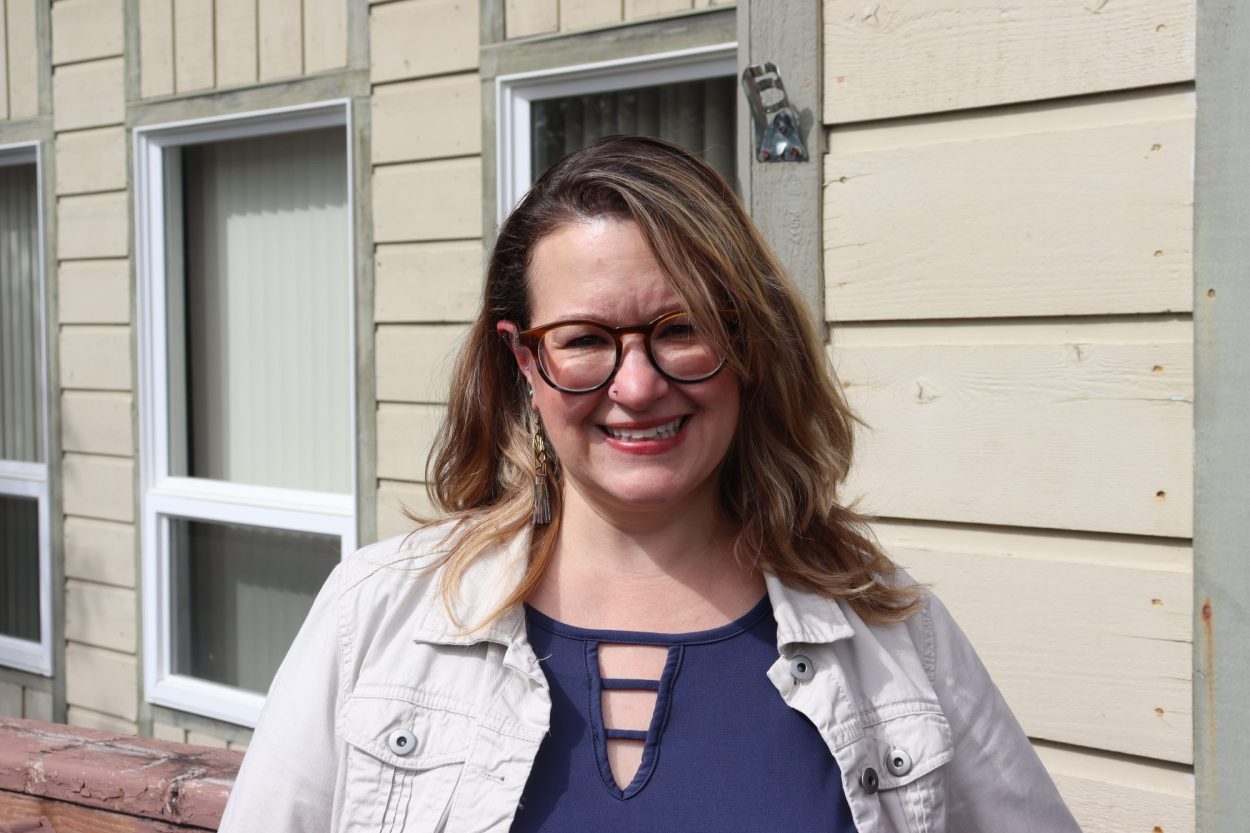
Name: Vicki OBrien
Age: 50
Occupation: Chief of Learning and Development, Division of Public Assistance, Department of Health, State of Alaska
Where are you from? How long have you lived in Ketchikan?
Born in Lorain, Ohio and raised in rural Geauga County, Ohio. Went to college in Pennsylvania and came to Alaska in 1998, initially as a volunteer at KNOM radio in Nome. Moved to Ketchikan in 1999 and have been here since.
What is your community involvement, past and present?
I’ve played with several local music groups including Paddy’s Leather Breeches, Tears of Fancy, Ketchikan Community Concert Band and The Foghorn Five. I have been involved with the Wearable Art Show going back to 2006 and over the past several years have been both a contributing artist and a co-chair of the committee that organizes the event. I have been on the board of directors for KRBD on and off (though mostly on!) since 2016 with several years as the board president. I am currently the board vice president. I am also KRBD’s board representative on the CoastAlaska board. I am the chapter vice chair for the Southeast Chapter of the State of Alaska Supervisors Union, Local 4900, am a member of the Local’s executive board, and am a member of the Alaska Public Employees Association’s board. A new developing project I am working on is a community event called KetchiCon – an event similar to comic book, fantasy, sci-fi, gaming, and pop culture conventions held in larger communities. This will debut next spring. My husband and I have raised three children in Ketchikan. Two are Kayhi graduates and my youngest is a senior this year. I’ve been involved with their educational experiences and extracurricular activities throughout their school years.
Have you previously run for public office? When and what office?
This is my first foray into running for a public office.
Why are you running for school board?
My experiences as listed above have given me the knowledge and skills to contribute meaningfully to board discussions. I have been involved with difficult financial and personnel situations over the years including the removal of all public funding on both the state and federal levels from public media. I was the KRBD board president during Covid and in those tense first months I worked closely with the station manager to devise innovative ways to continue providing the necessary services the community relied upon as well as develop new ways to fundraise when our previous methods were not an option. I think the school board needs some out of the box thinking to get the district positioned on a trajectory of excellence. I have seen way too many people leave Ketchikan recently as a direct result of the issues with the school district. A metric of health of a community is the health of its school system and right now, by that metric, Ketchikan is not healthy. I would like to see that get turned around.
What are your top priorities if elected?
First and foremost is to do a deep dive on the budget and make sure we are going where we need to be. There will need to be some tough discussions but we need to ensure the district is providing the services that are statutorily required by law as a baseline. Then we need to find ways to bring in the “nice to haves;” those programs, enrichments and extra curriculars that make kids excited to come to school and ensure their success as they progress through their school years The prioritization of additional programs is where the most contentious conversations will happen and objective, realistic decisions will need to be made. I’d like to see a strengthening of alignment with district personnel and the borough assembly, ensuring transparency through the budget process. I have been pleased to see some good strides made in these areas and want to continue the momentum that has already begun. I’d also like to see more community engagement and partnerships to bring in the enrichment activities, and career and post secondary education opportunities that meet the needs of the students and the community. There has been some great work done in this area and I would like to support district staff to explore and expand even more.
The district has struggled in recent years to maintain a balanced budget. What do you think needs to change going forward, if anything?
The past year in particular has seen progress in this area and, especially with a new superintendent at the helm, I’d like to see this momentum continue. We need to ensure transparency with the entire budget process and work to build collaborative partnerships with the Borough and school administration as well as regain public trust. I think the biggest thing the school board should do in regards to the budget is comb through the entire thing thoroughly and regularly and question everything.
After recent consolidation and cuts, what measures can or should be taken to support staff and students in these changes?
This will come down to building trust and developing relationships, and it can’t just be platitudes and lip service. The school board needs to demonstrate collaboration with district administration, working together to develop both short term and long term strategic plans that address the needs of staff, students, and the community as a whole, then hold staff accountable to these plans and shared goals.
What is your position on technology use in the classroom? Should the district develop policies fully or partially restricting cell phone use in schools?
Like many things in our modern society that are a blessing and a curse, cell phones can have both positive and negative impacts on life in general. Having ready access to all of the information and knowledge in the world is a powerful resource that carries with it great responsibility which I believe should be taught in the educational environment, including the appropriate use of social media. So much of our lives are online and on our phones these days, and this trend will likely only increase as time goes on so teaching students how to use the technology can only serve to benefit them. I do think age appropriate and educationally- relevant policies should be developed to this end that will prepare our students for the realities of the future.
What is your position on use of Artificial Intelligence, or AI, in Ketchikan schools?
I believe that AI is a tool that, when used responsibly, can be a very useful and powerful assistant in many applications. The fact is, technology is going to continue to progress and if we want to prepare our students for the realities of the future, we need to be forward-thinking when it comes to the use of new technologies including AI.
How do you plan to handle public criticism or pressure from the community?
Given the controversies surrounding the district over the past several years, it is to be expected that the school board will remain under close scrutiny. I think the best any of us can do is assure the public that we are doing our due diligence in the best interests of the community as a whole, thoughtfully and without malice; encourage mature, respectful dialogue; and respond to critiques with honesty.
How can the district best support students in their post-secondary goals?
As the parent of two recent Kayhi graduates and one current Kayhi senior I will attest: each of these three kids are vastly different and each have very different skills and interests but one thing they all had in common was at least one- and oftentimes more – Kayhi teacher who piqued an interest in them that propelled them in the direction they subsequently headed after high school. I firmly believe it is this personal interest in students and their success that best supports our kids post-secondary goals and it is the job of the school board to support district administration to in turn support staff so that students can be exposed to subjects and experiences that mold their future ambitions.
Editor’s note: OBrien is a KRBD board member.