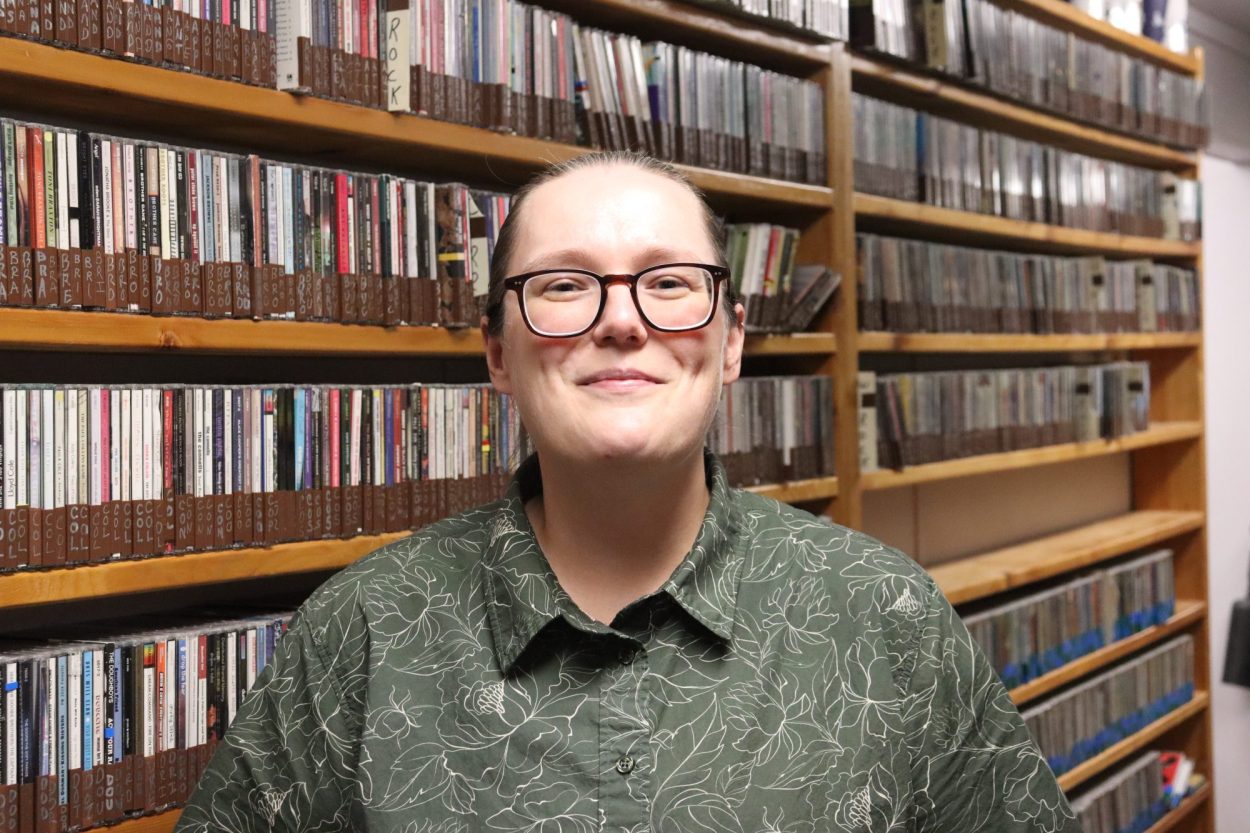
Name: Marissa Medford
Age: 39
Occupation: Operations Manager
Where are you from? How long have you lived in Ketchikan?
I was born in Sitka and moved to Ketchikan when I was 2.5 years old. I attended Houghtaling elementary (Kindergarten through 6th grade) and Schoenbar Middle School. I graduated from Kayhi in 2007. I have lived in Ketchikan almost my entire life, with the exception of living in the Seattle area for two years and while I was pursuing my post-secondary education.
What is your community involvement, past and present?
I have spent years volunteering and mentoring our youth with Ketchikan Youth Soccer League (KYSL). I have served as a director on the KYSL board, a coach, and a referee. I also served as both the assistant and head coach for our Kayhi Lady Kings soccer program. In 2018, with a few other community members, we formed the Tongass Timbers Soccer Club to provide advanced opportunities for player growth and development. Both KYSL and the Kayhi Lady Kings soccer program were instrumental in my development growing up. I have also coached Ketchikan Dribblers League (KDL).
Have you previously run for public office? When and what office?
I have not previously run for public office.
Why are you running for school board?
I am running for school board because I want to give back to the community that has invested so much in me and I would love to be able to return that investment. I feel extremely fortunate to have received my primary and secondary education in Ketchikan and I wholeheartedly believe the time and care my educators invested in me set me up for success in my post-secondary education. Between my education and 14 years of Human Resources and business operations experience, I have developed a strong understanding of policy development and implementation, fiscal responsibility and accountability through the budget process, and organizational operations. These skills would be beneficial as the school board, district, and borough staff work together to navigate the hard years ahead to regain stability.
What are your top priorities if elected?
The district’s foundation must be repaired before we can continue to build. The highest priority is the district’s finances and long-term budget stability. I believe making a decision to move from the current USI health plan over to the Public Education Health Trust will be a significant step in eliminating considerable unexpected costs to the district while maintaining comparable coverage. If elected, I can assure the community that I will bring the hard work, thoughtfulness, attention to detail, and integrity that I am known for. I am eager to learn and collaborate with the other school board members, district educators and staff, borough staff, and community members.
The district has struggled in recent years to maintain a balanced budget. What do you think needs to change going forward, if anything?
I think it’s important for people to remember that it has taken a long time for the district to get to this point and that it is going to take time to get the district back to where they need to be. Building trust and transparency is critical. Again, I believe making a decision to move from the current USI health plan over to the Public Education Health Trust will be a significant step in eliminating considerable unexpected costs to the district. Many changes to move the district forward are already in process. For example, in evaluating the budget on a macro level they were able to uncover the potential $4.5 million deficit and immediately disclosed their finding. This is a budget that the new administrative team has inherited and they are now working their way through it on a micro level, line-by-line. A spending freeze has been imposed. Vendor contracts and invoices are being reviewed and denied if deemed nonessential. Nonessential capital projects should be delayed, exploring alternative revenues (facility rentals, grants), and shifting professional development to focus on remote instruction whenever possible. Alignment of strategic planning and long-term goals between the school board, district and borough staff, and community members.
After recent consolidation and cuts, what measures can or should be taken to support staff and students in these changes?
With all of the changes being so new, it’s going to be imperative to keep an open line of communication with district staff, parents, and students to listen and determine how we can provide support navigating the changes.
What is your position on technology use in the classroom? Should the district develop policies fully or partially restricting cell phone use in schools?
Yes, I believe that the district, in collaboration with staff, parents, and students, should develop a policy partially restricting cell phone use in classrooms. In speaking with some local educators, they have expressed that cell phone use in classrooms significantly distracts students and negatively impacts academic performance. There needs to be a balance between reducing distractions during class time to facilitate and focus on learning, while allowing students and parents to reach each other in emergency situations.
What is your position on use of Artificial Intelligence, or AI, in Ketchikan schools?
I believe that the use of generative AI in Ketchikan schools needs to be limited. It’s important to listen to staff and students to balance the negative impacts and potential for it to be a supportive resource. It should be analyzed on the impact that generative AI has across each educational level. Between reading studies and speaking with local educators, generative AI overwhelmingly negatively impacts student’s cognitive development and inhibits intellectual growth and critical thinking skills. There is no replacement for student self discovery, effort, and growth. It seems negligent to deprive students of the opportunity to develop problem solving skills, which are vital academically but also in life.
How do you plan to handle public criticism or pressure from the community?
Compartmentalization will be key—separating personal feelings from the position in order to focus on the tasks at hand. Creating boundaries around social media, while providing space for civil engagement and public comment through appropriate channels. Promoting civility will be crucial. Finding common ground that we all want what is best for our district and knowing that our kids and the community deserve our best. We need to focus on collaborating to find solutions to move forward. It’s going to be extremely difficult to tackle issues and retain quality individuals if we continue to have constant turnover due to a lack of civility.
How can the district best support students in their post-secondary goals?
With the current budgetary issues, it’s going to take getting creative. For example, looking into career and technical education (CTE) programs where the district might be able to partner with local employers and organizations to provide credits for work based learning. The ability for students to explore career possibilities, apply what they learn to real world situations, and connect learning to available opportunities would help build confidence. Schools should be promoting all post-secondary options/opportunities equally, whether students decide to enter the workforce or pursue college or trade school.