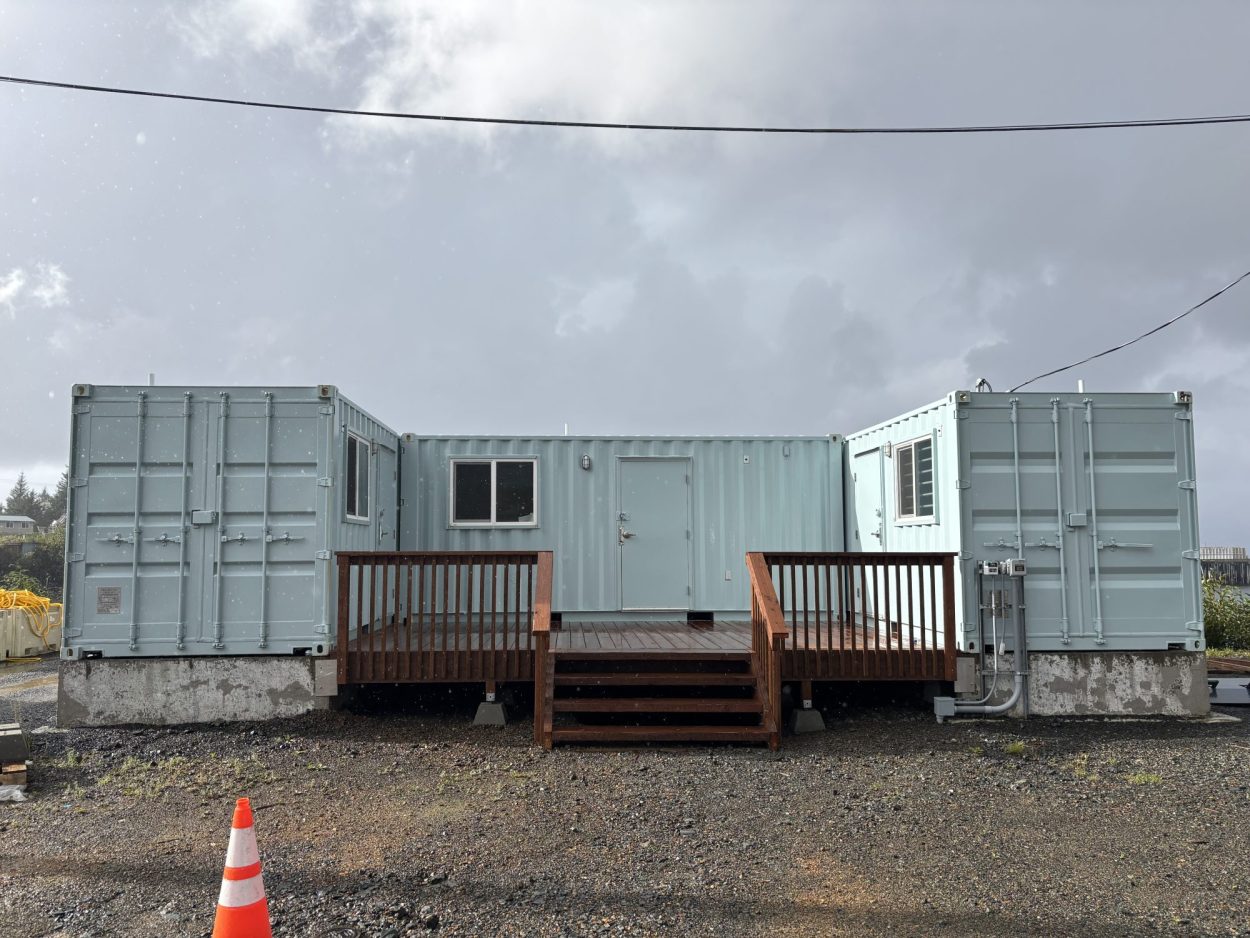
The Metlakatla Indian Community has a new laboratory facility. The space will help the tribe’s Department of Fish and Wildlife monitor for paralytic shellfish toxins, or neurotoxins that can form in oysters, clams, mussels and other shellfish, which are important subsistence foods.
Currently, the tribe outsources its shellfish toxin testing and doesn’t test as often in the summer months. Metlakatla Mayor Albert Smith said the new lab will allow the tribe to test year-round.
“It’s an exciting project,” Smith said. “It’ll help us monitor the PST levels to living off the land like we always have. We’ll be much safer in the future.”
The facility has three lab spaces, one of which is specifically designed for PST testing. The others are designed for handling liquid material and genetics testing.
The $1 million lab was federally funded by a grant from the Bureau of Indian Affairs. Smith said tribal staff will soon be trained on how to use the new labs.
“It’s exciting to know that we’re growing and we’re looking out for the best health and interest of the community,” Smith said.
Funding for the new laboratory was approved in 2024.
And the facility isn’t the only project the tribe has recently received federal funding for. They were just awarded over $16 million for infrastructure improvements at the Tamgas Creek Hatchery. The goal of that project is to increase salmon hatchery production.
Hunter Morrison is a Report for America corps member for KRBD. Your donation to match our RFA grant helps keep him writing stories like this one. Please consider making a tax-deductible contribution.