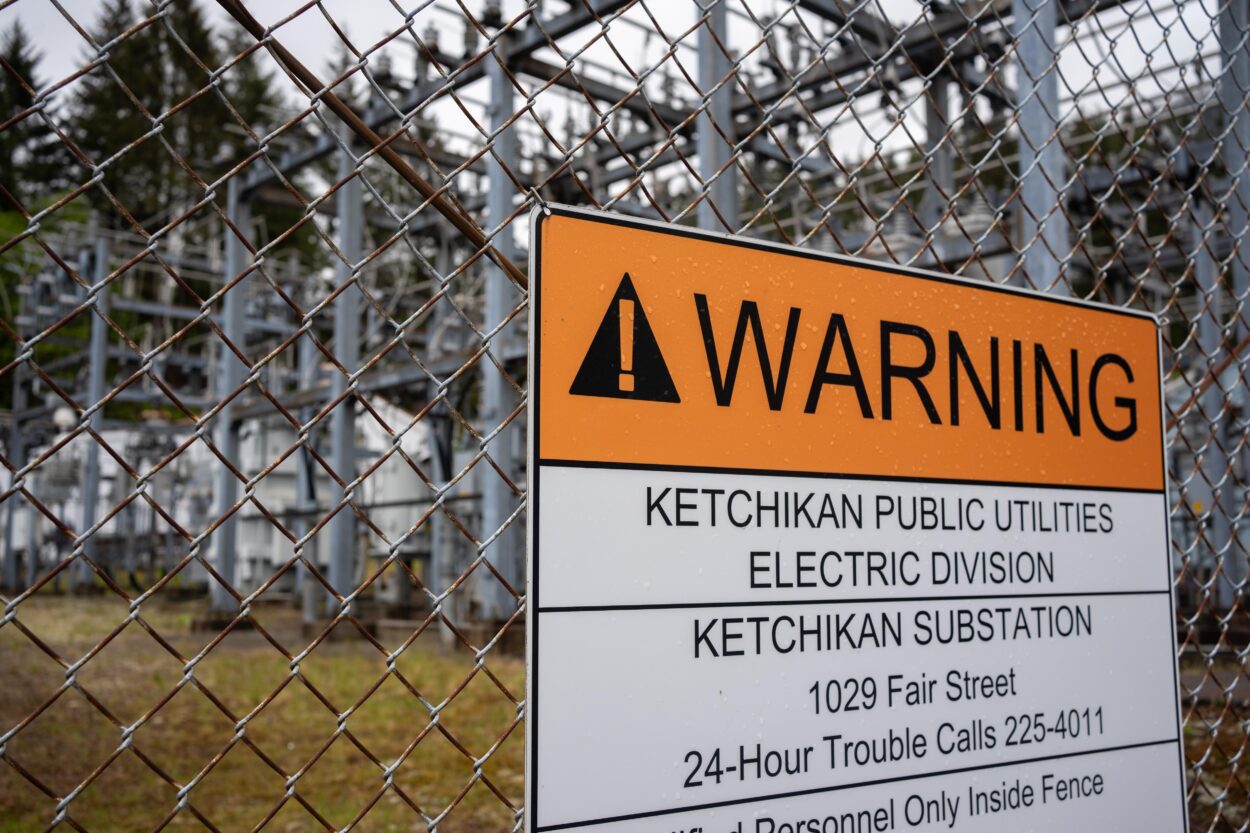
A ballot proposition in Ketchikan’s municipal election next month will ask city voters to authorize up to $25 million in spending power. If approved, city officials say the bonding authority would help pay for upgrades and repairs for its electric facilities.
All city bonding authority must be approved by voters. Using the bond for utility projects then must be approved by the city council. Interest or repayment on the bond will only take shape if the city uses those funds.
Abner Hoage is the Ketchikan City Manager and Ketchikan Public Utilities General Manager. He said the ballot proposition isn’t asking voter permission to draw from a bond right away.
“It doesn’t mean we’re actually immediately borrowing the $25 million,” Hoage said. “Any projects that are funded under that will still go through the regular council process for authorization of expenditures for the borrowing itself, the actual borrowing of the money.”
Hoage said the city has $83 million in electric projects on its needs list. Some funding sources, like grants, require a funding match from the city. He said the bonding authority could help with that.
One of the city’s top electric projects is a diesel generator replacement or repair at the Bailey Powerhouse, which helps power the city when hydropower is down. Hoage said one of its four generators is out of service.
Several of the city’s electric substations also have aging equipment that needs to be replaced. Hoage said if that equipment failed unexpectedly, costs for emergency replacement would be higher for the city.
“So we’re trying to stay ahead on those things and replace and repair the components, refurbish the components that are starting to age and wear out, so that we have an even more reliable system than what we already have,” Hoage said.
Hoage said if the city borrows the full $25 million bond, the maximum potential impact to city ratepayers is an additional 1 to 1.25 cents per kilowatt hour on their electric bills. A kilowatt hour is equal to using 1,000 watts of electricity in an hour. The city currently charges residential ratepayers about 15 cents per kilowatt hour.
Hunter Morrison is a Report for America corps member for KRBD. Your donation to match our RFA grant helps keep him writing stories like this one. Please consider making a tax-deductible contribution.