(Sydney Dauphinais/KRBD)
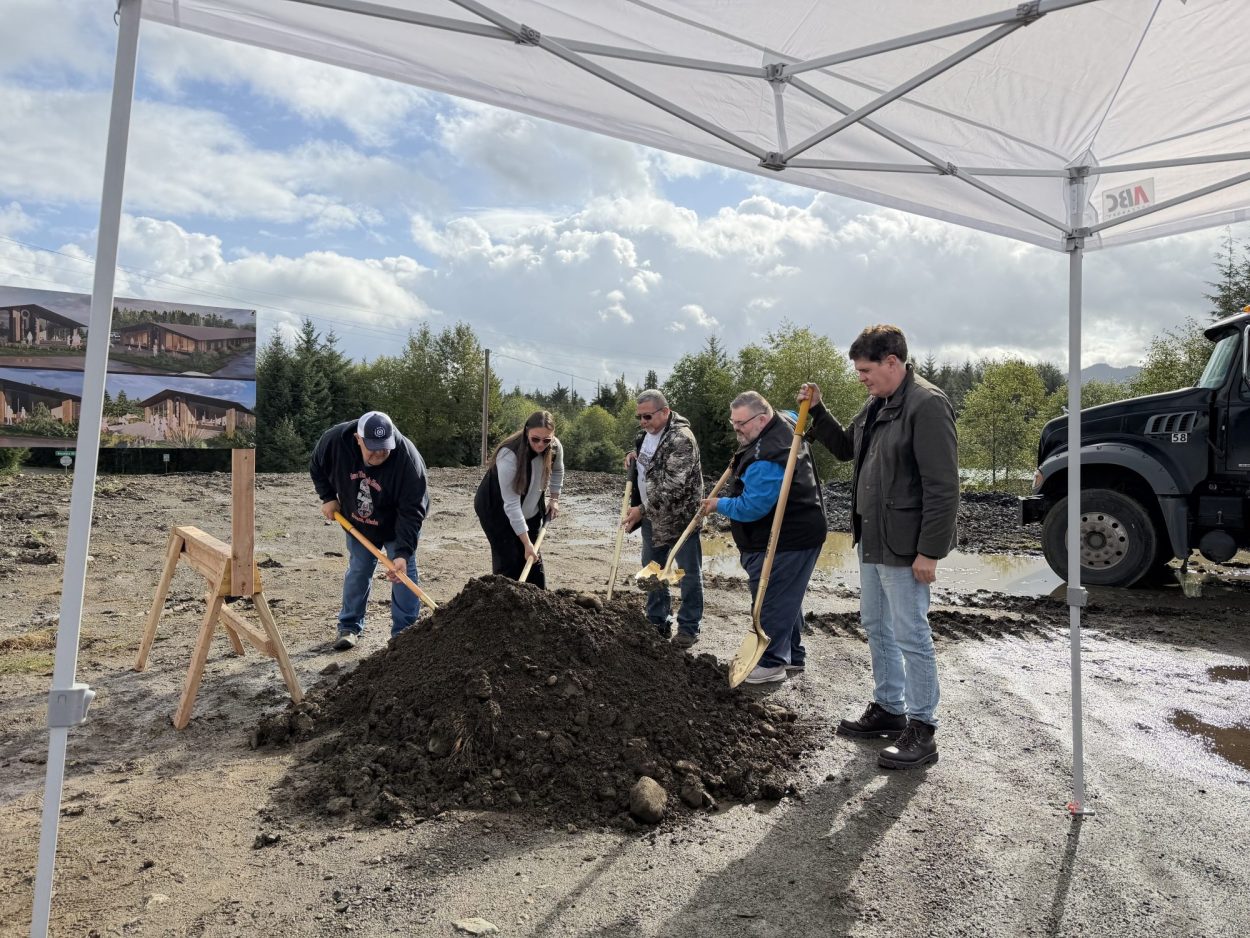
On a cloudy day late last month, around 100 people crowded around a pile of dirt outside the Generations Southeast Prince of Wales campus, a comprehensive community learning center in Klawock. They were celebrating the groundbreaking for construction of a new housing complex for students enrolled in workforce training classes.
“It’s critically important that we recognize that education and educational opportunities don’t look the same to everybody.” Richard Peterson, President of the Central Council of the Tlingit and Haida Indian Tribes of Alaska, said to the crowd. Standing with tribal leaders and state lawmakers, he dug a shovel in the dirt to commemorate the first day of construction.
The building will be about a 230 feet long dorm-style project with 18 dorm units, two apartments for traveling instructors and one apartment for the director. The goal is for it to resemble a traditional longhouse.
Generations Southeast is a regional community training center owned and operated by Tlingit and Haida, with campuses in Juneau and Klawock. They offer vocational training courses in welding, carpentry, and certification classes to teach early childhood education. The construction is happening in tandem with expanding vocational opportunities, including Indigenous trades, like traditional vest making and machine sewing sea otter fur.
“I think that can’t be understated enough,” Peterson said. “How many artisans we have in our villages who have real skill, real knowledge that deserves to be recognized, just like any other trade.”
The training center is administered by the regional tribe but open to the public statewide. Chas Edwardson, director of the Prince of Wales campus, said the need for this kind of workforce housing is palpable. Classes are in high demand and fill up quickly, attracting students from all over Southeast. Some commute from villages on the other side of the island, while others travel from places like Angoon or Metlakatla. Usually they end up sleeping in churches, or on the floor of the Klawock High School gym.
“Our goal is to keep people here or bring them back,” Edwardson said. “There’s just too many people leaving our communities, and then we import workers to do the work that’s there. So we’re going to make that connection and keep going.”
Edwardson said this project has been about 15 years in the making. He’s worked with community leaders and lawmakers, like Southeast’s Senator Bert Stedman, to make economic developments in the region, seeking more state revenue to make that happen.
Most of that state workforce development money was getting siphoned to projects in Northern and Western Alaska, Stedman said. For years, Edwardson and Stedman worked together to get funding for projects across Southeast — and even got things moving for the workforce training center in Klawock — but money was limited and the financial droughts put things on hold.
“We still couldn’t carve out a little piece for us, so what we had to do was feed all the other dogs, so we can get some scraps,” Stedman said.
Revenue improved a few years ago with an increase in state Technical Vocational Education Program, or TVEP, funding that became available across the state. That ended up being around $1.4 million for Klawock’s vocational training center. Generations Southeast also received an additional investment from Sealaska Corporation, a for-profit Native corporation based in Juneau.
Stedman said he’s confident the investment in the Klawock programming will give more education and job opportunities to people in Southeast. Then, they can work anywhere. But he hopes they stay local.
“When we look at our young Southeasterners, bringing them the opportunity to go to a Prince of Wales to school versus sending them up to Seward or down into the states, you might as well tell the young kids you’re going to send them to China,” Stedman said. “The culture’s different, it’s a long ways away from home, where they can come from around all Southeast to Prince of Wales, and it’s like being home.”
The goal is to have the building occupied by the end of 2027. Construction will be completed by the Craig Tribal construction crew and McGraw Construction, with opportunities for student participation.