As a supplement to the statewide voter guide, KRBD, KFSK and KCAW posed a short list of supplemental questions to Southeast candidates touching on issues of regional significance. Their responses are below.
Listen to KRBD’s live forum with House District 1 candidates here.
House District 1:
Grant Echohawk (Nonpartisan)

Southeast’s population of working age residents has declined. But the number of jobs increased. What should the Legislature do to address the growing gap between workforce supply and demand?
This is a multifaceted problem that needs to be addressed in multiple ways to create an economic and opportunity environment where our younger people and young families want to stay in Alaska. To do this, we need to properly fund our schools and increase the Base Student Allocation (BSA) so our schools have the resources and support to provide the best possible learning environment for our children. The state is also not appropriately compensating state employees, so those jobs are less appealing in the state of Alaska while a similar job in another state will come with compensation that includes an appropriate retirement plan. To resolve this, the state legislature needs to implement ‘defined benefits’ which will allow us to more easily recruit workers and prevent the very costly revolving door that we see where public employees often start their careers in Alaska to get the experience only to then move to another state with appropriate compensation to finish their careers. Lastly, we need robust infrastructure and community services and support programs so young families have critical needs met. Workers and families will follow the most lucrative path for themselves and their families, so if we want to keep working age residents to take root in Alaska, then we need to invest in the things that are going to keep them in our communities.
What specific methods do you endorse for addressing the state’s school funding situation?
The BSA needs to be increased to account for the last 8 years of inflation increases. Once that is done, we need to forward fund our schools so our administrators can build a budget on actual data and not be forced to work on incomplete information and assumptions. The BSA needs to be inflation-proofed with automatic annual increases to follow the annual increase of the cost of goods.
Fishing and seafood processing are a cornerstone of this district’s economy. How should the Legislature prioritize the industry to support Alaskans in District 1?
Growing up on a gillnetter, I distinctly remember the abundance of fish in our oceans that, 40 years later, appears to have significantly decreased in comparison. Any industry directly tied to a natural resource, like salmon, needs to have that resource in abundance to ensure long term success. Once the resource is depleted, then the industry collapses. To ensure our fishing and seafood processing industries are protected, we need to limit the destruction of habitat by highly destructive industries like trawling, manage our other resources like the Tongass National Forest responsibly, and protect our rivers and ocean from transboundary mining spills and other industry waste like cruise ship pollution.
What, if any, change would you make to state law to support communities with limited healthcare access?
Recent federal changes regarding Affordable Care Act subsidies and causing tens of thousands of Alaskans to be dropped from Medicaid has had a devastating impact on healthcare access throughout the state. It all comes down to funding and much of it is federal, so we start by electing federal delegates who will prioritize the health and wellbeing of Alaskans and have the state legislature work in concert with the federal delegation to get the needed and appropriate funding to meet the healthcare needs of our citizens and constituents. When it comes to specific legislation, preventative care is significantly less expensive than treatment after the fact or emergency visits that can result from preventative care not taking place. It is in the area of preventative care where I would focus any areas of legislative support to try to build out a public health preventative care support network to reach as many communities as possible.
A survey a few years ago shows Alaskans are frustrated with the state-run ferry system for a lot of reasons, including lack of service. What would you do as a legislator to address this? Please be specific in your response.
There is a great deal to be frustrated about when it comes to our ferry service and the perceived efforts to allow it to fall into disrepair in an attempt to privatize it. That is the perception of many people and not a strategy I do not agree with. Highways and bridges are not privatized nor is there an expectation that highways and bridges be ‘profitable’. Southeast Alaska is entitled to reliable and affordable transportation not only so our community members can travel throughout the region, but as a way to keep costs down for our schools while allowing our students to engage in as many activities as possible which becomes far more costly and restrictive when our schools have to rely on major airlines. As well, the ferry service is an economic driver that allows our communities to be more economically independent as we keep goods and materials moving in and out of our communities which allows each dollar to multiply on itself and stabilize our regional economy. To ensure that our communities have their transportation needs met, just as our road system communities are, I will advocate for appropriate funding to begin modernizing and updating not only our ferries themselves but docks and any other infrastructure needs our communities may have. This state gives up hundreds of millions of dollars, by way of tax credits and subsidies, to out-of-state corporations doing business in Alaska and I would like to end or greatly reduce that fiscally irresponsible practice. The funds for these projects are there when we leverage our resources and federal dollars, so I would like to see our ferries built out and if a Prince Rupert solution is not feasible, then look into a Hyder alternative to get us connected to the mainland.
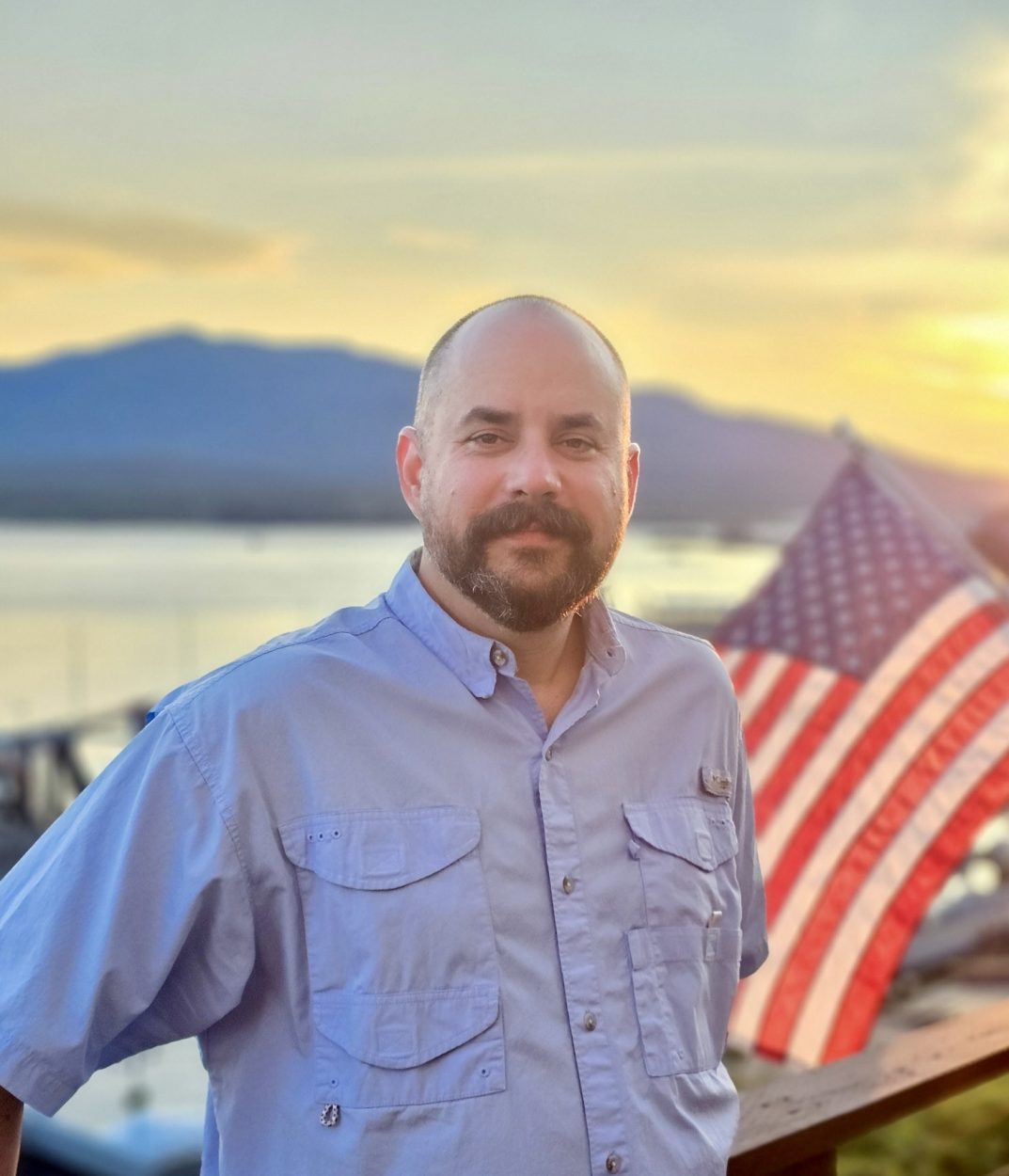
Incumbent Jeremy Bynum (Republican)
Southeast’s population of working age residents has declined. But the number of jobs increased. What should the Legislature do to address the growing gap between workforce supply and demand?
Southeast Alaska has tremendous economic opportunities, but we must do more to develop and retain the workforce needed to support our communities. I believe the Legislature should focus on three priorities: expanding career and technical education, addressing housing availability, and investing in infrastructure that supports economic growth.
I have been a strong advocate for expanding vocational and technical education in our schools and creating pathways that connect students directly with Alaska employers. We need to prepare our young people for careers in the trades, maritime industries, healthcare, and other occupations that our communities depend on.
We also need to address the shortage of affordable workforce housing by making more land available for development, improving infrastructure, and reducing unnecessary regulatory barriers. Ultimately, our goal should be to make it possible for Alaskans to build careers, raise families, and remain in the communities they call home.
What specific methods do you endorse for addressing the state’s school funding situation?
Alaska needs a school funding system that is predictable, sustainable, and focused on student success. During my time in the Legislature, I supported changes to our funding process and significant increases in education funding, including an increase to the Base Student Allocation, while also supporting important education reforms.
I believe we need to establish a more predictable funding process that recognizes inflation and the actual costs of operating our schools. We should also review the foundation formula to ensure it properly addresses special education, student transportation, and the challenges facing small and rural school districts.
We also need to do more to support and retain our teachers. Competitive compensation and meaningful retirement benefits are essential to attracting and keeping qualified educators in Alaska. I support improving teacher pay and reforming our retirement system to provide greater long-term financial security for educators. We cannot expect to maintain a strong education system if we continue losing experienced teachers to other states offering better compensation and retirement opportunities. Any retirement reform should be structured responsibly to ensure it remains financially sustainable for the state.
At the same time, funding must be accompanied by accountability, transparency, and measurable improvements in student outcomes. I want to see more resources directed toward classroom instruction, career and technical education, and the programs that prepare students for successful careers.
We must also address school infrastructure and energy costs through responsible capital investments. Simply increasing the BSA every year without addressing the underlying cost drivers is not a complete solution. Our responsibility is to provide a quality education, support the educators who make that possible, and ensure Alaska can sustain those investments over the long term.
Fishing and seafood processing are a cornerstone of this district’s economy. How should the Legislature prioritize the industry to support Alaskans in District 1?
Commercial fishing and seafood processing are essential to Southeast Alaska’s economy, and protecting these industries must remain a legislative priority.
I believe we need to focus on maintaining strong, science-based fisheries management, investing in our harbors and working waterfronts, and reducing the costs of doing business in Alaska.
One of my priorities is rebuilding our capital investment program. Our harbors, docks, marine infrastructure, and transportation systems are critical to keeping Alaska’s fishing industry competitive. These investments support fishermen, processors, and the many small businesses that depend on the seafood industry.
We also need to support value-added seafood processing capacity in Alaska, expand market opportunities, and ensure that state regulations do not unnecessarily increase costs for our fishermen and processors.
I support adequate funding for the Alaska Department of Fish and Game so management decisions are based on reliable science and sustainable harvest opportunities. Our fishing industry is more than an economic statistic. It represents generations of Alaska families, and I want to ensure future generations have the opportunity to continue that tradition.
What, if any, change would you make to state law to support communities with limited healthcare access?
Access to quality healthcare is one of the most important challenges facing rural Alaska. In Southeast, geography, transportation costs, and shortages of medical professionals create significant barriers to receiving timely care.
I support reviewing and modernizing Alaska’s healthcare licensing laws to make it easier for qualified professionals to practice in our communities. This includes expanding appropriate interstate licensing reciprocity, reducing unnecessary regulatory barriers, and strengthening telehealth opportunities.
We also need to develop our own healthcare workforce through training partnerships and programs that encourage Alaskans to pursue medical careers and return to serve their communities.
Alaska has a significant opportunity through the federal Rural Health Transformation Program. I want to ensure those resources are invested in sustainable improvements to rural healthcare, including workforce development, medical technology, and improved access to local services. My goal is to help rural communities maintain essential healthcare services while reducing the need for expensive medical travel whenever care can safely and effectively be provided closer to home.
A survey a few years ago shows Alaskans are frustrated with the state-run ferry system for a lot of reasons, including lack of service. What would you do as a legislator to address this? Please be specific in your response.
The Alaska Marine Highway System is essential transportation infrastructure for Southeast Alaska. Our communities depend on reliable ferry service to move people, vehicles, and goods, support local businesses, and access essential services.
I believe the Legislature needs to approach the ferry system with a long-term capital investment strategy rather than continuing to react to equipment failures and service disruptions.
My priorities include establishing a reliable vessel replacement and maintenance program, addressing workforce shortages, and providing predictable schedules that residents and businesses can depend on.
I also support restoring important transportation connections, including service to Prince Rupert, or other southern connection, and improving coordination between ferry operations and the communities they serve.
As a professional engineer with more than two decades, I understand the importance of maintaining critical infrastructure. Deferred maintenance eventually becomes more expensive, and equipment failures directly affect the people who depend on these services.
I would work to ensure that capital investments are tied to measurable improvements in vessel reliability, available service days, and operating efficiency. I also believe the Legislature should require clear reporting on maintenance backlogs, vessel availability, and service disruptions. We cannot rebuild confidence in the ferry system with promises alone. We need a realistic long-term plan, responsible investments, and accountability for delivering reliable service.
Senate District A
Incumbent Bert Stedman (Republican)
Did not respond.