On a wet July afternoon in Hydaburg, on the southern end of Prince of Wales Island, water dripped from Jennifer Mooney’s roof into a plastic storage tub. It was nearly full.
“So then I’ll take more out and put it in buckets in the house,” Mooney said. “That way, if it rains more, I have more capacity to get more water.”
For the past few days, that storage container, along with several buckets and cooking pots in her yard, had been Mooney’s main water source.
Her neighbors’ yards were dotted with pails and buckets, too. The village and its 400 residents had been cut off from their running water.
Mooney owns Haida Botanicals, which sells jams, jellies, syrups and teas from berries and plants foraged on Prince of Wales. But production is at a standstill.
“Without having water, I’m trying to only focus on essential things,” she said. “So I absolutely cannot do any processing for my business right now.”
And there are worse things than businesses shutting down. The lack of water also temporarily shuttered Hydaburg’s only medical clinic.
All of this was happening because two separate water lines in the village had broken. They’re likely 40 or 50 years old. Just last winter, freeze-ups shut the system down for several days.
The problem extends beyond Hydaburg. In Wrangell, 90 miles north, three water lines failed in a single August day. A few months before, a downtown gift shop flooded when a nearby water main burst, sending about 2 inches of water and mud into the store.
Kimberly Szczatko, owner of Cooper’s Corner gift shop, said she had to throw out hundreds of items.
“I lost Lego product. I lost Play-Doh product. Yarn, I lost because there’s nothing you can do with yarn after that,” Szczatko said. “It was just destroyed.”
Many of the state’s modern water lines were installed in the 1970s and 1980s. In southern Southeast Alaska, many of those lines are failing — and it could take years to find the funds to replace them.
Public works officials say the need to upgrade is ‘increasing’
It’s a nationwide issue. According to the U.S. Environmental Protection Agency, much of the country’s water distribution infrastructure has exceeded its life expectancy. The agency says it expects historically clean and reliable water supplies to face more and more challenges.
Most of Wrangell and Hydaburg’s water lines are made of ductile iron. That’s a cast-iron alloy that can have a service life of more than 100 years, according to the American Society of Civil Engineers.
But public works officials in several southern Southeast communities said their ductile iron lines aren’t coming close to that.
“We see a lot of failures in the 30 to 35 year range,” said Wrangell Public Works Director Tom Wetor. “Usually by 40, they’re getting pretty beat up.”
Some officials said the lines haven’t held up in part because installation standards may have been different back then.
Muskeg can also be a factor.
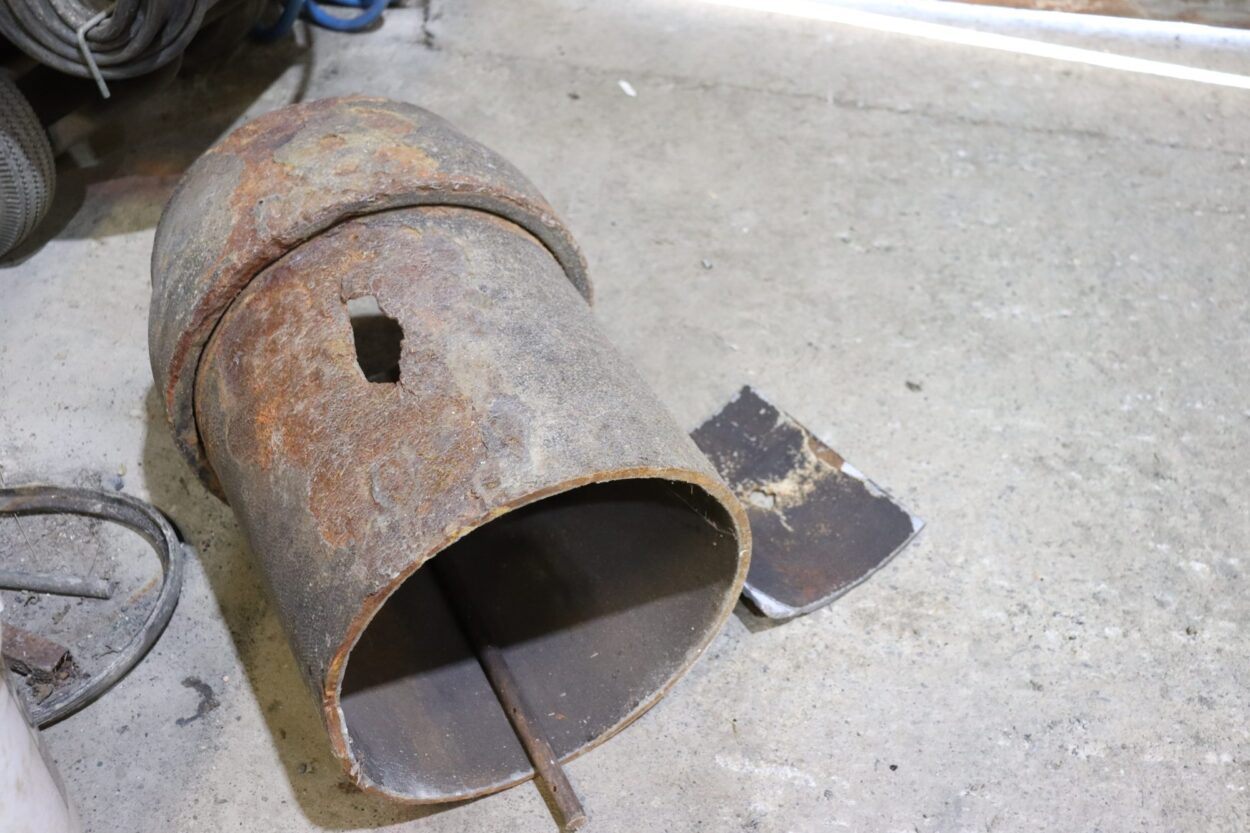
In Craig, on the western side of Prince of Wales Island, the water line that runs from the holding dam to the treatment plant was laid beneath acidic muskeg. It’s the most degraded water line in town.
Craig Public Works Director Oliver Lewis said that’s where the city does the most repairs.
“The need is increasing to upgrade parts of our water system,” Lewis said.
He said the city has contracted with an engineering firm to redesign it, an early step. But Craig still needs to find funding to pay for the actual construction. It could be years before the line gets replaced.
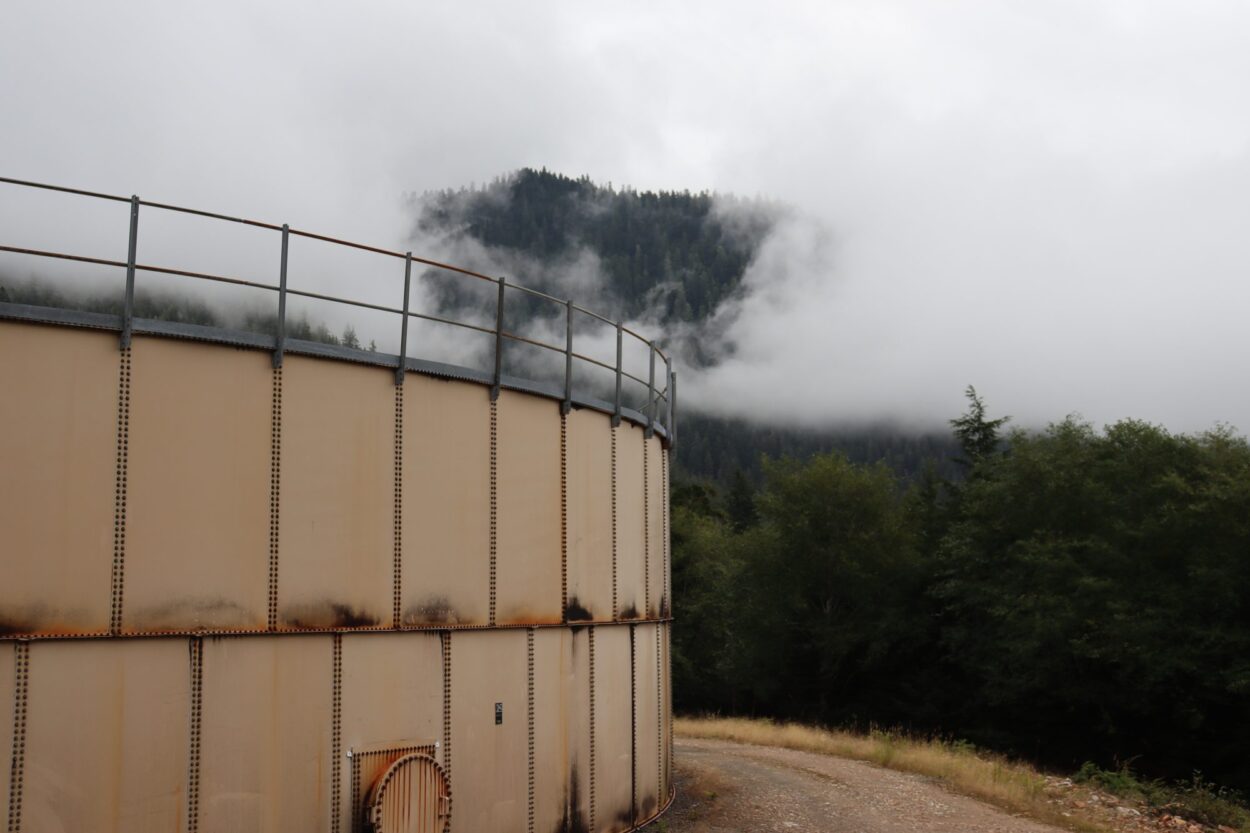
Other parts of the system are failing, too. Last winter, pipes around the city froze. When they thawed, new leaks left the city’s holding tank running low.
Residents were on notice to conserve water for about two weeks.
In Saxman, just south of Ketchikan, a notice to conserve water lasted about three months after a leak was discovered in the water system this year.
The village recently named water line replacements a top capital project priority. They’re requesting $10 million from the state for water line upgrades.
A smokehouse full of fish but no water to clean them
Hydaburg’s crisis lasted more than a week. While the village worked to repair the lines and bring the system back online, towns across the region donated drinking water in bottles and tanks.
Organizations in Craig and Klawock, about an hour’s drive away, offered showers to Hydaburg’s residents, if they could get there.
Meanwhile, Mooney had a smokehouse full of salmon to deal with. It’s a subsistence resource she relies on.
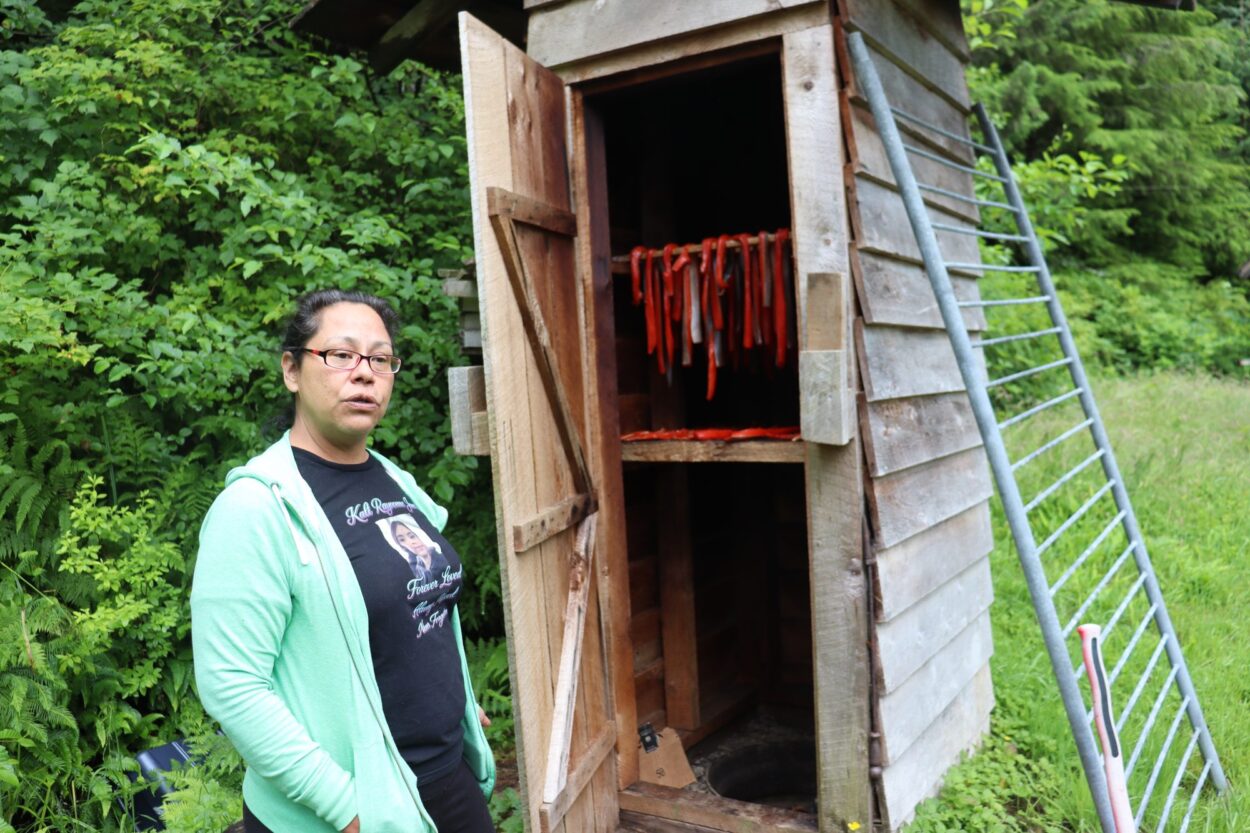
She said not having running water made cleaning and processing the fish incredibly challenging, and she leaned on family members to bring her jugs of water from Craig, an hour away.
“Things are a little different when it’s the middle of winter and you’re not working on fish and picking berries, and things like that,” Mooney said.
The water is working for now, but there’s no guarantee that village residents won’t find themselves in the same situation before too long. Hydaburg’s mayor, Anthony Christianson, said the village has funding set aside to plan for upgrades. But he doesn’t know when they might be able to actually replace the water lines.
This is the first installment in a three-part series. Funding for this series was made possible by the Alaska Center for Excellence in Journalism.
Hunter Morrison is a Report for America corps member for KRBD. Your donation to match our RFA grant helps keep him writing stories like this one. Please consider making a tax-deductible contribution.