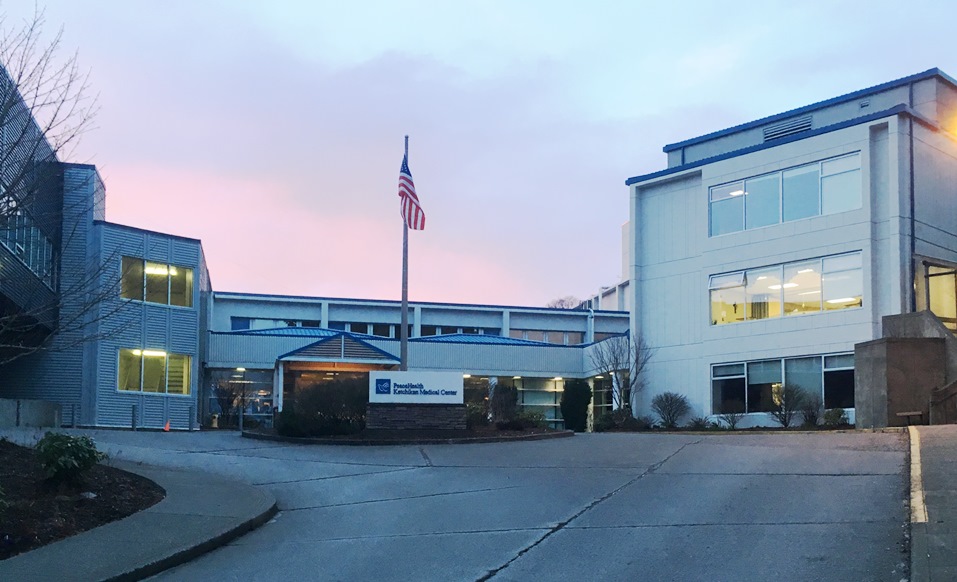
Leaders of the PeaceHealth Ketchikan Medical Center gave community members hospital updates at their annual town hall late last month.
PeaceHealth executives shared multiple improvements made in the last year. The hospital was recently awarded money through the federal Rural Health Transformation Program. Most of that money — nearly $7 million — is funding robotic assisted surgeries in urology, gastroenterology, gynecology and general surgery. The purpose is to minimize the invasiveness of surgeries such as hysterectomies and cystectomies. An additional $200,000 is going towards improving maternal, fetal and neonatal care surveillance technologies.
Ketchikan has seen a healthy portion of the Rural Health Transformation Program funding going towards multiple local nonprofits. House District 1 Rep. Jeremy Bynum spoke at public comment, asking hospital executives to be innovative with the money to best serve the community.
“We did pretty good, but I’m here to encourage you,” Bynum said. “I’m here to encourage you to be creative, and let’s not let this once-in-a-lifetime opportunity pass us by.”
Bynum is running for reelection in Tuesday’s general election. He also commented on the importance of hospital staff retention, which executives say is one of their top priorities for the upcoming year. Chief Medical Officer Jamie Park outlined four guiding focuses going forward: community angst, internal and external communication, staffing and staff morale.
A few staff members spoke with concerns about staff morale and retention. Wages are low, they said, and many departments are stretched thin. That can have an impact on patients.
Caitlin Brady is the president of Ketchikan Registered Nurses, the local nurse’s union, which is currently in active negotiations with the hospital. She said she hopes they reach an agreement that can better support staff and the community.
“We’re seeing an increase in the number of psychiatric patients in the hospital. Those patients are staying longer because there’s nowhere for them to go,” Brady said. “They’re being boarded in the [emergency room] because there are no inpatient rooms available, and this situation is increasingly putting hospital staff at risk of violent behavior from patients. These challenges are happening while nurses are being asked to do more with less.”
Brady said starting wages at the Ketchikan Medical Center are lower than they are at PeaceHealth locations in the Lower 48. She said there may be a nationwide shortage of healthcare workers, but that doesn’t tell the whole story.
“The truth is, there’s a shortage of workers willing to work under current conditions, and that distinction matters because nurses want to work, we want to care for our patients, we want to live in Ketchikan, we want to raise our families here and be part of this community,” she said.
Most of the public comment was positive, thanking caregivers for their work and the administration for hosting the forum. This was the fifth annual Community Health Board town hall and was held at the Ted Ferry Civic Center. PeaceHealth administration encourages community members to make comments at any time online.