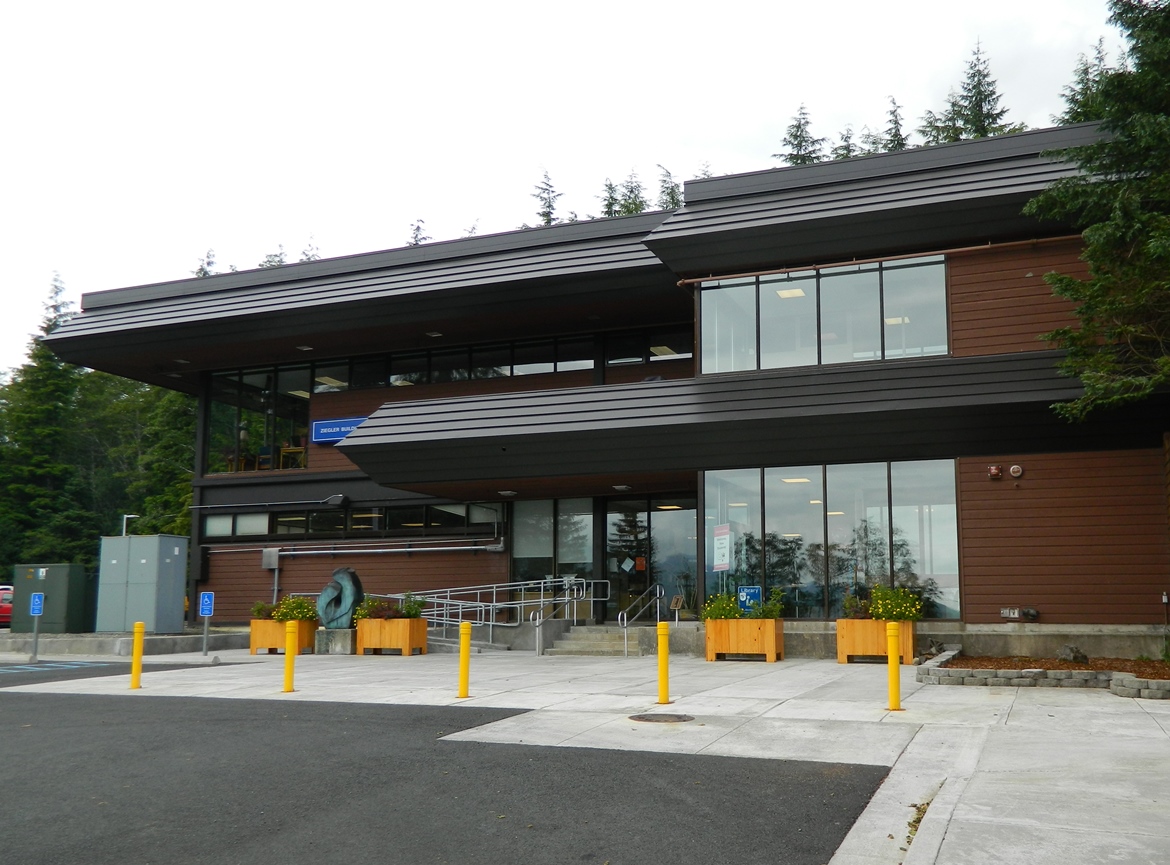
Ketchikan’s University of Alaska Southeast campus has received a $2.6 million federal grant to expand career training in healthcare and maritime industries.
The money is from the U.S. Department of Education as part of the Title III Strengthening Institutions Program, a grant program that’s meant to increase education and career opportunities in rural communities.
The money will go towards expanding access across the region as well as creating new classes in high-demand fields, like behavioral health and nursing. It will also fund updates to equipment at the UAS Maritime Training Center in Ketchikan in order to maintain U.S. Coast Guard compliance. Some course offerings will be remote or hybrid for the first time.
“It’s basically expanding our ability to do things that we already do, and to do them in new ways that allow new students to come to Ketchikan, or for Ketchikan to come to them, and deliver instruction that will improve their lives and improve their communities,” Simpson said.
Instructors will go in person to places like Wrangell, Metlakatla and Klawock to offer opportunities for students in their home communities.
Simpson said sometimes Ketchikan can feel like the big city in Southeast Alaska when compared to more remote communities in the region — but in reality, potential students face a variety of obstacles traveling to the UAS campus for programming. Virtual and hybrid offerings can help address those barriers.
“Traveling to Ketchikan can be a fairly big undertaking, and especially in the winter when the weather can be a little bit more unpredictable,” Simpson said. “But also in the summer when there is just really not enough housing to house college students who might be hanging out here for a week, two weeks, a whole semester.”
Funds will be distributed over the next five years.
UAS Ketchikan plans to use the money to hire a psychology instructor to develop a new behavioral health degree program in Ketchikan. Those efforts will be coordinated with existing programming in Juneau. That instructor will teach both in-person on campus and hybrid in nearby communities.
Some of these grant-funded developments are already in the works. They plan to offer a 100-ton captain’s license class this spring in Wrangell and Klawock.